All guides
37 guides across 11 subjects, grouped below in the order most projects need them.
If you are about to buy or hang something, start with Measuring: most of the mistakes these guides deal with come from a number checked too late. If something in the house is already not behaving, start with Problem Solving. Three good first reads: The Measurements That Decide Whether a Rug Works; Six Places to Look When a Room Feels Off; Choosing Paint Sheen When the Color Is Already Decided.
Measuring
9 guidesThe inches that decide whether a room works: rug sizes, curtain drops, TV height, table and kitchen clearances, and fixture spacing. Each guide gives the number, the reason behind it, and the code or manufacturer source where one exists.
- Measuring
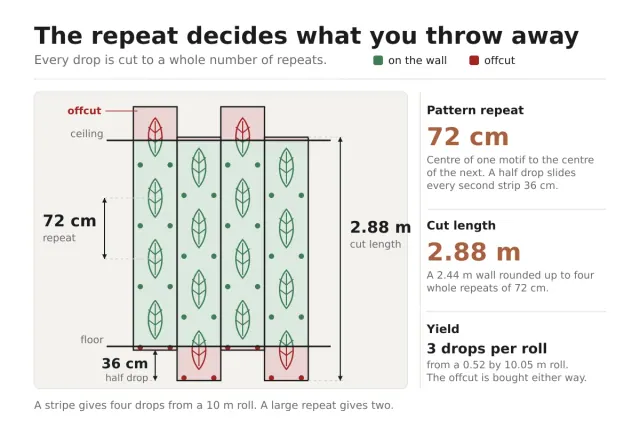
How Much Wallpaper to Buy: Roll Size, Pattern Repeat, and Waste
A 10-meter roll yields four drops of a stripe and two of a large repeat. The roll formats, match types and drop arithmetic that decide a wallpaper order.
- Measuring
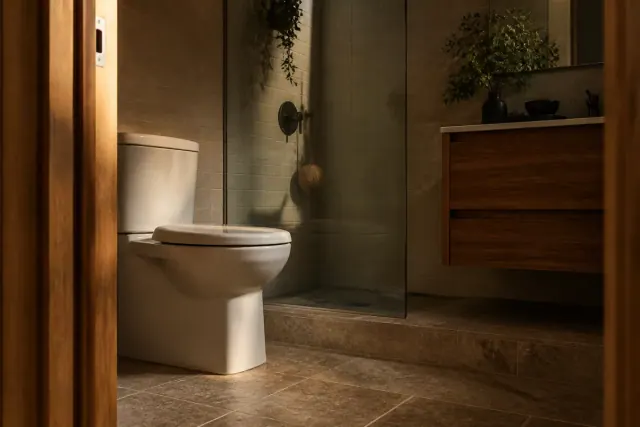
Bathroom Fixture Spacing and the Code Minimums Behind It
Which bathroom dimensions are legal minimums and which are merely comfortable: toilet centerlines, shower sizes, vanity centers, grab bar blocking and heights.
- Measuring
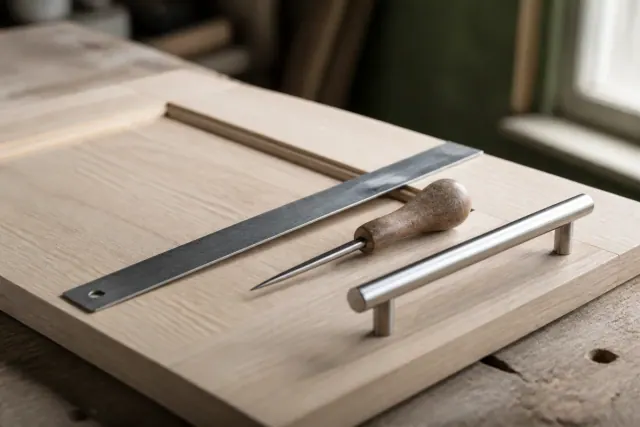
Cabinet Pulls Are Sized, Not Chosen
Center-to-center is hole spacing, not handle length. Standard sizes in inches and millimeters, placement conventions, and a step-by-step drilling method.
- Measuring
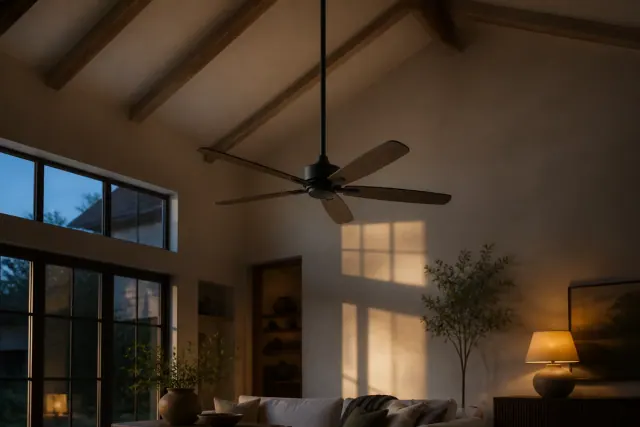
Ceiling Fan Size and Downrod Length by Ceiling Height
Blade span by room square footage, downrod length for 9, 10, 12 foot and vaulted ceilings, the airflow huggers give up, CFM per watt, and fan box ratings.
- Measuring
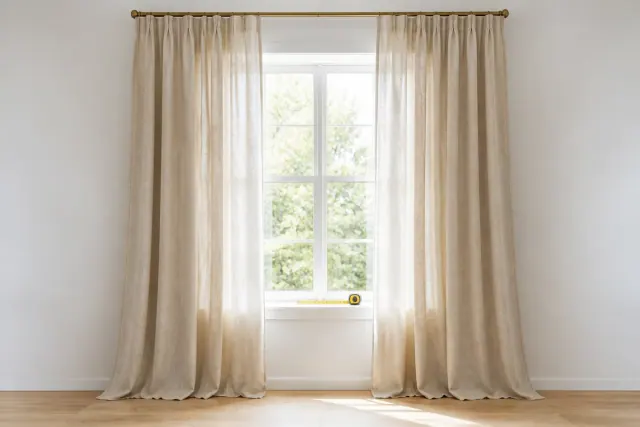
Curtain Height, Width, and Length: The Numbers Before You Order
Rod height, stackback, fullness ratio and finished drop: the exact inch figures and a nine-step measuring sequence to record before ordering curtains.
- Measuring
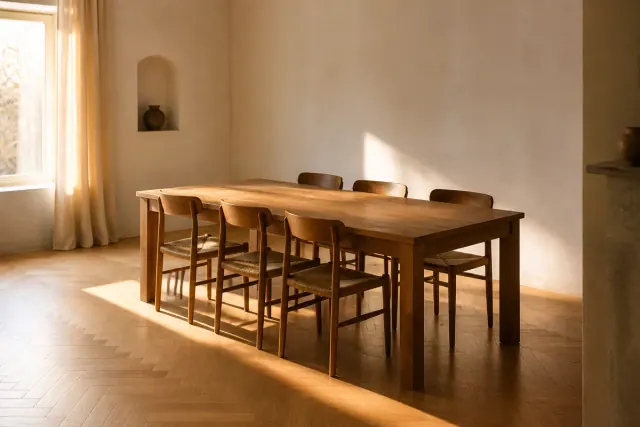
Fitting a Dining Table to the Room It Goes In
The clearance figures, edge inches per seat, and shape math that decide which dining table a room can take, plus a floor-taping procedure to test it.
- Measuring
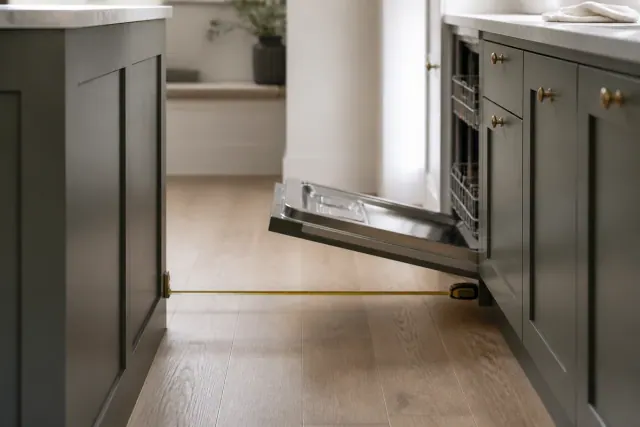
Kitchen Clearances: The Inches Between Everything
Walkways, work aisles, landing space, island overhang, and hood height, with the published figures behind each one and a numbered plan check.
- Measuring
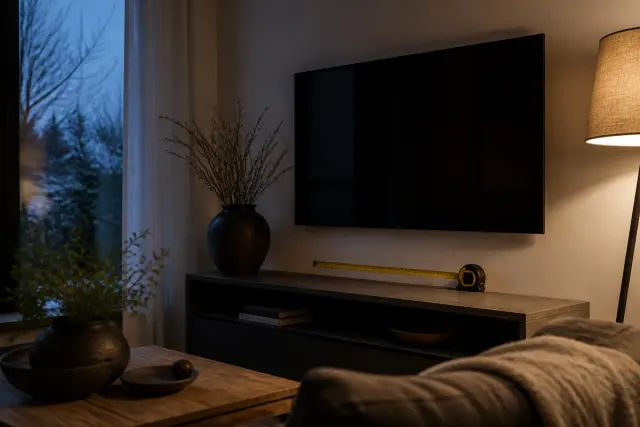
Mounting a Television at the Height You Watch It From
Seated eye height governs every figure in a TV install: screen center, viewing distance, tilt angle, and the exact line you mark on the wall before drilling.
- Measuring
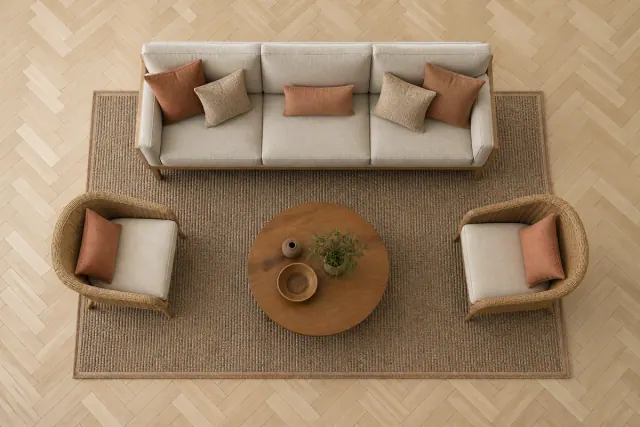
The Measurements That Decide Whether a Rug Works
Rug sizing solved in inches: the three placement conventions, floor reveal margins, dining chair pull-back, bedroom clearances, and a tape mock-up procedure.
Materials
8 guidesHow rug fibers, wood finishes, countertops, floors, tile and grout behave over years of use, compared by what damages them rather than by how they look on the first day.
- Materials
Countertop Materials Ranked by What Ruins Them
Ten countertop surfaces compared by what destroys them: heat, abrasion, stains and acid etching, plus sealing schedules and 2026 installed pricing.
- Materials
Grout Decisions That Outlast the Tile
Sanded or unsanded, epoxy or cement, how wide the joint should be, when sealing is required, and how to cut out and refill a grout line that has failed.
- Materials
Hardwood, Engineered, and Vinyl Plank Compared by Subfloor
Slab moisture, grade level, radiant heat and joist flex decide your flooring shortlist. Wear layers, Janka limits and real 2026 prices compared.
- Materials
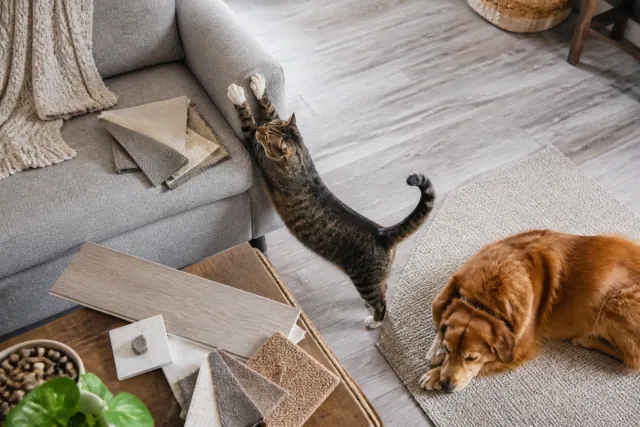
Nine Materials That Hold Up to Claws, Fur, and Accidents
Nine pet-proof materials rated by claw, accident, and wear resistance, with the spec to look for, the weakness of each, and real 2026 prices.
- Materials
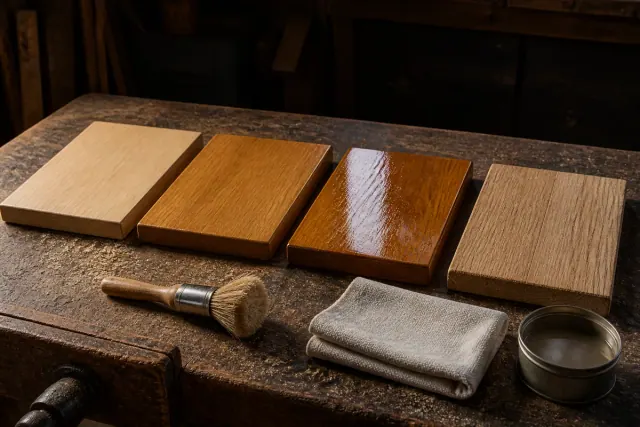
Polyurethane vs. Hardwax Oil vs. Shellac on Wood Furniture
Oil and water-based polyurethane, hardwax oil, shellac, lacquer and penetrating oils compared on durability, repair, cure time, VOCs and food contact.
- Materials
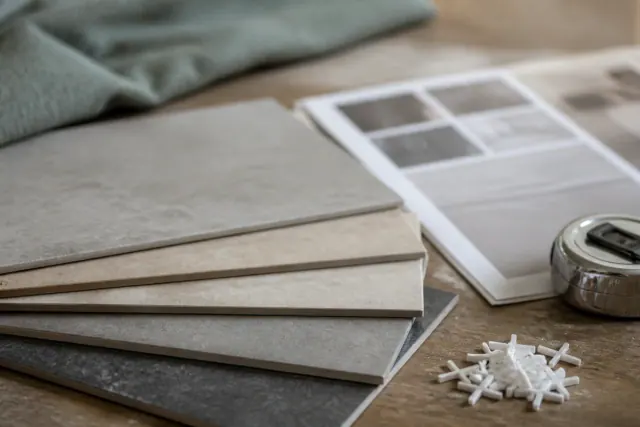
Reading a Tile Spec Sheet Before You Buy Tile
How to read the specification sheet behind a tile: absorption bands, abrasion class, DCOF, breaking strength, frost, edge type, shade variation, lot codes.
- Materials
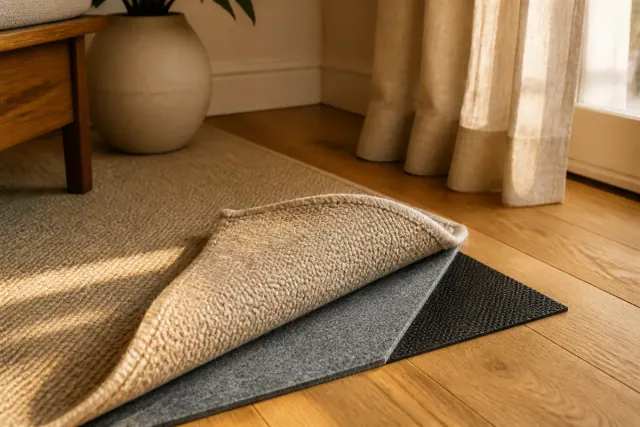
Rug Pads by Material, Thickness, and Floor Type
Felt cushions, natural rubber grips, and PVC can stain a finish. How to choose rug pad material and thickness for wood, tile, vinyl, or carpet.
- Materials
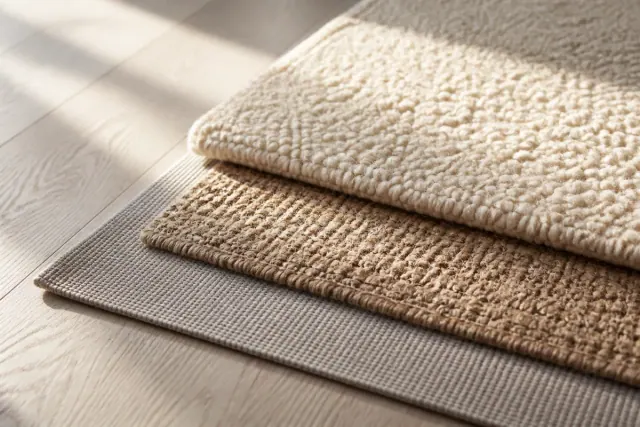
Wool, Jute, and Polypropylene: Matching Rug Fiber to the Room
How wool, jute, cotton, polypropylene, viscose, and nylon behave under weight, water, and a vacuum, and which fiber belongs in each room of a house.
Lighting
3 guidesLight for rooms that fight it: LED bulbs on older dimmers, rooms that get no direct sun, and under-cabinet lighting planned before the wiring goes in.
- Lighting
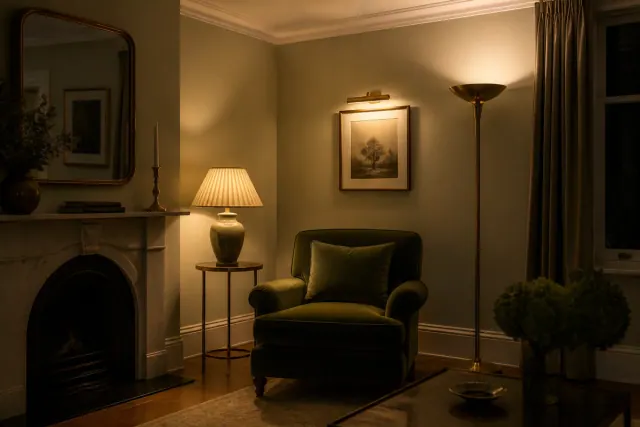
How to Light a Room That Gets No Sun
A step-by-step method for lighting north-facing, basement and windowless rooms: lumen targets, Kelvin, CRI 90+, paint LRV and what fixture to add first.
- Lighting
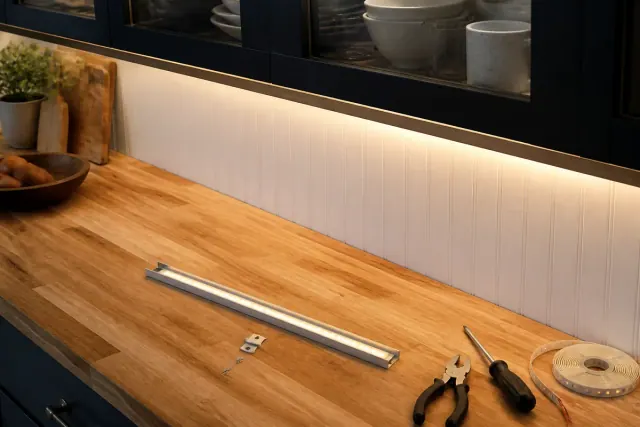
Wiring and Placing Under-Cabinet Lighting
Under-cabinet lighting fails on position first. Where the strip belongs, what CRI and lumens per foot to buy, and which wiring steps need an electrician.
- Lighting
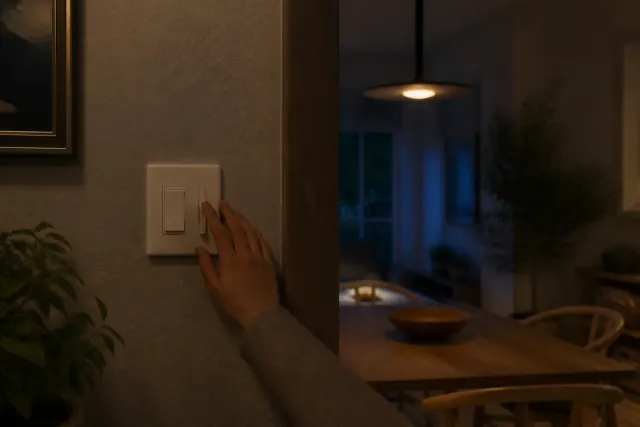
Your New LED Bulbs Flicker on the Old Dimmer
LED bulbs draw a fraction of the load old dimmers were built around. Why they buzz, flicker, drop out and glow when off, and the order to fix it in.
Paint
2 guidesEverything after the color is chosen: primer, surface prep, and the sheen that suits each wall and trim.
- Paint
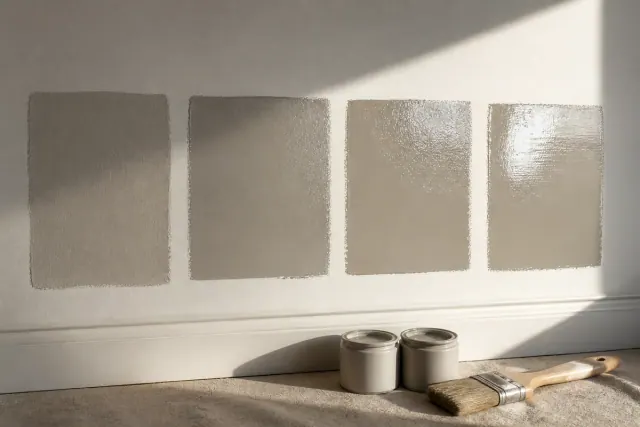
Choosing Paint Sheen When the Color Is Already Decided
A buying guide to paint sheen after the color is picked: gloss units, raking light, washable mattes, room-by-room picks, and a proper sampling method.
- Paint
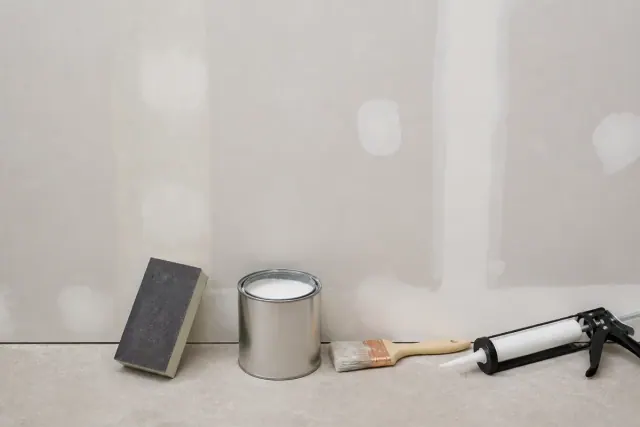
Primer Does Three Jobs, and Skipping It Costs More
Primer grips, blocks stains, or seals porosity. Learn which job your wall needs, how to test for it, and the prep sequence that keeps paint from failing.
Small Spaces
3 guidesStorage measured rather than guessed: how far a shelf can span, rod heights for double hanging, and an audit of the wall space most homes leave empty.
- Small Spaces
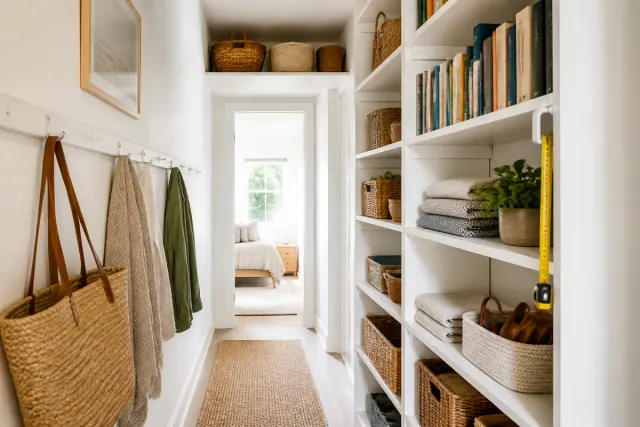
A Vertical Storage Audit for Homes Without Square Footage
A repeatable wall-by-wall audit for small homes: measuring the dead zones, reading stud lines, matching anchors to real loads, and setting shelf depth.
- Small Spaces
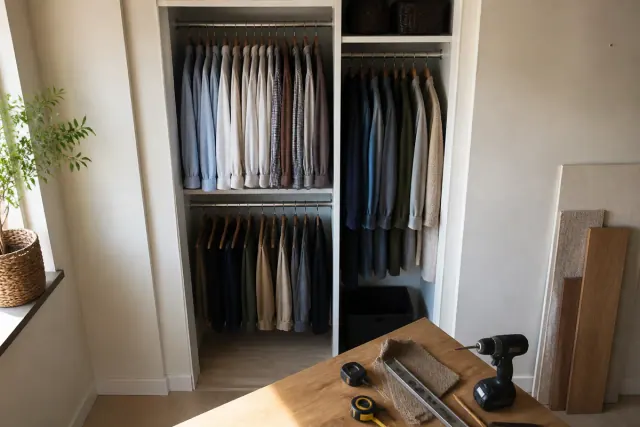
Closet Rod Heights and the Math of Double Hanging
Plan a closet from your clothes, not the room: hook-to-hem lengths, rod heights, double-hang math, shelf depths, and the span before a rod bows.
- Small Spaces
How Far a Shelf Can Span Before It Sags
Shelf sag is governed by unsupported span, not weight. Practical span limits for particleboard, plywood, pine, oak and glass, plus a pre-build check.
Problem Solving
7 guidesFor a room that is not behaving: condensation on windows, echo, fading, bathroom and range-hood airflow, plants that do not suit the light, and where to look when a room simply feels off.
- Problem Solving
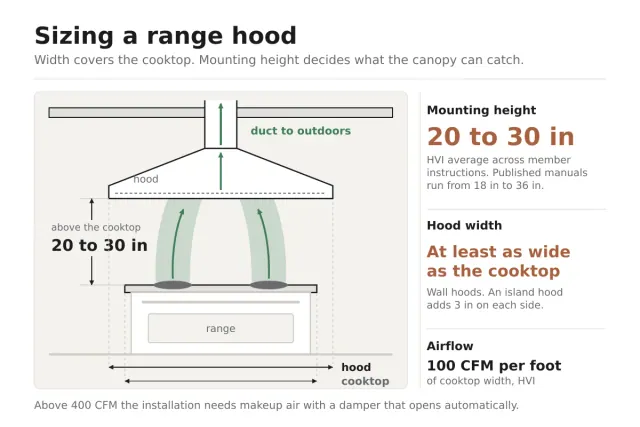
Sizing a Range Hood: Airflow, Capture Area, and the 400 CFM Line
HVI asks for 100 CFM per foot of cooktop, the BTU rule asks for more, and crossing 400 CFM triggers makeup air: the sizing math, capture area and duct size.
- Problem Solving
How Sunlight Fades Fabric, Wood, and Paint
Why fading is driven by visible light as much as UV, how cherry and walnut move opposite ways, and which window fix removes the most damage per dollar.
- Problem Solving
Matching Houseplants to the Light You Measured
Plant tags say bright indirect light, which has no unit. Here is how to measure your room in foot-candles and match real species to the reading.
- Problem Solving
Six Places to Look When a Room Feels Off
A six-point diagnostic for a finished room that still looks wrong: scale, height rhythm, layout, lighting, contrast and art height, with real measurements.
- Problem Solving
Sizing a Bathroom Exhaust Fan in Cubic Feet per Minute
A shower sends 20 to 25 gallons through a small room. Here is the CFM math for bathrooms under and over 100 square feet, plus the ducting that undoes it.
- Problem Solving
Water on the Inside of the Window
Interior window condensation is a two-variable problem: the dew point of the room air and the glass temperature. Here is how to tell which one is failing.
- Problem Solving
Why Your Living Room Sounds Louder Than It Should
Hard floors, bare drywall and glass send sound straight back at you. Here is what absorbs, what blocks, and the order to fix an echoey living room.
Furniture
1 guideHow furniture is built, and which construction details predict how long it will last.
- Furniture
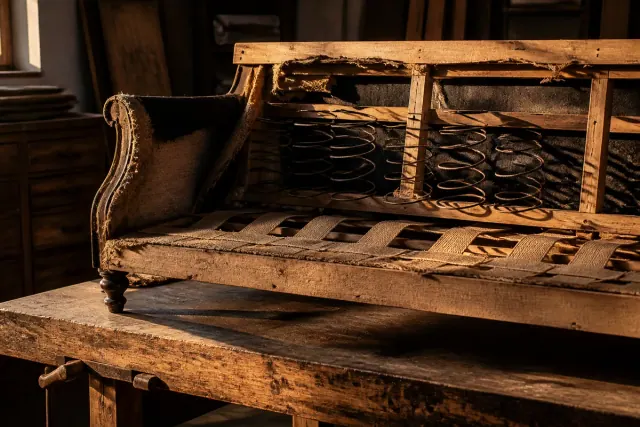
What Holds a Sofa Up, and Why It Fails
Frame joinery, spring suspension, foam density and double rub counts decide how long a sofa lasts. What each layer's failure looks like by year five.
Textiles
1 guideHow fabric construction changes the way bedding feels and wears.
- Textiles
How Sheet Fabric Is Made and Why It Feels That Way
How percale, sateen, jersey and flannel are built, what staple length and GSM really report, and why thread count stops meaning anything past a point.
Renting
1 guideUpgrades that make a rental feel finished and come back off without costing the deposit.
- Renting
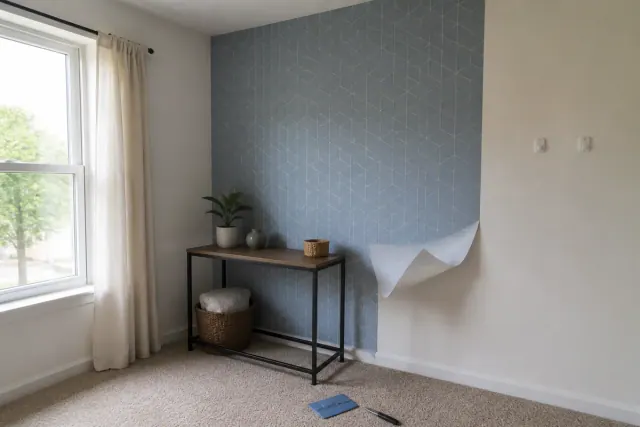
Renter Upgrades That Come Back Off Without Damage
Nine renter upgrades that reverse cleanly, with 2026 costs, the surfaces each one bonds to, and the exact removal step that protects your deposit.
Budgeting
1 guideWhat a project costs once every line is counted, including the ones that are easy to forget.
- Budgeting
What a Living Room Refresh Really Costs, Line by Line
A line-by-line 2026 cost breakdown of a living room refresh at three budgets, with real price ranges, cost per year of use, and a seven-month order.
Maintenance
1 guideThe checks that keep small problems small, organized by season.
- Maintenance
Seasonal Home Upkeep, Quarter by Quarter
A quarterly upkeep list for finishes, textiles and fixtures, with measured humidity targets, real weatherstrip sizes and the season each job belongs to.