Polyurethane vs. Hardwax Oil vs. Shellac on Wood Furniture
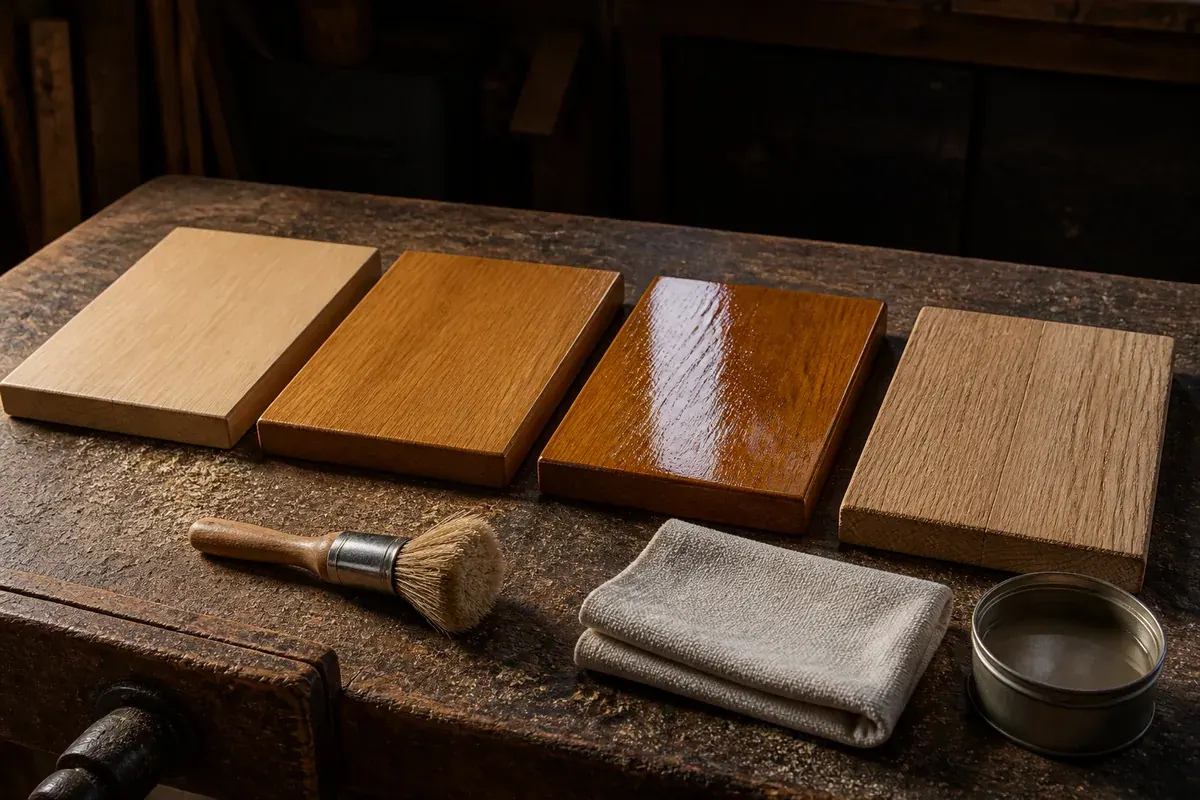
The sanding is done. The drawer fronts are smooth at 180 grit, the dust has been pulled out of the pores, and the piece looks as honest as it ever will bare. Everything from here is reversible only by stripping. What goes on in the next hour decides how this piece behaves for the next decade: whether a sweating glass leaves a white ring, whether a scratch can be healed in place or forces a full refinish, whether pale maple stays pale or drifts toward honey.
We read manufacturer technical data, federal limits and published specifications, then line the options up. No single finish wins on every axis. The useful question is which trade-offs suit this piece, in this room, with this owner.
What Each Finish Is Made Of and Where It Sits in the Wood
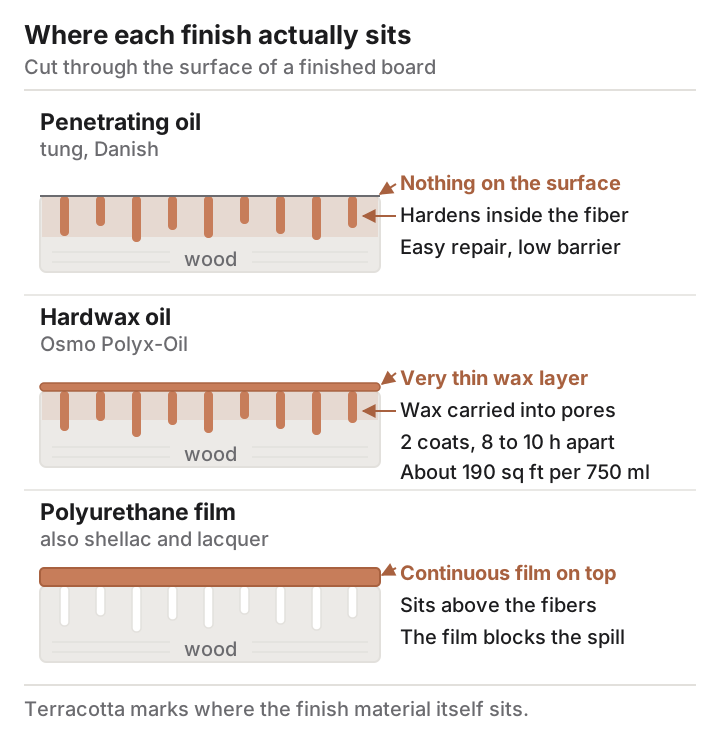
Three families cover nearly everything sold for furniture and built-ins. Film formers cure into a continuous layer that sits above the fibers: oil-based polyurethane, water-based polyurethane and polyacrylic, shellac, and lacquer. Penetrating oils go the other direction, soaking into the fiber and hardening inside it, leaving almost nothing on the surface. Hardwax oils split the difference, carrying wax down into the pores and leaving a very thin wax layer on top.
Osmo Polyx-Oil is a representative hardwax oil, blended from vegetable oils including sunflower, soybean and thistle together with carnauba and candelilla waxes. Lee Valley lists coverage at about 190 square feet per 750 ml can, two coats, with 8 to 10 hours of drying between them and no sanding required in between (Lee Valley).
That structural split drives most of what follows. A film protects by standing between the spill and the wood. An in-wood finish protects by making the fiber less absorbent, and it accepts lower resistance in exchange for painless repair.
Water Rings, Heat Marks and Which Surfaces Blush
A crosslinked polyurethane film is the one to reach for when the surface will hold drinks, plants or a laptop that runs hot. Shellac is at the opposite end. It dissolves in denatured alcohol, which is both the reason it repairs so beautifully and the reason a spilled cocktail or a hot mug can leave a cloudy bloom in it. Lacquer sits in between: harder and more solvent-resistant than shellac, less resistant than a cured urethane.
Hardwax oil behaves differently again. Because there is barely any film to blush, water damage tends to show as a dulled or darkened patch rather than a ring trapped under plastic.
| Finish | Where it sits | Water and heat | Color shift | Spot repair | Typical coats |
|---|---|---|---|---|---|
| Oil-based polyurethane | Film on the surface | Very high | Warm amber, deepens over years | Poor; scuff and recoat the whole panel | 2 to 3 |
| Water-based poly / polyacrylic | Film on the surface | High once fully cured | Dries clear, no ambering | Poor; blends less readily than solvent finishes | 2 to 3 |
| Hardwax oil | In the pores plus thin wax layer | Good water, moderate heat | Slight warming | Excellent; abrade the mark and re-oil | 2 |
| Shellac | Film on the surface | Low; alcohol and heat both mark it | Clear when dewaxed, orange in amber grades | Excellent; alcohol redissolves it | 2 to 4 |
| Lacquer | Film on the surface | Good | Slight warming in nitrocellulose | Good; thinner reflows the existing film | 3 or more |
| Penetrating oil (tung, Danish) | In the pores only | Low | Warm, deepens | Excellent; wipe on more | 2 to 3 |
Ratings above reflect our reading of published data sheets, not laboratory results.
Ambering, and What It Does to Maple and Ash
Read the sheen names on the can. Minwax sells Fast-Drying Polyurethane as Warm Satin, Warm Semi-Gloss, Warm Gloss and Warm Ultra Flat, cleans up with mineral spirits, and covers about 125 square feet per quart (Minwax). The word “warm” is doing real work there. General Finishes describes its water-based High Performance topcoat as “Water White in can (dries clear)” with no ambering (General Finishes).
On walnut or cherry, amber is usually welcome and often the whole point. On hard maple, ash, birch ply and pale white oak, that amber pushes the piece several steps yellower than the sample board promised. A water-based topcoat is the safer default whenever the design depends on the wood staying cool in tone.
Shellac is its own category here because color is a purchase decision. Zinsser Bulls Eye SealCoat is a premixed 2 lb cut of dewaxed shellac and reads clear, while amber and garnet flake grades of the same resin add deliberate orange.
Spot Repair Versus Stripping the Whole Top
This is where the money hides. Shellac and lacquer are evaporative finishes: fresh material redissolves what is already there, so a new coat melts into the old one and the repair line disappears. Polyurethane cures by crosslinking instead, so a fresh coat sits atop the cured film rather than merging with it. A scratch through polyurethane usually means sanding the entire surface flat and recoating the whole panel so the sheen matches.
Hardwax oil is the most forgiving of the group. A ring or a scuff is abraded with 320 grit or a fine abrasive pad, the area is wiped with a little more oil, and the blend is invisible because there is no film edge to feather. Osmo’s instructions call for no sanding between coats at all, which is the same property working in your favor.
Three Clocks: Dry to Touch, Recoat Window and Full Cure
Confusion here ruins more projects than bad brushwork. Dry to touch, ready to recoat and safely cured are three separate numbers, and the gap between the last two can run three weeks.
Minwax publishes a recoat window of 3 to 4 hours for Fast-Drying Polyurethane while listing dry-to-touch at 24 hours, asks for 24 hours after the final coat before light use, and on floors tells you to avoid heavy traffic and replacing furniture for 72 hours (Minwax). Those two numbers are not a contradiction: a coat accepts fresh material long before it is hard enough to touch without printing it. General Finishes High Performance is touch-dry in 30 minutes and recoatable in 2 hours, but rates light use at 7 to 10 days and full cure at 21 days (General Finishes). Zinsser SealCoat is dry to the touch in about 10 minutes and ready to sand or recoat in 20 to 40 minutes (Rockler). Osmo Polyx-Oil wants 8 to 10 hours between its two coats.
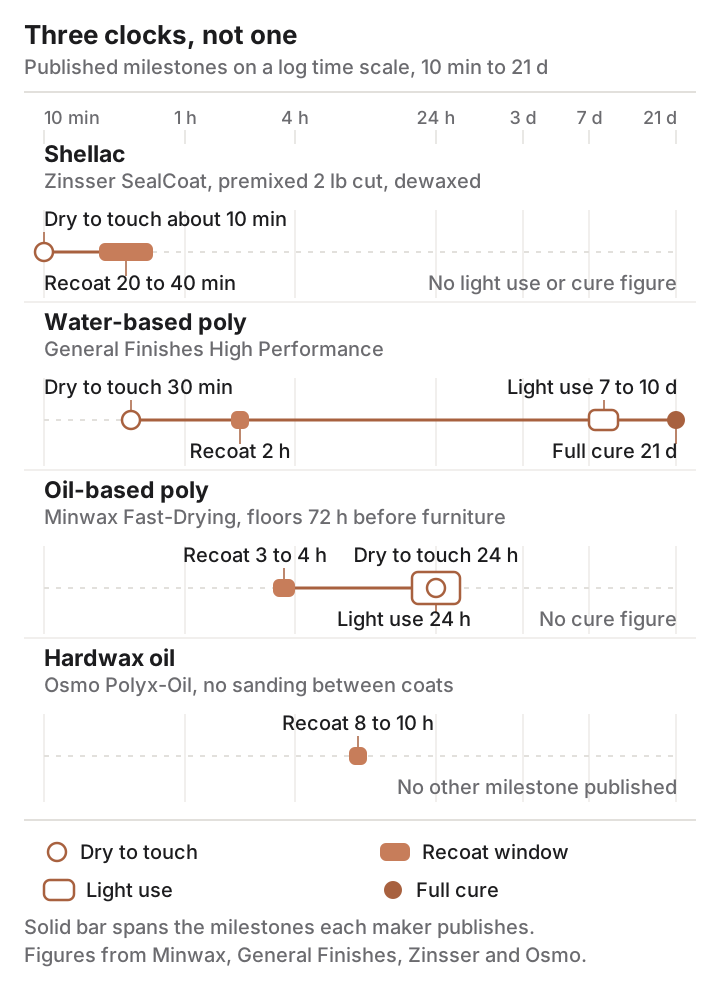
A fast recoat window does not mean a fast project. Water-based polyurethane lets you get three coats on in a single afternoon, then asks you to keep table linens, rubber feet and potted plants off it for three weeks.
Odor, VOC Ceilings and Finishing in an Occupied Room
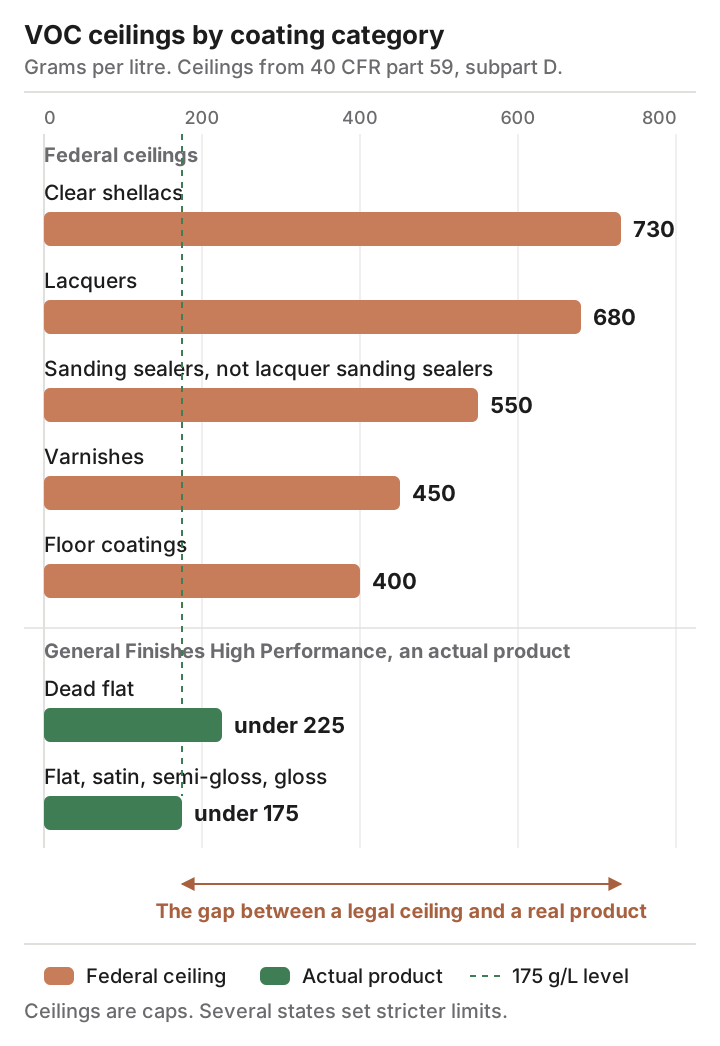
Federal rules cap VOC content by coating category. Under 40 CFR part 59, subpart D, the ceilings include 730 grams per liter for clear shellacs, 680 for lacquers, 550 for sanding sealers other than lacquer sanding sealers, 450 for varnishes and 400 for floor coatings (Cornell LII). Those are ceilings, not typical values, and several states set stricter limits of their own, but the ranking shows which categories carry the most solvent.
Compare that with an actual modern water-based product. General Finishes lists High Performance at under 175 grams per liter in flat, satin, semi-gloss and gloss, and under 225 in dead flat (General Finishes). That gap separates a bedroom you can sleep in that night from one you cannot.
Shellac’s solvent is denatured alcohol, so the smell is sharp and then gone in minutes. Oil-based polyurethane is the opposite: milder at first, and it lingers for days.
Butcher Block, Cutting Boards and the Food-Contact Question
The relevant rule is 21 CFR 175.300, which governs resinous and polymeric coatings used as a food-contact surface, including coatings intended for repeated food contact. Its permitted-component lists include drying oils such as tung and linseed, and natural resins such as shellac (Cornell LII). Manufacturers that claim compliance almost always qualify it as applying to the fully cured film, not the wet product.
Split the decision by how the surface is used. A butcher block you genuinely cut on will be scarred, so the finish has to be renewable: food-grade mineral oil with a beeswax paste, reapplied whenever the surface looks dry, is the low-drama answer. A block used as counter surface rather than a chopping surface is a better candidate for hardwax oil. Lee Valley describes Osmo’s finish as non-toxic once cured and safe for food contact, with resistance to water, alcohol and mild acids (Lee Valley).
Applying Water-Based Polyurethane to a Dresser Top
For most furniture and built-ins we recommend a water-based polyurethane. It stays clear, the odor is manageable indoors, cleanup is water, and it recoats in about two hours. Working figures below assume a quart covering 125 to 150 square feet.
- Final-sand to 180 grit, then 220 on a horizontal top. Going finer than 220 can burnish the surface and reduce grip.
- Wipe the whole surface with a damp cloth to raise the grain. Let it dry 30 minutes.
- Knock the raised fibers back with 320 grit: light pressure, no rounding at the edges.
- Vacuum with a brush attachment, then wipe down with a cloth that is barely damp. Skip solvent tack rags under water-based products.
- Optional barrier coat: one thin coat of dewaxed shellac blocks tannin bleed on oak and silicone contamination on old furniture. Because it carries no wax, SealCoat is listed as compatible with all clear finishes, including water-base acrylic polyurethane, alkyd-modified polyurethane and catalyzed finishes (Rockler); confirm on your topcoat label too.
- Stir the topcoat slowly for 60 seconds. Never shake it, because bubbles cure in place.
- Lay on a thin coat with a synthetic-bristle brush or a fine foam roller, in long passes with the grain. Do not go back over an area that has started to set.
- Wait a minimum of 2 hours, then scuff lightly with 400 grit or a gray abrasive pad and vacuum again.
- Apply three coats total on a horizontal surface, two on vertical ones. General Finishes recommends 2 to 3 coats of High Performance (General Finishes).
- Allow 7 to 10 days before light use and 21 days before anything sits on the surface, especially rubber, vinyl or a damp planter.
Temperature matters more than people expect with water-based products. General Finishes puts the working range at 65 to 75°F, calls 70°F and 50 percent humidity ideal, and says a space below 55°F is definitely too cold (General Finishes). Work below that band and the film levels poorly, dimples into an orange-peel texture, and every number in the cure schedule stretches. High humidity cuts the other way: moisture trapped under a water-based film can blush it, which is why a fan moving air across the panel is worth more than a second heater.
What Each Finish Asks of You in Year Three and Year Ten
Hardwax oil asks the most attention and gives the most back. Expect a light re-oil of high-wear zones around year three, perhaps a full wipe-on coat by year five, and at year ten a piece that has never been stripped because every mark was absorbed into a refresh.
Water-based polyurethane asks nothing at year three beyond a damp cloth. By year ten a heavily used top will show a dulled traffic path, and the fix is a full scuff and recoat of that panel, not a spot repair.
Oil-based polyurethane follows the same curve with an extra wrinkle. By year ten the amber shift is visible, so any recoat lands over a background that has already moved.
Shellac and lacquer invert the pattern. Both will want attention sooner, possibly a padded touch-up coat in year three, but neither ever reaches a point of no return, because fresh solvent reopens the old film. Penetrating oils sit closest to hardwax oil on effort and furthest from polyurethane on protection: easy every year, never a crisis, never much of a barrier either.