Wool, Jute, and Polypropylene: Matching Rug Fiber to the Room
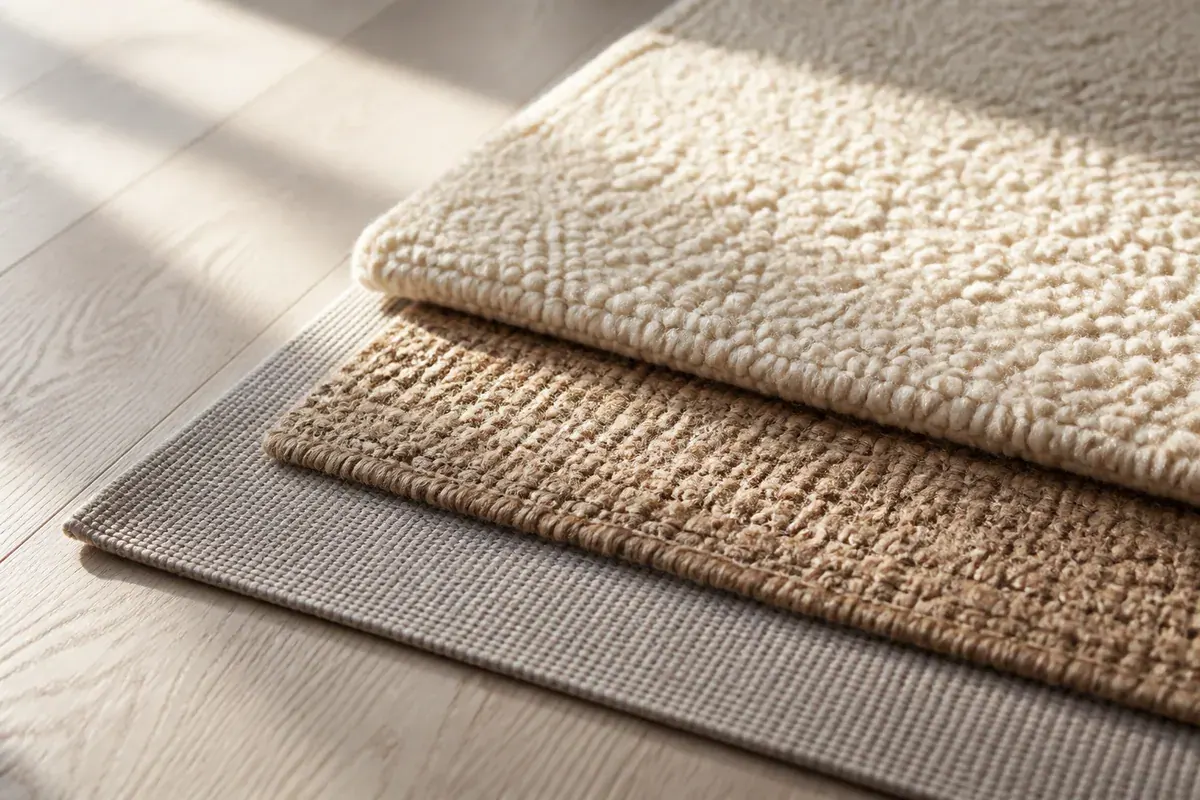
Lanolin is the grease a sheep grows to keep weather out of its own fleece, and almost none of it reaches your floor. Scouring, the wash stage that comes before spinning, pulls it out on purpose: the International Wool Textile Organisation describes first-stage processing as removing grease (lanolin), vegetable matter, and dirt. What survives into a finished rug is more useful than the grease anyway. It is the fiber’s own scaled outer surface: Woolmark describes Merino wool fibres as having a natural protective outer layer that helps prevent stains from being absorbed.
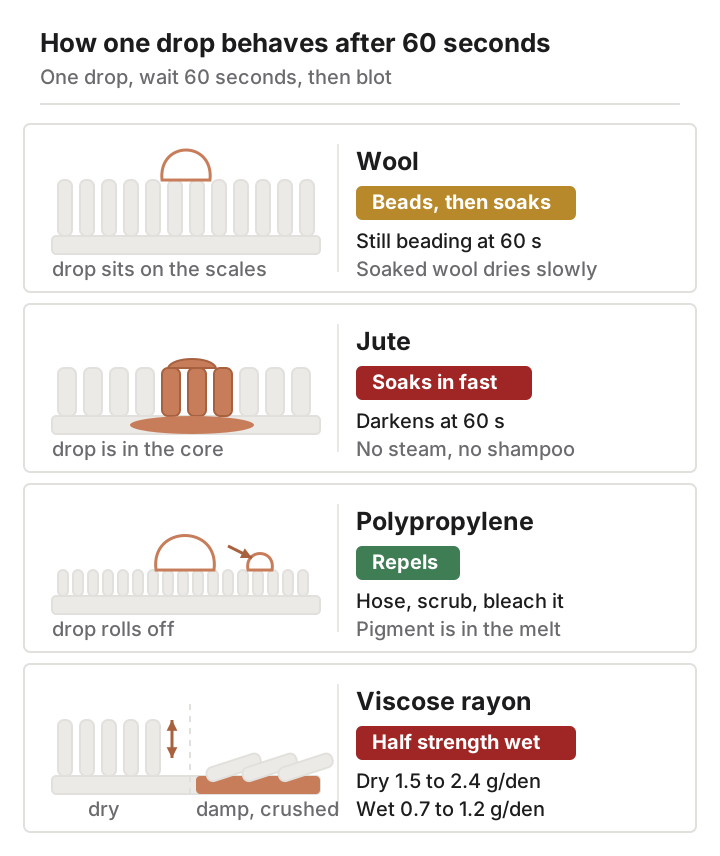
That surface buys you seconds. A glass of red tipped onto a dense wool pile sits on top of the yarn long enough for you to get a towel under it. On a plant-based fiber, the same spill is in the yarn core before you have finished standing up. Pattern, color, and price tier do nothing about this; the fiber does.
Which is why fiber deserves the first decision and usually gets the last one. Below is how the fibers you will actually meet on a label behave under weight, water, and a vacuum head, plus where each one survives.
The Scaled Surface and the Coiled Core of Wool
Wool has two properties working at once. The outer scales slow liquid down, and the internal crimp behaves, in Woolmark’s description of a Merino wool fibre, like a coiled spring that returns to its natural shape after being bent. That spring is why a wool pile lifts back after a sofa leg is moved, and why traffic lanes take longer to show in wool than in a fiber with no crimp recovery.
The cost is real and the cost is the point. The Shepherd Hand Knotted Wool Rug from Marie Flanigan’s collection for Annie Selke is 100% wool, hand knotted in India, with a 0.75 inch pile; the 3’ x 5’ carries a regular price of $724, which works out to roughly $48 per square foot before any markdown. Hand-knotted wool sits at the top of the price ladder for a structural reason, not a branding one.
Wool has one honest weakness. It absorbs moisture vapor readily, so a wool rug that gets soaked dries slowly and holds odor while it does. Anywhere water lands repeatedly, wool is the wrong answer at any price.
Jute, Sisal, and the Cellulose Water Problem
Jute is a bast fiber taken from the stem of the plant; sisal is a leaf fiber from agave. The difference shows immediately underfoot. Jute is soft enough to sit on and slightly waxy to the touch. Sisal is hard, cool, and abrasive enough to take skin off a knee, which is exactly why it wears so well in a hallway.
Both are cellulose, and cellulose drinks. That single fact governs everything else about them: no steam cleaning, no shampooing, and no rooms where wet shoes land. Blot and go dry, or accept the mark.
Price is the compensation. The Safavieh Natural Fiber NF-447A is 100% jute, handwoven, with a 3/8 inch pile, and Rugs Direct lists the 8’ x 10’ at $364.80. An 8’ x 10’ is 80 square feet, so that is $4.56 per square foot, roughly a tenth of the hand-knotted wool above. Jute also sheds a fine plant dust continuously, which is a vacuuming chore rather than a defect.
Cotton in Flatweaves You Intend to Launder
Cotton is the fiber to choose when you have already decided the rug is consumable. It has almost no resilience, so it flattens under furniture and stays flat. It wrinkles. It absorbs freely: at 70°F and 65% relative humidity, cotton carries about 6% moisture content against viscose rayon’s 13%.
None of that matters if the rug goes in the washing machine. Cotton dhurries and rag rugs in kitchens, kids’ rooms, and doorways are a fair trade: cheap, soft, washable, and replaced every few years without regret.
Polypropylene: Color Built Into the Melt
Polypropylene, sold interchangeably as olefin, cannot absorb dye from a bath, so pigment goes into the polymer before the fiber is extruded. Color that is part of the fiber rather than sitting on it is what allows the aggressive care instructions you see on outdoor lines. Mohawk Home lists its polypropylene as offering fade and moisture resistance, stain resistance, and low static, and calls it the choice for indoor/outdoor rugs.
The Rugby Stripe Handwoven Indoor/Outdoor Rug from Dash & Albert by Annie Selke shows what that permits in practice: 100% polypropylene, a 0.25 inch pile, handwoven in India as a dhurrie, and described by the maker as washable, scrubbable, bleachable, hoseable, and UV treated. The 2’ x 3’ lists at $54, which is $9 per square foot at the smallest size, where per-foot pricing always runs highest.
Two trade-offs come with it. Polypropylene has poor crush recovery, so a heavy sofa leaves a dent that does not lift, and its surface attracts oily soil that water alone will not shift.
Viscose Rayon and Its Wet Tenacity Collapse
Viscose is cellulose that has been dissolved and re-formed, and it is sold under names designed to avoid the word: art silk, bamboo silk, banana silk, faux silk. It looks superb. It has a sheen no wool can match and it takes dye brilliantly.
Then it meets water. Ordinary viscose rayon runs a dry tenacity of 1.5 to 2.4 grams per denier, falling to 0.7 to 1.2 grams per denier wet. Losing roughly half its strength while damp means a wet viscose pile can be crushed permanently by an ordinary vacuum stroke or a mop head passing over it.
Damp is enough. This fiber does not belong in an entry, a dining room, a kitchen, a bathroom, or any house with a dog that drinks messily. In a low-traffic bedroom it can last a decade.
Where Nylon and Wool Blends Earn Their Premium
Nylon turns up less often in decorative area rugs than in the places where traffic is genuinely heavy: stair runners, hallways, and wall-to-wall broadloom. Mohawk Home describes its nylon as offering durability and resiliency against matting and crushing from everyday wear-and-tear and recommends it for high-traffic areas. Solution-dyed nylon adds the colorfastness that polypropylene has by default.
Blends exist to buy one property cheaply. Wool over a jute base gives you wool’s hand at a lower cost per square foot with jute’s water sensitivity attached. A wool pile with a minority nylon content picks up abrasion resistance for stairs. Read the percentage: the minor fiber sets the care rules whenever it is the one that fails first.
Seven Rug Fibers Side by Side
| Fiber | Underfoot | Liquid behavior | Shedding | Where it belongs |
|---|---|---|---|---|
| Wool | Springy, warm, dense | Beads briefly, then absorbs | Heavy, most noticeable on tufted goods | Living rooms, bedrooms, dining |
| Jute | Soft for a plant fiber, slightly waxy | Absorbs fast, marks | Constant fine dust | Dry living rooms, under a coffee table |
| Sisal | Hard, cool, abrasive | Absorbs fast, stains | Minimal | Halls, stairs, covered entries |
| Cotton | Flat and thin, no bounce | Absorbs fully, launders clean | Low | Kitchens, kids’ rooms, doorways |
| Polypropylene | Slick, thin, low warmth | Repels; some lines bleachable | Low | Porches, entries, dining, poolside |
| Viscose rayon | Cool, silky, high sheen | Weakens sharply when wet | Moderate | Low-traffic bedrooms only |
| Nylon | Springy, resists crushing | Cleans well, holds color | Low | Stair runners, hallways, family rooms |
How Knotting, Tufting, and Weaving Spend the Fiber
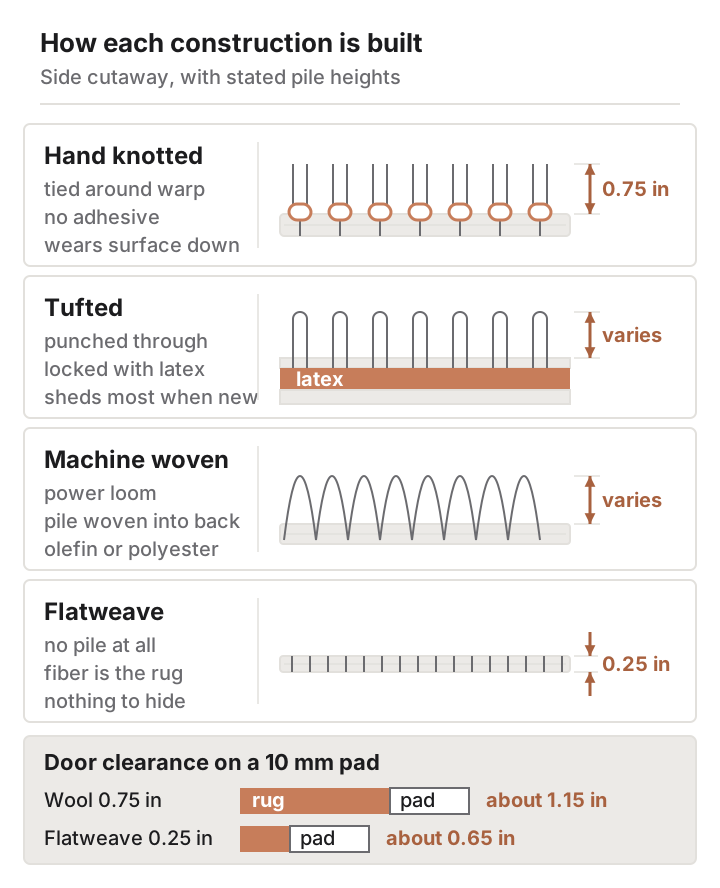
Construction decides how much of a fiber’s potential actually reaches the floor. In a hand-knotted rug, each tuft is tied around the warp, so there is no adhesive holding the pile in and the rug wears from the surface down over decades. In a tufted rug, yarn is punched through a backing cloth and locked with latex, then covered with a secondary backing. Two separate things follow from that. Short fiber ends left loose by the tufting process work their way out early, which is why a tufted rug sheds most heavily when it is new, and the latex layer is the component that degrades with age, releasing pile it no longer grips.
Machine-woven rugs weave pile and backing together on a power loom, which is why so many of them are polypropylene or polyester: the process suits a fiber that runs fast and takes solution dye. Flatweaves have no pile at all, so fiber choice controls everything, and a flatweave in the wrong fiber has nothing to hide behind.
Density and twist matter within any construction. The Carpet and Rug Institute notes that cut pile durability depends on the type of fiber used, density of tufts, and the amount of twist in the yarn, and that highly twisted yarn holds its shape longer in high-traffic areas. Good construction extends a suitable fiber; it never rescues an unsuitable one.
A Five-Step Fiber Check Before You Order
- Find the fiber content, not the collection name. If a listing says art silk, bamboo silk, or banana silk anywhere, treat it as viscose and apply viscose rules.
- Divide list price by area to compare honestly. An 8’ x 10’ is 80 square feet and a 3’ x 5’ is 15, so a $364.80 jute works out at $4.56 per square foot against $48.27 for a $724 hand-knotted wool.
- Measure your door clearance before you commit to pile height. A 0.75 inch hand-knotted wool sitting on a 10 mm pad, such as Ruggable’s Cushioned Rug Pad, stacks to roughly 1.15 inches; a 0.25 inch flatweave on the same pad reaches about 0.65 inches.
- Run a water test on the swatch or a hidden corner. Place one drop, wait 60 seconds, then blot. Wool should still be beading; jute will darken; viscose will let you flatten the damp pile with a fingertip and it will stay flat.
- Rub the pile with a flat palm ten times and count what comes away. Anything more than a few loose fibers on a machine-woven or hand-knotted rug is a construction problem, not a break-in period.
Entry, Dining, Bedroom, Bath, and Covered Porch
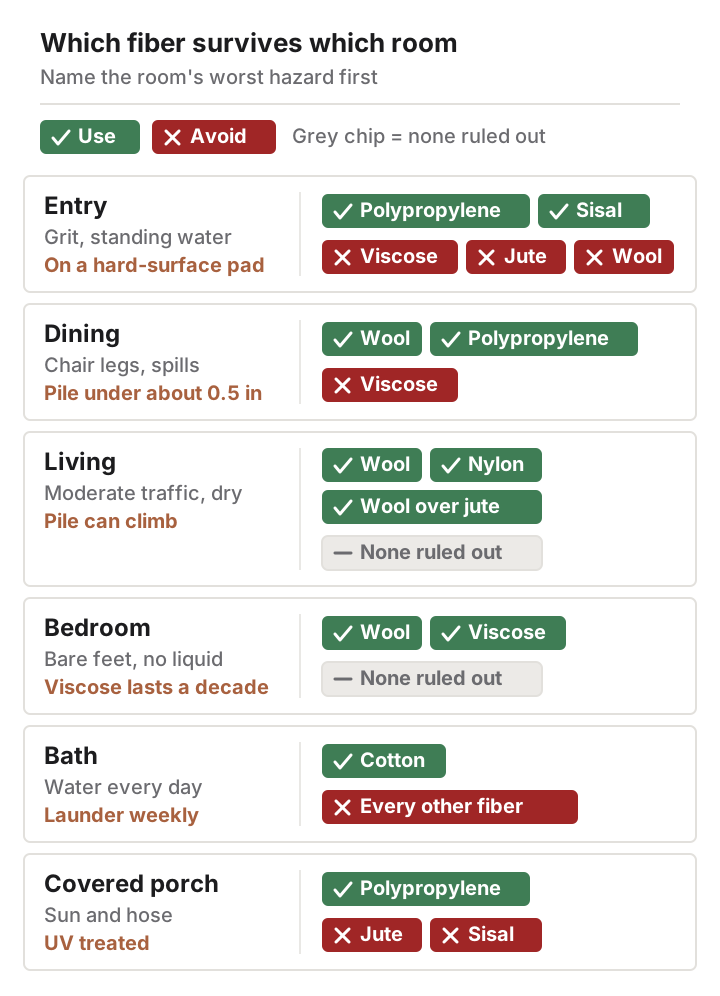
Entries take grit and standing water, so the fiber has to tolerate both: a polypropylene flatweave or a sisal runner over a hard-surface pad. Dining rooms need a pile under about half an inch so chairs slide, plus a fiber that forgives a dropped sauce, which puts low-pile wool and polypropylene ahead of everything else.
Living rooms are the only place with real freedom, since traffic is moderate and water is rare. Wool, wool-over-jute, and nylon all work, and pile height can climb because nothing has to roll across it. Bedrooms are the one room where viscose is defensible: bare feet, no shoes, no liquid.
Bathrooms rule out every fiber on this list except cotton you can launder weekly. Covered porches invert the logic entirely: UV-treated polypropylene handles the sun and the hose, while jute and sisal will hold humidity and mildew in place.
Fiber First, Construction Second, Color Third
The rule that falls out of all of this is a sequence, and the sequence is not negotiable. Name the room’s worst hazard first, whether that is standing water, chair legs, grit, or sun, and eliminate every fiber that fails it. Only then choose construction, matching hand-knotted, tufted, machine-woven, or flatweave to the traffic and the budget the surviving fibers allow.
Color comes third, chosen from what is left. Working in that order costs you some options and no rugs; working in reverse produces a viscose runner in a hallway, which is a purchase that fails on the first wet day.