How to Get the Scandinavian Bedroom Look Without the Minimalist Guilt
Scandinavian bedroom ideas that feel cozy, not cold. Add warmth and texture while keeping that clean Nordic style you love.
My sister called me last spring in a mild panic. She'd just moved into a new apartment and fallen hard for Scandinavian design after scrolling Instagram for about forty-five minutes. Crisp white walls, light wood, clean lines. It looked perfect. But then she realized something: every room she pinned looked like nobody actually lived there. No books stacked on nightstands. No plants that had maybe seen better days. No throw blankets that were, frankly, a little rumpled from use.
"Maya," she said, "how do I make this look feel like home and not a hotel?"
That's the thing about Scandinavian bedroom design that nobody talks about. It's got this reputation for being cold and minimal, like you're supposed to own exactly seventeen things and feel grateful. The truth? Real Scandinavian style is cozy. It's warm. It's just done with intention. You can absolutely have a bedroom that feels calm and organized while also looking like a person who actually lives there. You don't need to choose between minimalist guilt and comfort.
You Don't Need to Ditch Your Stuff
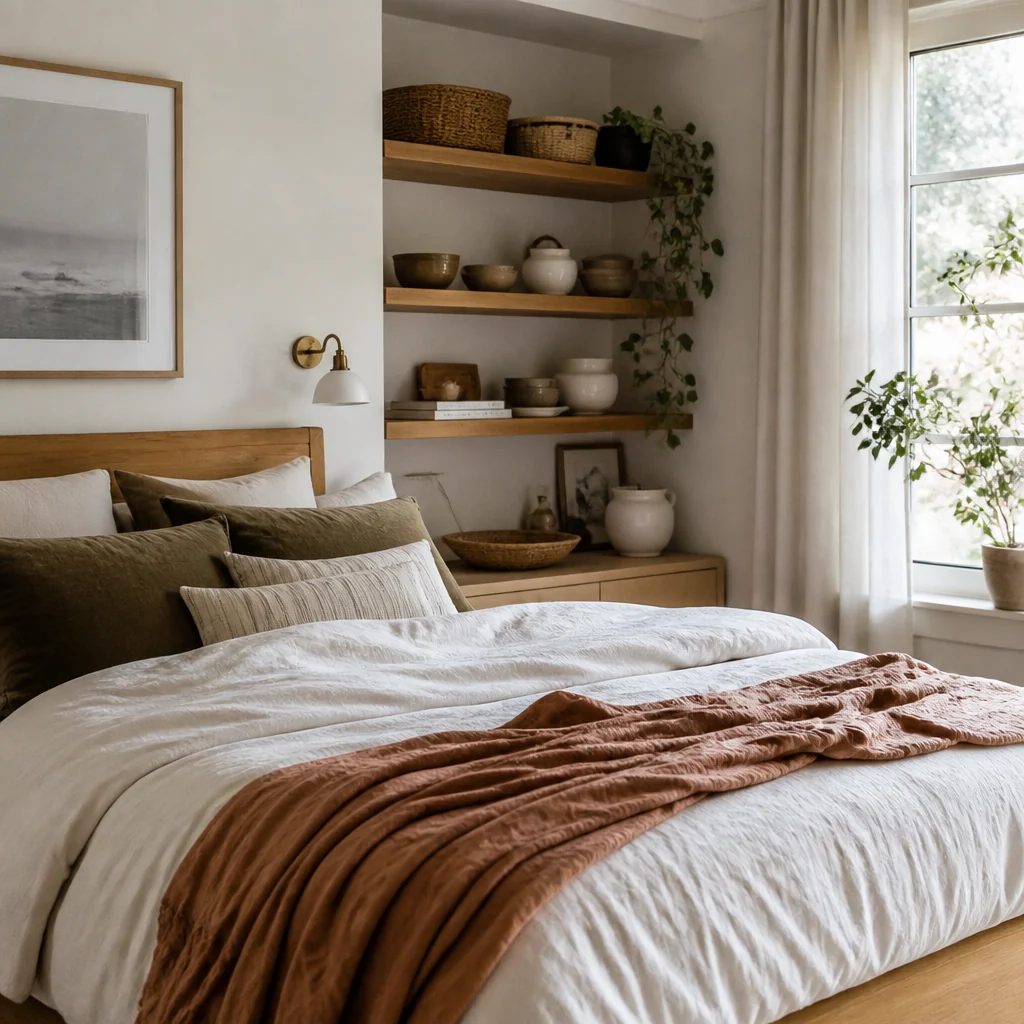
Scandinavian design isn't about owning nothing. It's about choosing what you bring in and giving it a home. This was the biggest shift for my sister's thinking. She thought she'd need to throw out half her belongings, but what she really needed was a system.
Start by sorting what's actually in your bedroom right now. Things you use daily, things that make you happy, things that feel cluttered. Most designers I follow say the key is visibility and purpose. A messy closet stuffed with clothes doesn't look Scandinavian. Open shelves with neatly folded sweaters do. You're not minimalist if you're hiding clutter. You're just hiding it.
My sister kept about sixty percent of what she owned and gave away the rest. She wasn't being ruthless for its own sake. She was being honest about what she actually reached for, what fit her current life, and what just took up mental space.
The payoff? Her bedroom became calm because it wasn't full of decision fatigue.
Light Wood and White Walls Are a Start, Not the Whole Story
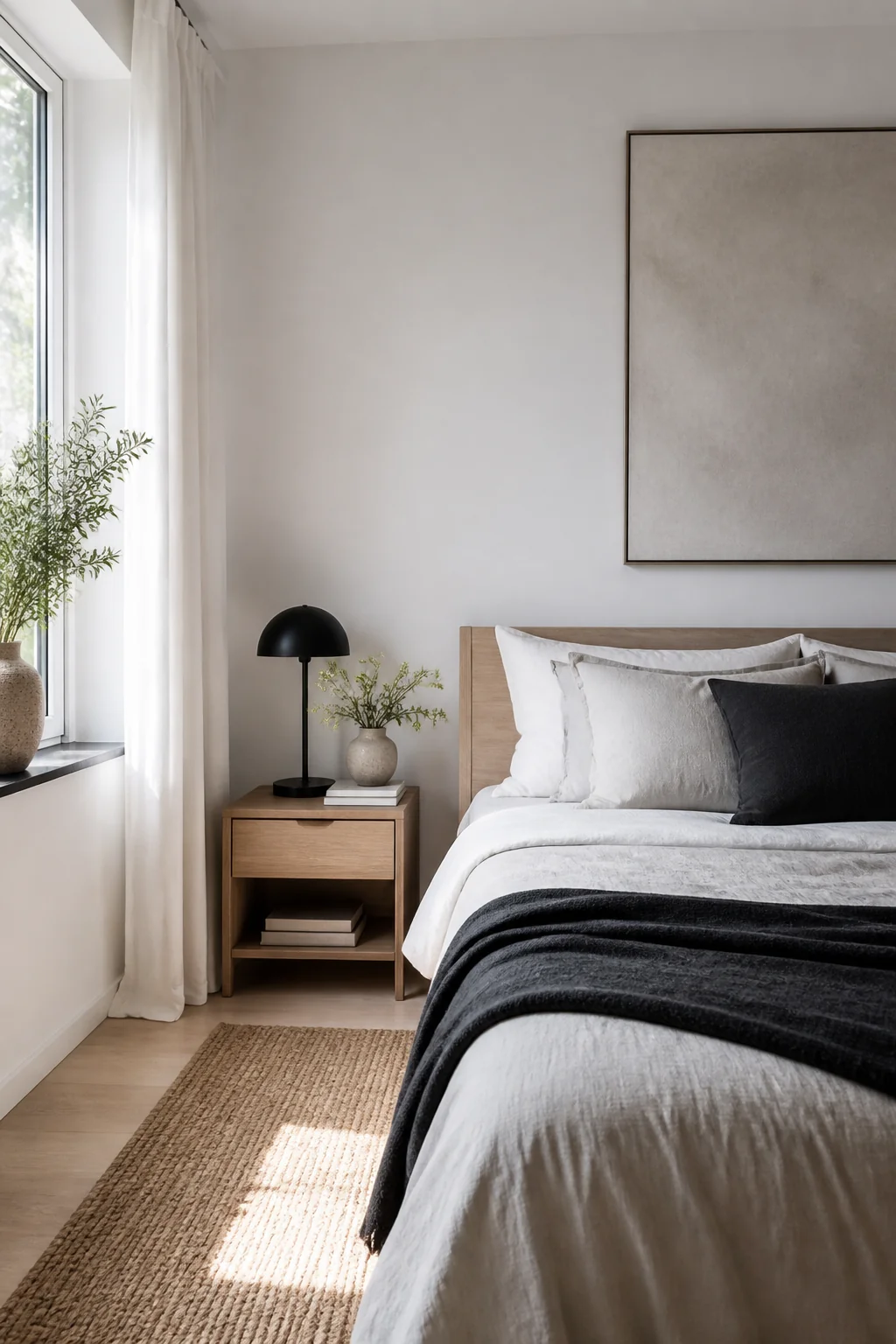
Here's where color comes in. Scandinavian rooms don't have to be white or beige. They can be. But they don't have to be.
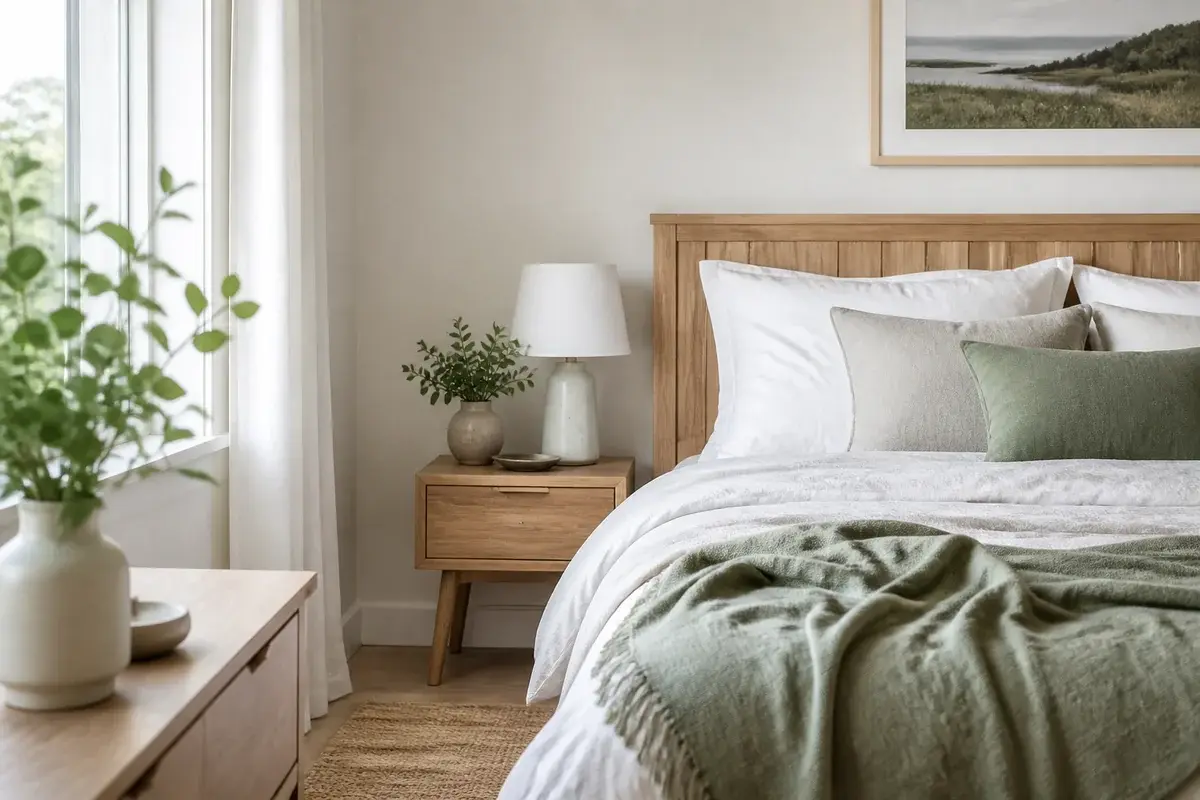
Think soft, muted tones. Warm grays. Soft sage. Even a pale blue that feels clean but not cold. One wall painted in a gentle color creates visual interest without breaking the aesthetic. My sister painted one wall a soft dove gray and suddenly the room had depth. It wasn't stark anymore.
For wood, light oak or birch is classic. But don't stress if you don't have money for new furniture. Paint what you have. A darker wood nightstand painted soft white ($30 in paint and a Saturday afternoon) fits right into the look. Scandinavian design values quality and intention, not brand new everything.
Texture Actually Matters More Than You Think
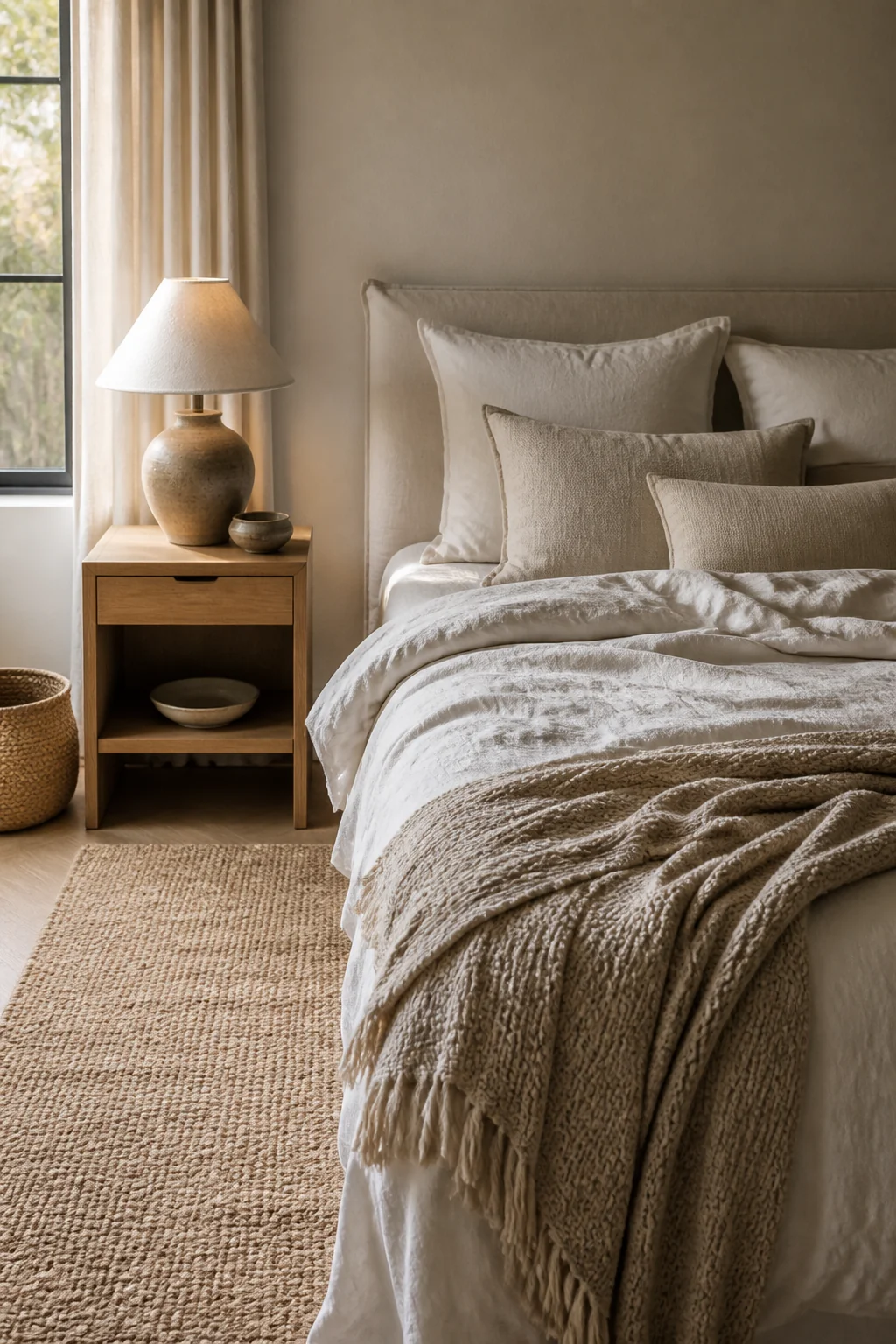
This is where the coziness lives. Scandinavian rooms that feel cold are missing layers of texture.
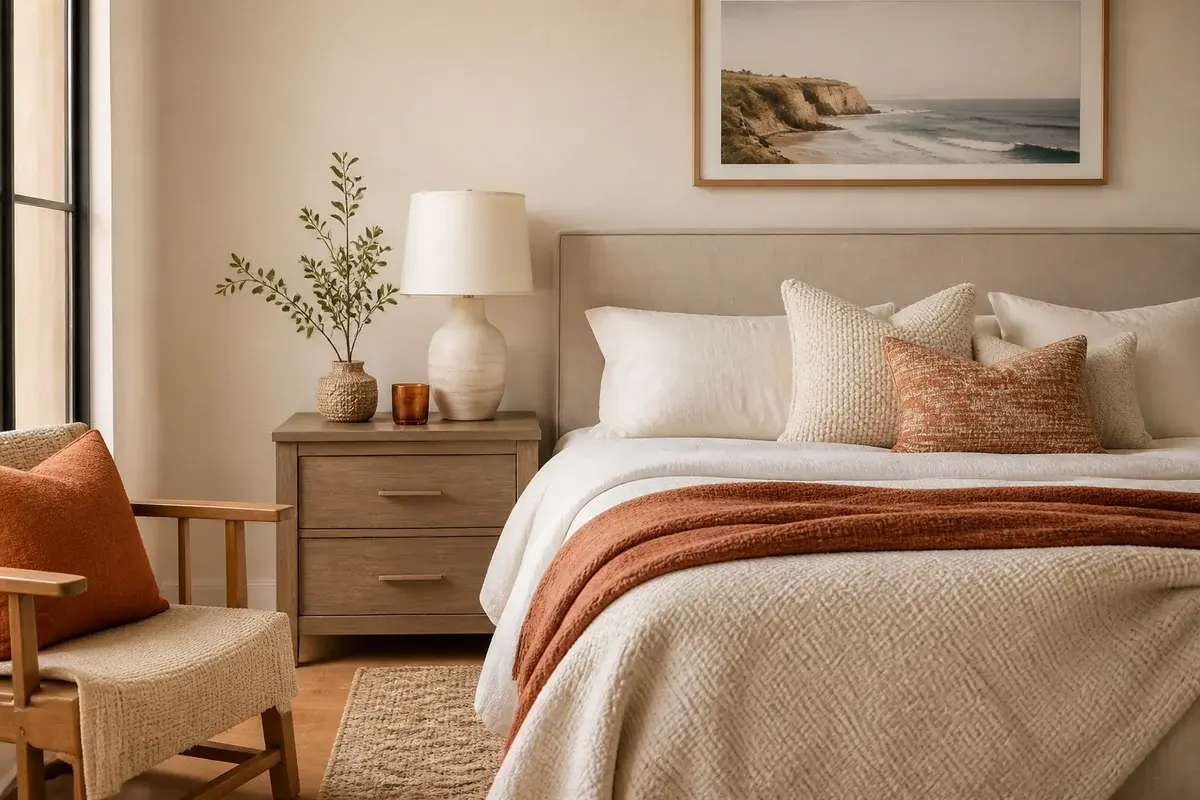
Add a linen bedspread in cream or soft white. Layer it with a chunky knit throw in gray or natural wool. A sheepskin rug next to the bed (or a faux sheepskin if that's your vibe) changes everything. Seriously, this changed everything for my sister. Suddenly it wasn't austere. It was inviting.
A few pieces of ceramic or stoneware on the nightstand. Natural fiber baskets under the bed or in the corner for blanket storage. A woven wall hanging that's subtle and neutral. These textures make the room feel human. They give it warmth that white walls alone never can.
Plants Break Up the Minimalism Without Ruining It
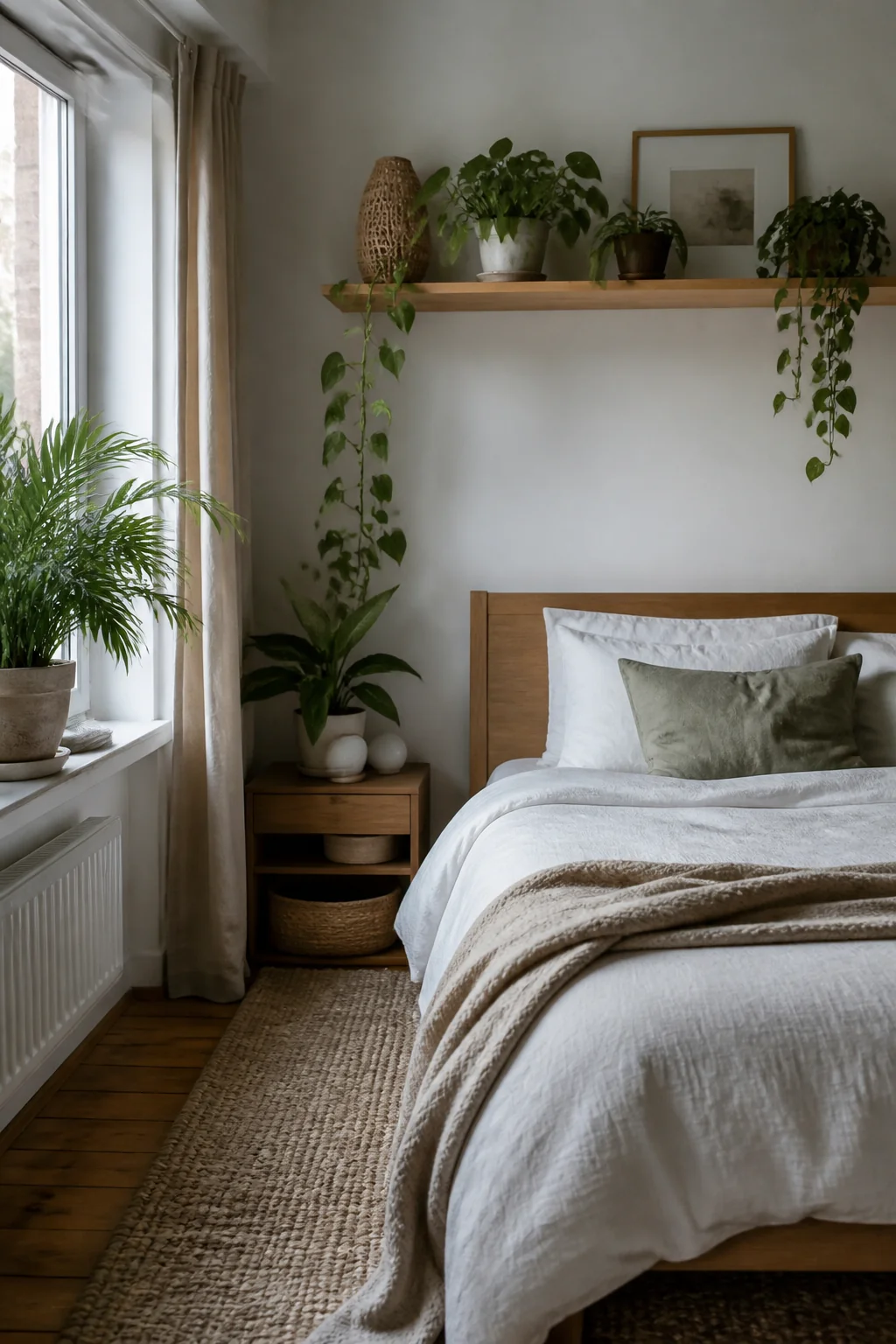
You know how some Scandinavian rooms look like they're waiting for people to live in them? Plants fix that instantly.
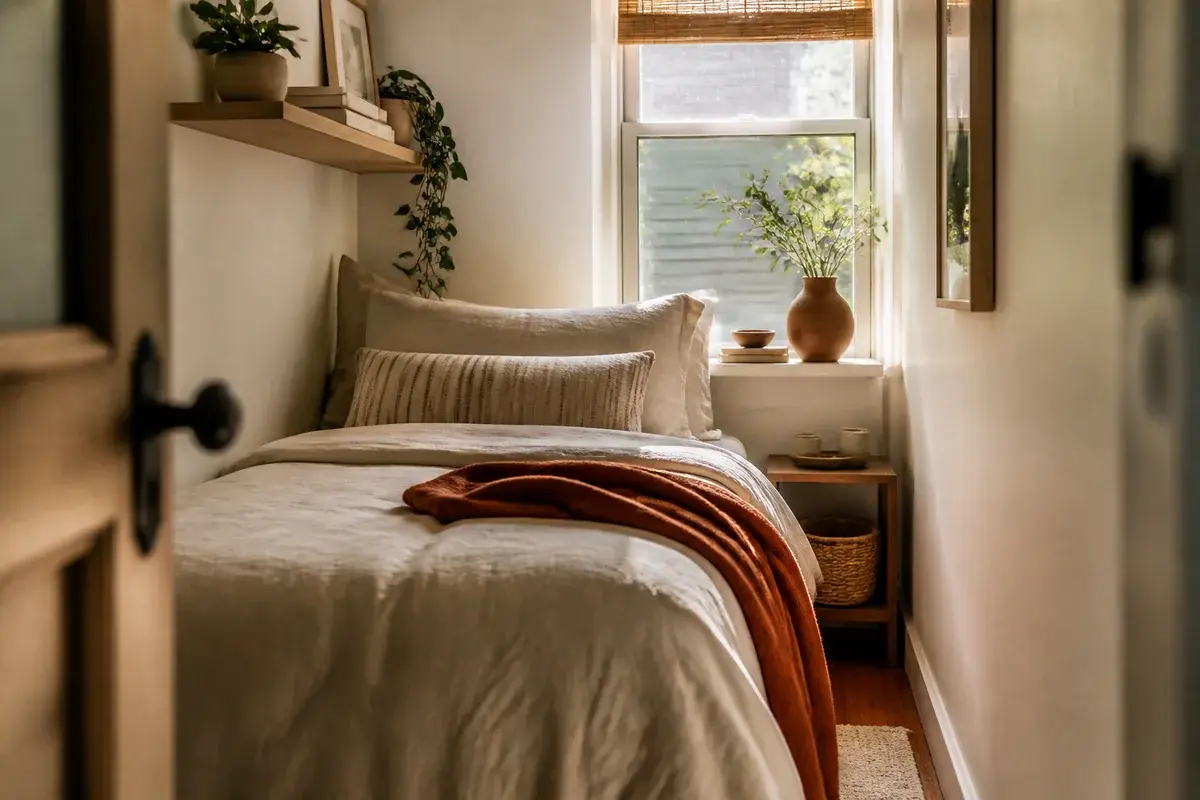
A tall fiddle leaf fig in one corner. A few pothos on the windowsill. Trailing plants from a high shelf. They're living things, so they feel organic and real. They also soften hard lines and add that natural element that Scandinavian design loves. If you can't keep plants alive, faux ones in ceramic pots work fine. I won't judge.
My sister bought three plants for about $40 total and placed them strategically. They weren't crowded or cluttered. Just three thoughtful spots. Suddenly the room had life without feeling chaotic.
Lighting Changes Everything About How the Room Feels
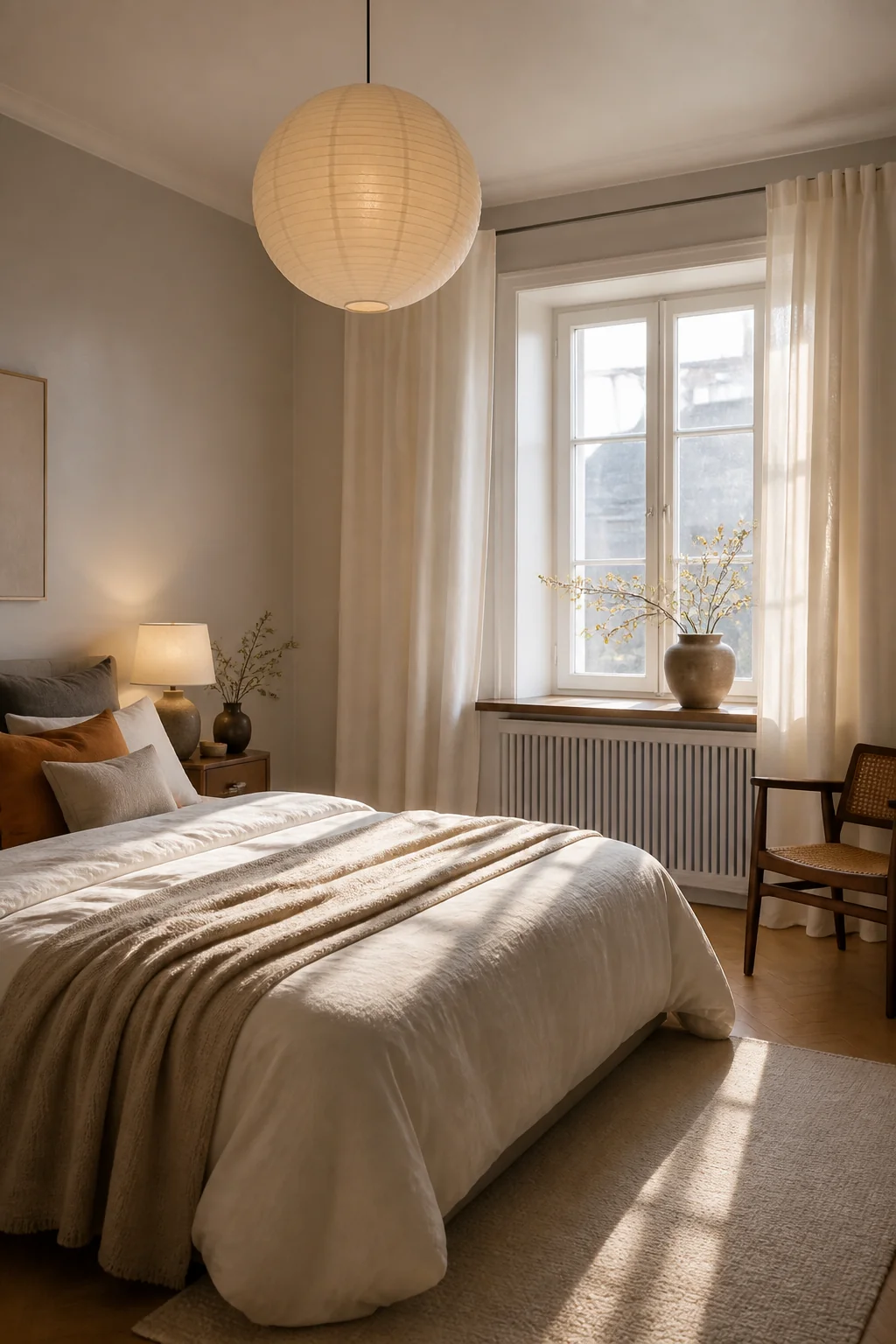
This is non-negotiable. Overhead lighting ruins Scandinavian vibes.
A simple pendant light or two above the bed works. A bedside lamp with a linen shade. A small string of warm white lights (not the cold white ones) tucked along a shelf. These create layers of light so you can adjust the mood. Bright and clean during the day. Soft and cozy at night.
My sister ditched her harsh ceiling light and added two adjustable wall sconces. Cost her about $65 total. She says it's the most noticeable change because now her bedroom actually feels like a place she wants to spend time in, not just a room where she sleeps.
The Nightstand Matters
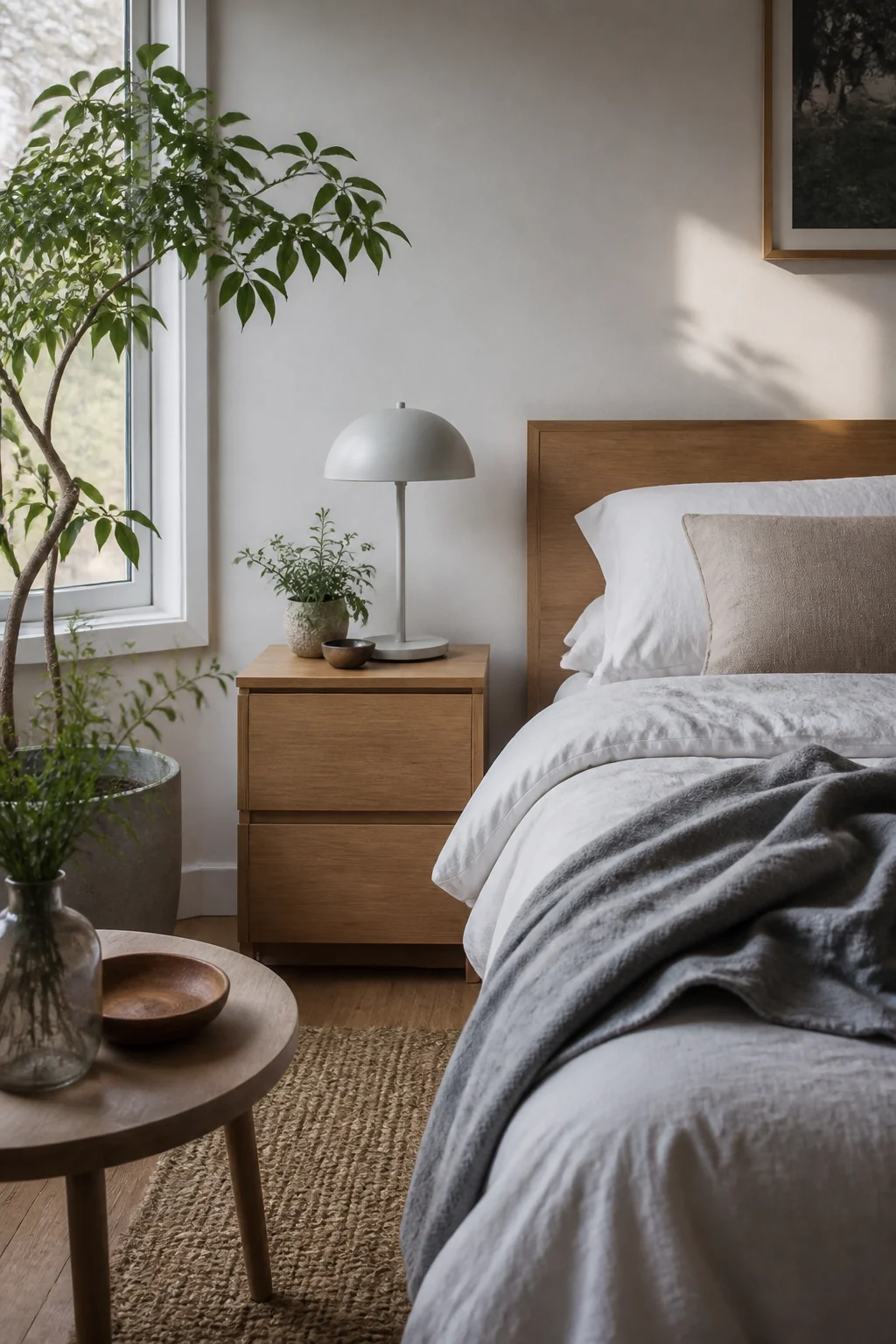
I'm serious about this one. Your nightstand tells the whole story.
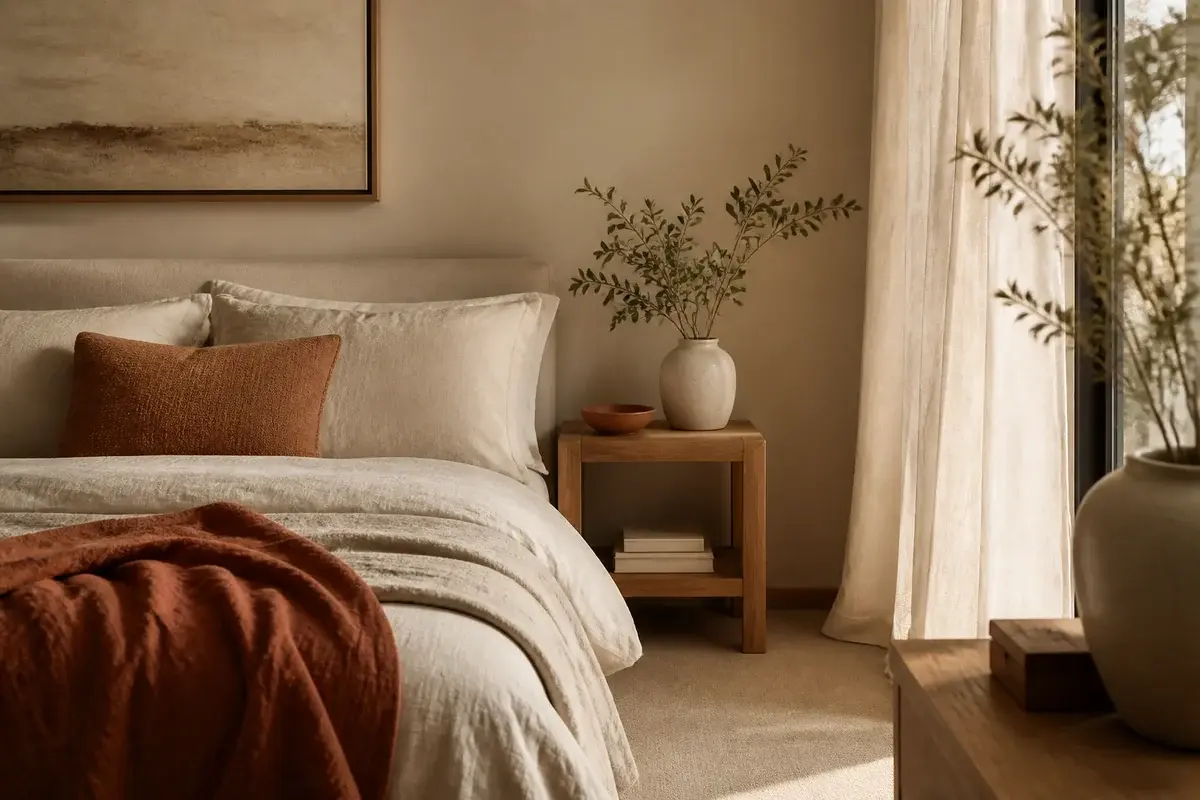
A simple wooden table with open space underneath. A small lamp. Maybe a ceramic dish for keys or jewelry. A small stack of books if you actually read in bed. A plant in a simple pot. That's it. Scandinavian design is about restraint, but restraint with intention. A messy nightstand with seventeen bottles and papers everywhere reads as chaotic. Three items selected thoughtfully reads as curated.
My sister moved her nightstand away from the wall slightly to give the space around it breathing room. Sounds small, but it visually opens up the whole corner.
Window Treatments Don't Need to Be Complicated
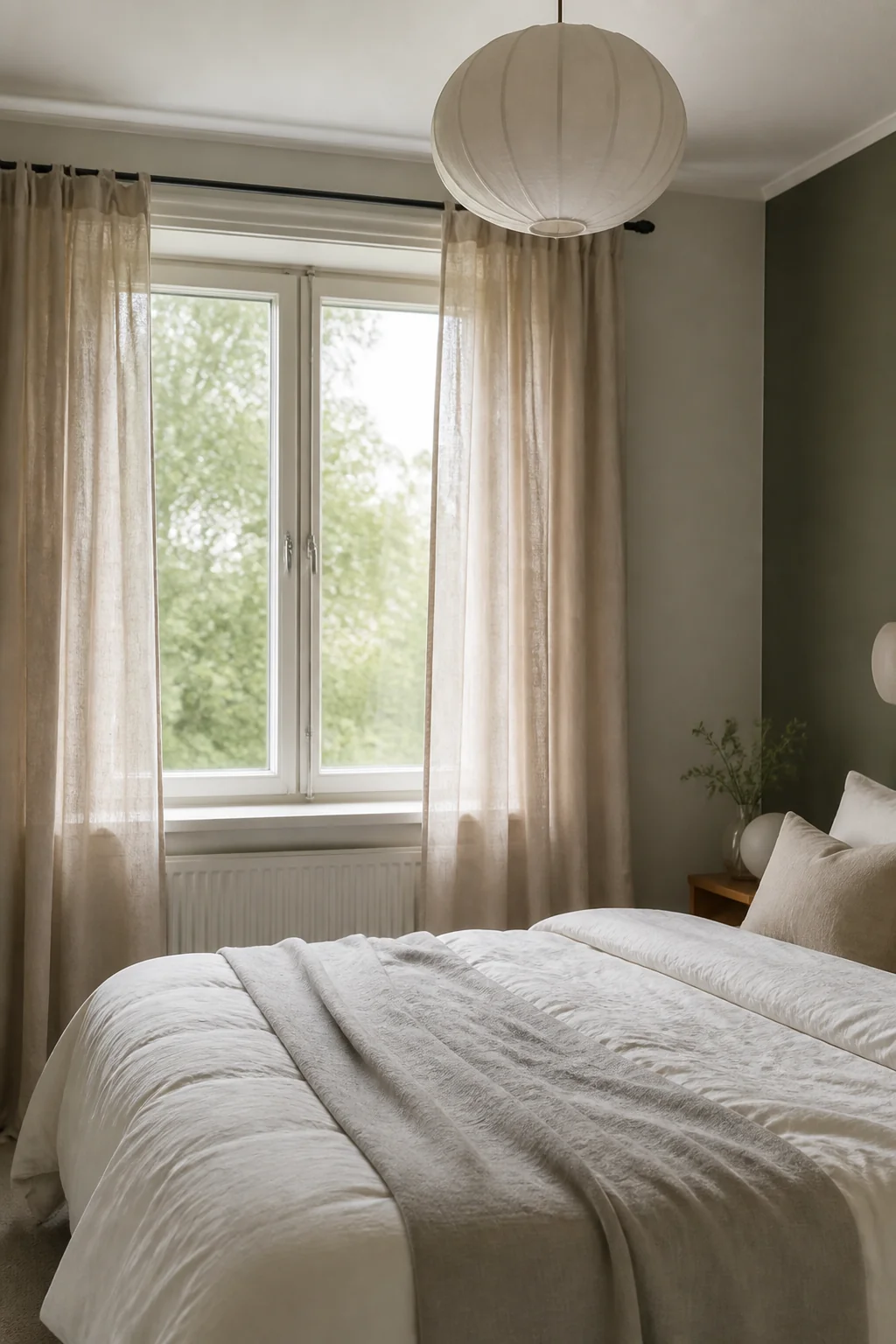
Simple curtains in white, cream, or light gray. That's honestly the move.
You want fabric that filters light softly, not blackout curtains. Scandinavian rooms feel bright and airy. Heavy drapes block that feeling. Natural linen or a linen-cotton blend hangs beautifully and costs about $25 to $40 per panel at most places. They don't need ruffles or complicated hardware. A clean rod, simple panels, done.
If your windows face a busy street and you need privacy, use roll shades in a solid color underneath simple curtains. You get the look and the function.
The secret is that Scandinavian design works because it's honest about what a room actually needs.
You need light. You need comfort. You need to feel like your space is yours. Everything else is extra. My sister's bedroom took about six weeks to fully come together, and she probably spent less than $800 on everything combined. Some of that was paint, some was new pieces, some was rearranging what she already had.
Start with one thing today: paint your nightstands white or soft gray, add a linen throw to your bed, or swap your overhead light for something warmer. Just one thing. See how it shifts the whole room. That's how Scandinavian design actually works. It's not about perfection. It's about intention, one choice at a time.
Save the full guide
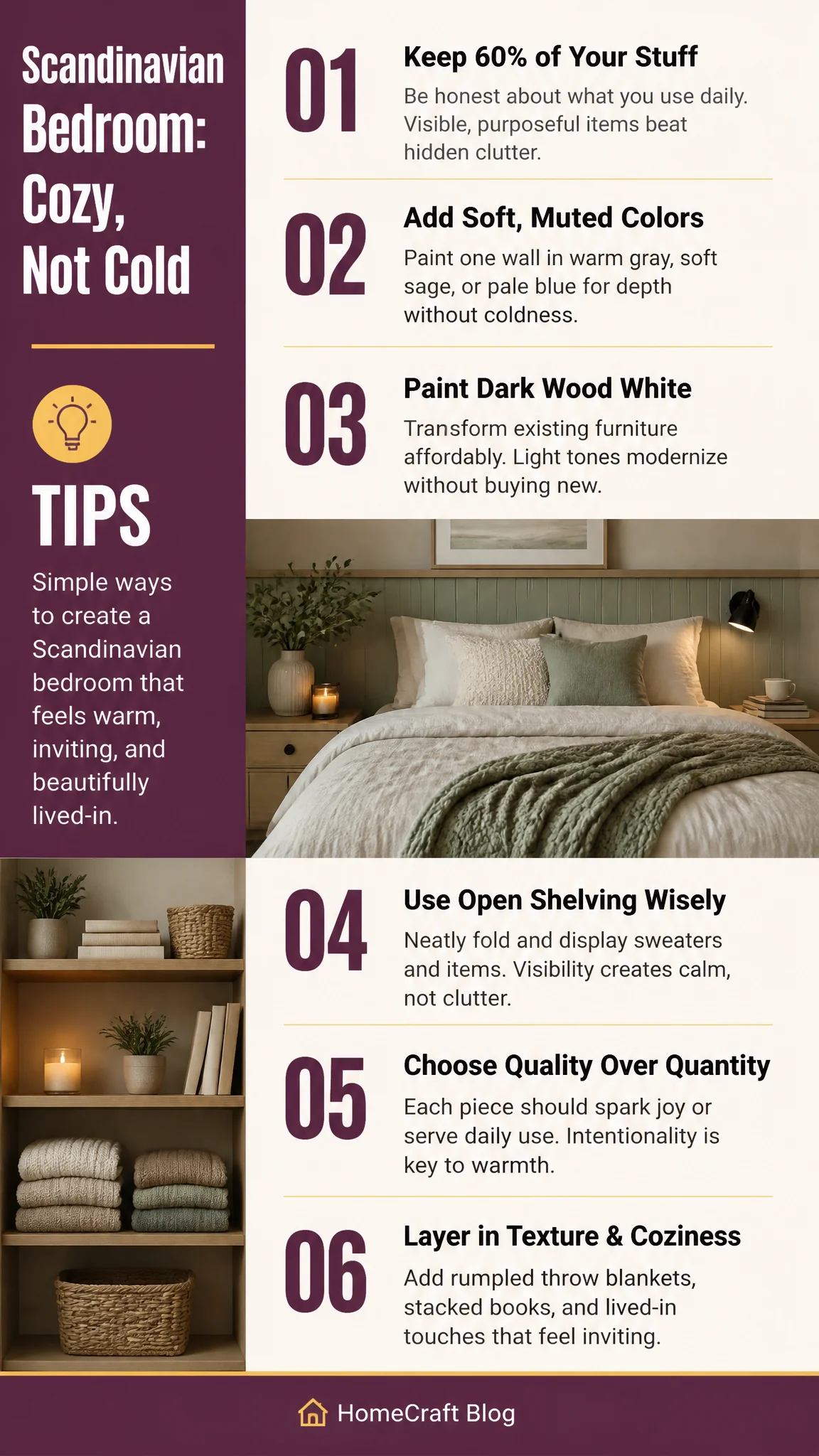
Save this for later if you're planning a bedroom refresh.