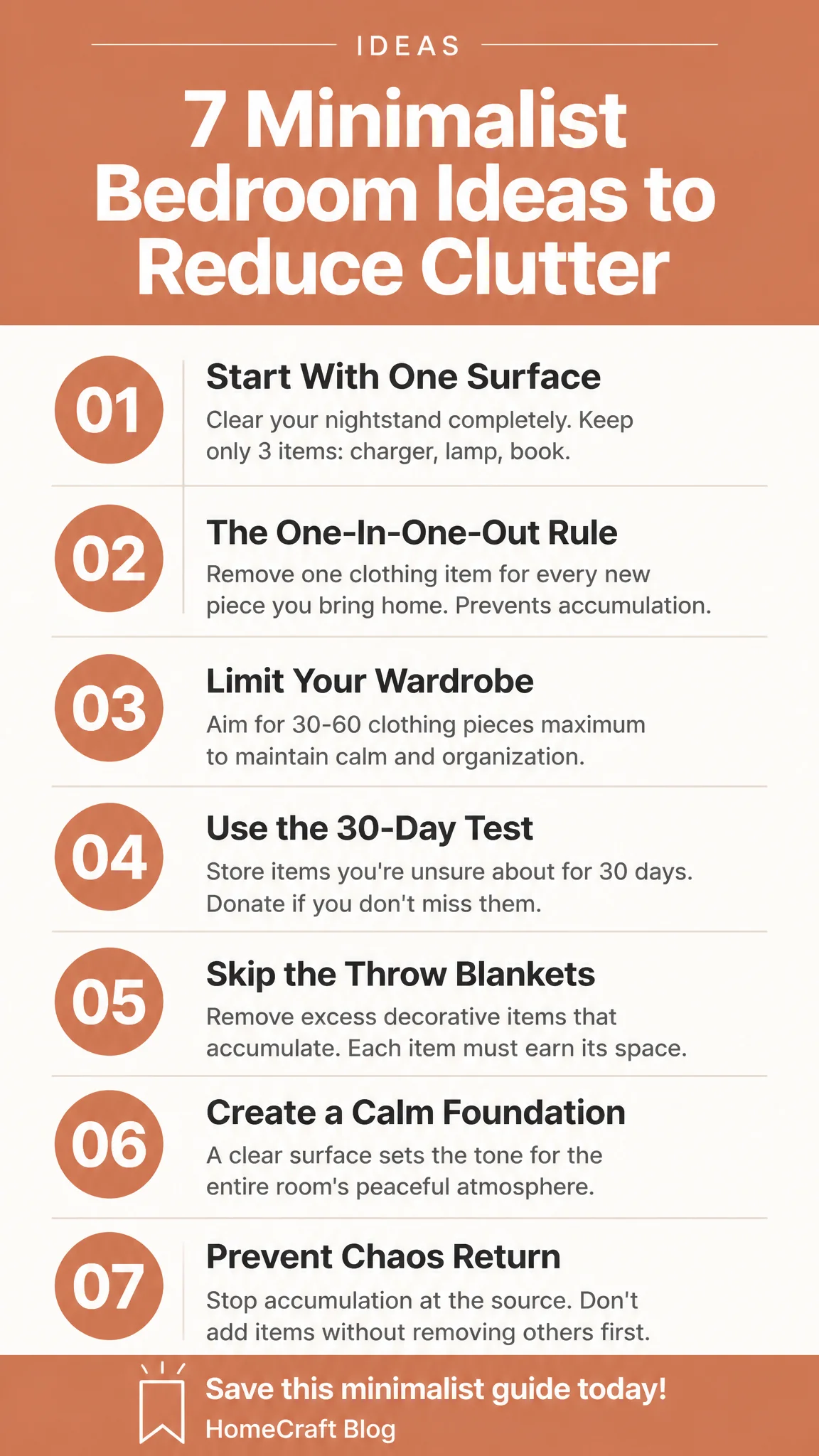
7 Minimalist Bedroom Ideas That Actually Reduce Clutter
7 Minimalist Bedroom Ideas That Actually Reduce Clutter
I stood in my bedroom at 10 PM last spring, staring at three different throw blankets draped over my chair, a dresser so cluttered I couldn't find matching socks, and a nightstand that looked like a storage unit exploded on it. My husband walked in, took one look, and said, "This doesn't feel like a bedroom anymore." He was right. I'd collected so much stuff over the years that the room felt anxious instead of peaceful.
That night, I started researching minimalist bedroom design, not the sterile, cold Instagram kind, but the real, livable kind. The kind where you actually want to spend time. Over the next six months, I completely reimagined our bedroom using strategies that stuck. No complicated systems. No perfectionism. Just practical changes that made our space feel like a sanctuary again.
Here's what actually worked for me (and what I'm sharing with you today).
Start With One Surface, Seriously, This Works
Pick your nightstand. That's it. Don't try to overhaul your entire bedroom in one weekend because you'll burn out and give up. I learned that the hard way after attempting to minimize everything at once, only to end up putting stuff back because I felt overwhelmed.
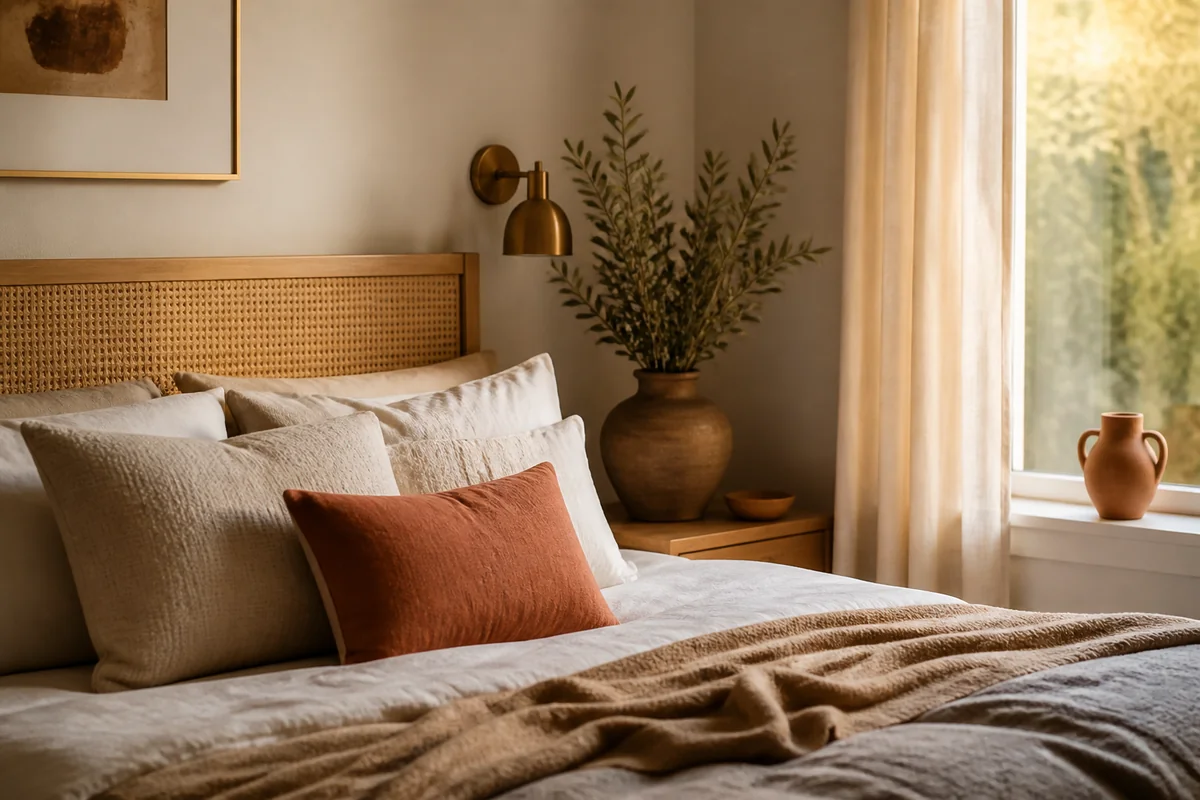
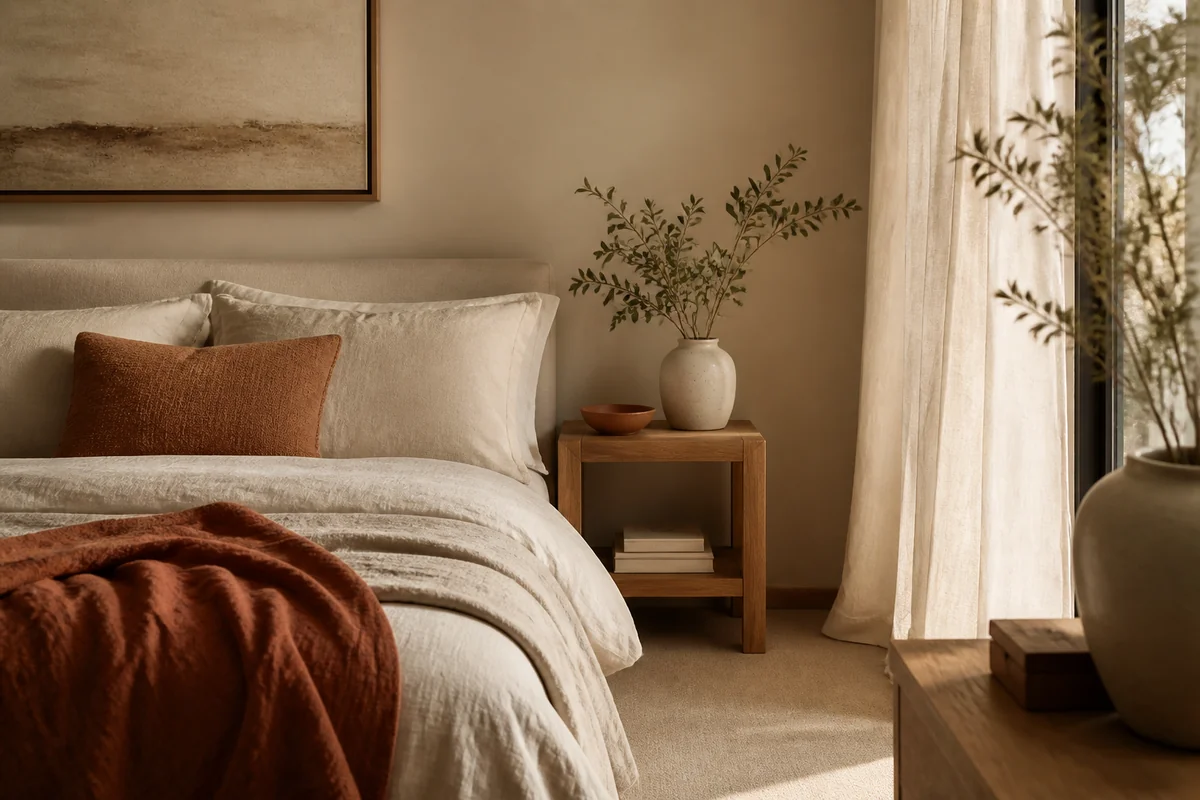
Your nightstand is perfect because you see it every single day. When it's clear and calm, it sets the tone for your whole room. I cleared mine completely and now I keep just three things: my phone charger, a lamp, and one book I'm currently reading. Sometimes a glass of water, depending on the night. That's it.
Before I did this, I had seven things on that surface. A candle. A journal I never opened. Two pairs of glasses. Chapstick. Receipts. A random pen. My brain was exhausted just looking at it (seriously, this changed everything). When I removed all of that, something shifted. The room felt bigger. Quieter.
Start there this week. Pick one surface and clear it completely. Put everything else in a box and store it somewhere else for 30 days. If you don't miss it, donate it.
The One-In-One-Out Rule for Clothes
This is the rule that actually keeps clutter from sneaking back.
Every time you bring a new piece of clothing into your bedroom, one piece has to leave. Donate it, sell it, or give it to a friend. But it has to go.
Most designers I follow say that minimalist closets have between 30-50 items max, but honestly? I'm not that strict. I have around 60 pieces, and my bedroom stays calm. The key isn't hitting a magic number, it's preventing accumulation. Because accumulation is what turns bedrooms into chaotic spaces again.
I used to buy something new and just... Add it to the pile.
My dresser drawers overflowed. My closet rod bent under the weight. Now when I see something I love in a store, I think about what I'd be removing. Nine times out of ten, that pauses me long enough to realize I don't actually need it.
It sounds restrictive, but it feels freeing.
Create a "Donation Box" You Can Live With
Keep a pretty basket or box in your closet, somewhere visible but not in your main living space. When you try something on and it doesn't feel right, or you remember you haven't worn something in a year, it goes straight in the box.
Don't make yourself feel guilty about it.
I used to keep clothes for years thinking "I might wear this again" or "This cost money." That guilt kept me trapped. Now I see it differently: if something isn't serving me right now, it's taking up space that could serve me better. Those clothes might serve someone else beautifully. That's better than them gathering dust in my room while I feel anxious about the clutter.
When the box is full, I donate everything at once. I don't overthink it.
Go Vertical With Storage, Walls Are Your Secret Weapon
Here's something I realized: my bedroom felt cluttered because everything was sitting on surfaces. Dressers, nightstands, the floor. But my walls? Mostly bare.
I added two floating shelves above my dresser (they cost about $40 total, and my brother-in-law installed them for tacos). Now I keep a few meaningful items there instead of random stuff on the dresser itself. A small plant. A couple of books. A framed photo from our wedding. The dresser top is almost completely clear now.
If shelves aren't your thing, wall hooks work too.
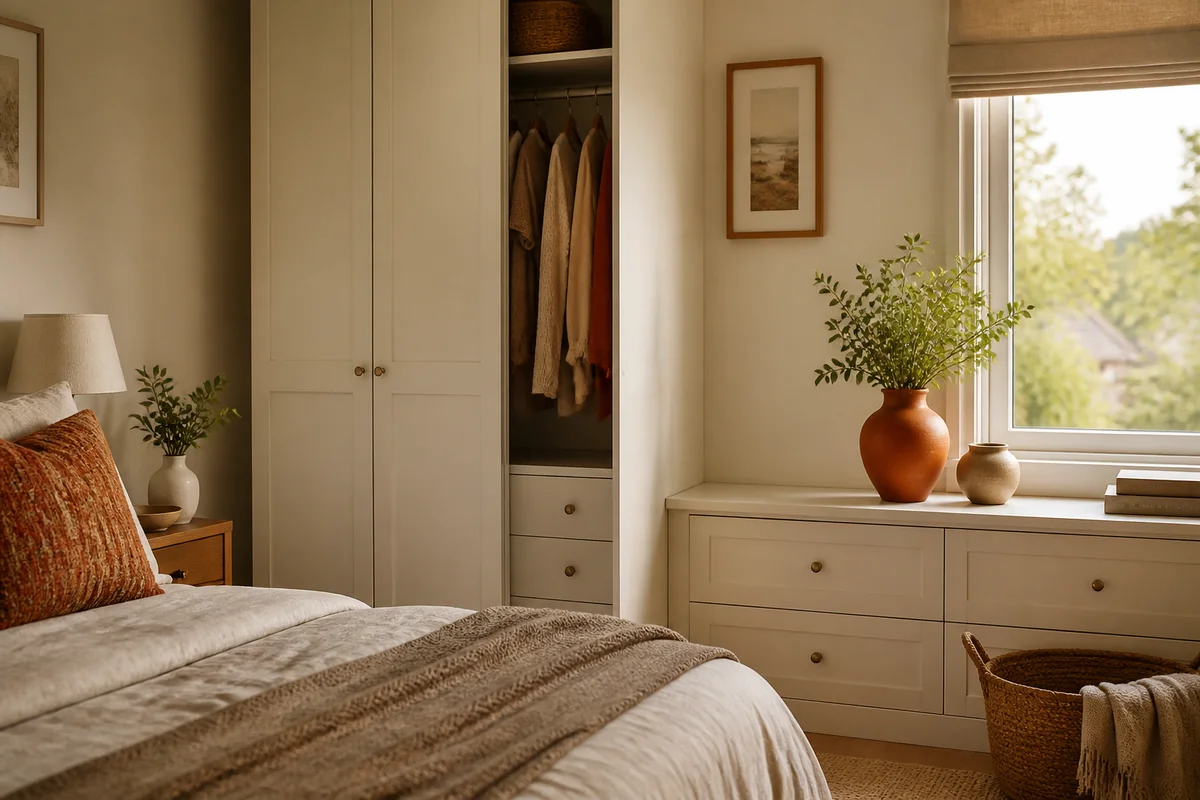
I added a simple wooden hook on the wall by my closet for scarves and belts instead of letting them pile up in drawers. Same idea, get things off surfaces and onto walls. Your floor space feels bigger, your surfaces feel calmer, and honestly? Your room looks more intentional.
Save the full guide
Keep Your Bed Simple, Less Is More Here
This is where I made a rookie mistake.
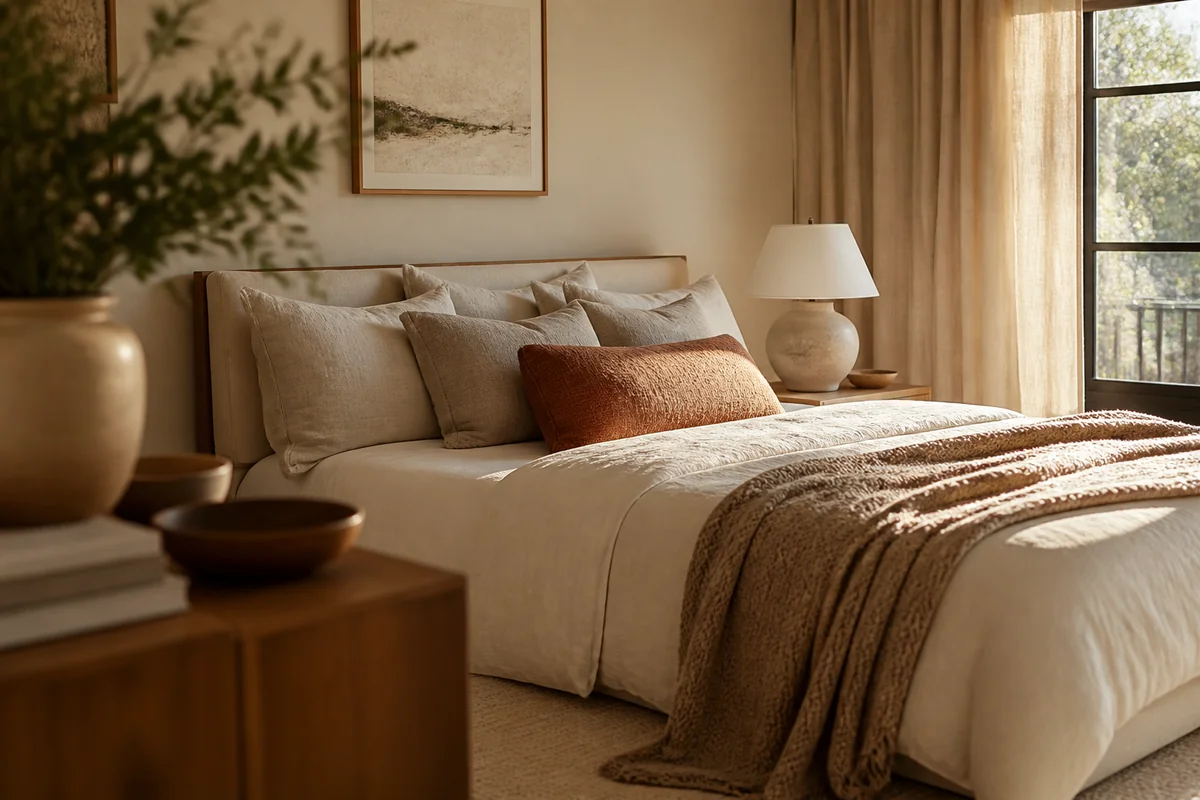
I had this gorgeous bedroom set with a massive upholstered headboard, decorative pillows everywhere, throw blankets, a quilted bedspread, and more pillows stacked on top. It looked pretty in those first few weeks, but then the pillows started living on my floor, the throw blankets collected dust, and making the bed felt like a chore instead of a nice ritual.
Now my bed has exactly four things: a fitted sheet, a flat sheet, a duvet cover, and one pillow for sleeping. That's it.
I traded the decorative pillows for one throw blanket, linen, in a neutral color, that actually folds up and lives in a basket next to my nightstand. When I want it, I grab it. When I don't, it's not creating visual clutter.
Making the bed takes 30 seconds now. It looks clean and intentional. And I actually enjoy doing it, which means I actually do it consistently.
Choose a Real Color Palette (Not Just Beige)
People think minimalist means beige, cream, and white walls. But that's not minimalism, that's just... Boring.
I painted my bedroom a soft sage green. It's calming without being bland. All my other pieces coordinate with it: my bedding is cream and green, my rug is a soft natural fiber, my throw blanket is linen in the same sage tone.
Having a cohesive color palette actually makes it easier to declutter. When you're deciding whether to keep something, ask yourself: "Does this fit my palette?" If it doesn't, it's easier to let it go. Pink decorative items? No. An orange lampshade? Goes in the donation box. A teal throw pillow? Not in this room.
Sound familiar? Have you been keeping stuff just because it's pretty, even though it doesn't match?
The "One Year" Test, Make It Your Rule
If you haven't used something in your bedroom in one full year, it needs to leave. Not "might use someday." Not "this could be useful if..." No. Actual, real use in the past 12 months.
For me that meant letting go of:
- A humidifier I never remembered to use
- A second set of decorative throw pillows
- Three decorative boxes that just sat on my shelf
- A reading lamp that wasn't bright enough anyway
These weren't objectively bad things. They just weren't serving my actual life. And keeping them was taking up mental energy.
Your Action This Week, Pick One Thing
I want you to do one thing before the end of this week: clear your nightstand completely. Put everything in a box. Live with the clear surface for seven days.
I'm guessing you'll feel the difference immediately. If you do, you're ready for the next step, maybe it's tackling your dresser, or doing a real closet edit, or painting that accent wall. But start with the nightstand. Start small.
Minimalism isn't about deprivation. It's about making room for what actually matters. And when you can see your nightstand clearly, you'll understand why that matters so much.
Your bedroom should be your sanctuary, not a storage unit. You deserve to feel calm in that space.
If you found these ideas helpful, save this post or pin it for when you're ready to tackle more rooms. And if you've done a bedroom refresh, I'd love to hear about it, seriously, share in the comments. What made the biggest difference for you?
Need help with other spaces? I've got real strategies for home-office-ideas and bathroom-organization-ideas that work the same way, practical, personal, and actually sustainable.