I Tested 11 Master Bedroom Decor Ideas, Here's What Actually Stuck
I spent last spring standing in my bedroom at 6 AM, coffee in hand, staring at beige walls and a bed frame I'd bought on sale three years ago. My husband walked in and said, "It's fine," which is basically code for "this room has no personality." That's when I realized I'd decorated literally every other room in our Austin home, the kitchen got fresh hardware, the living room got a gallery wall, but our master bedroom? It looked like a hotel room nobody particularly wanted to stay in. So I went a little obsessed. Over six months, I tested eleven different master bedroom decor ideas, and I'm sharing exactly which ones made the cut and which ones ended up at Goodwill. Some cost $15. Others were pure mistakes.
Layered Lighting Changed My Entire Mood
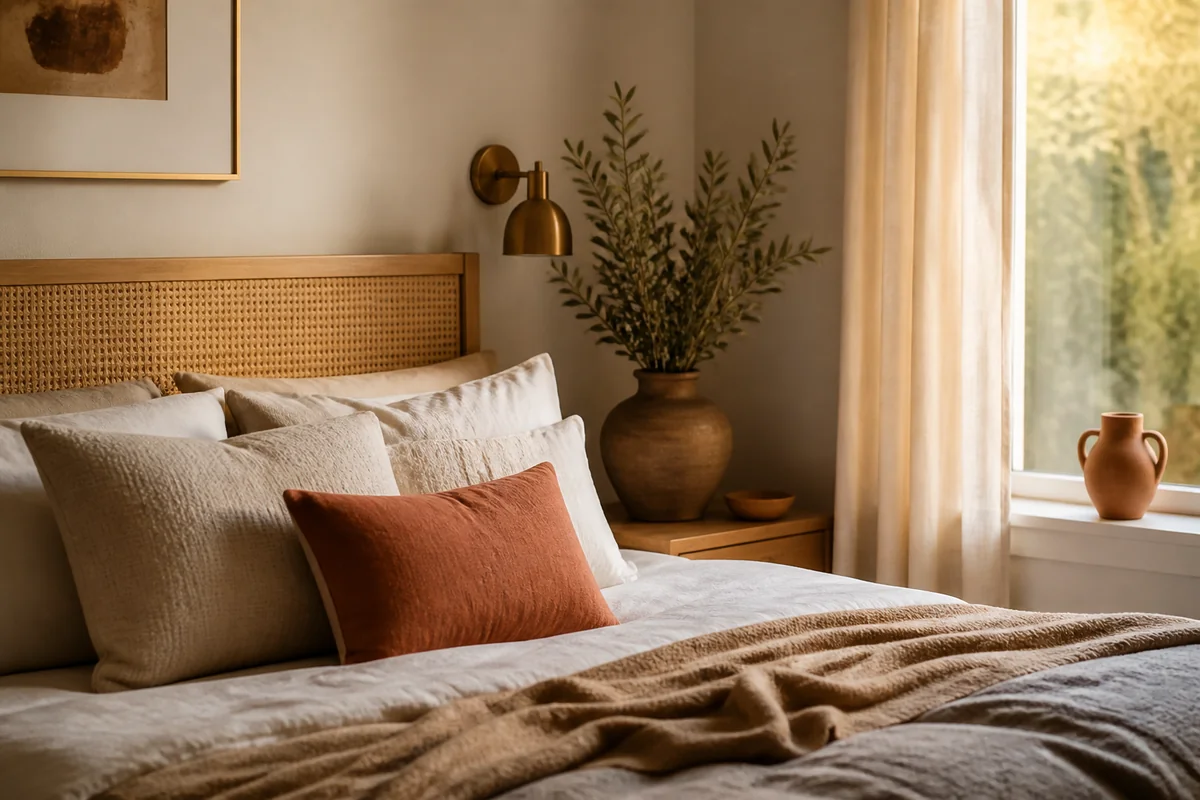
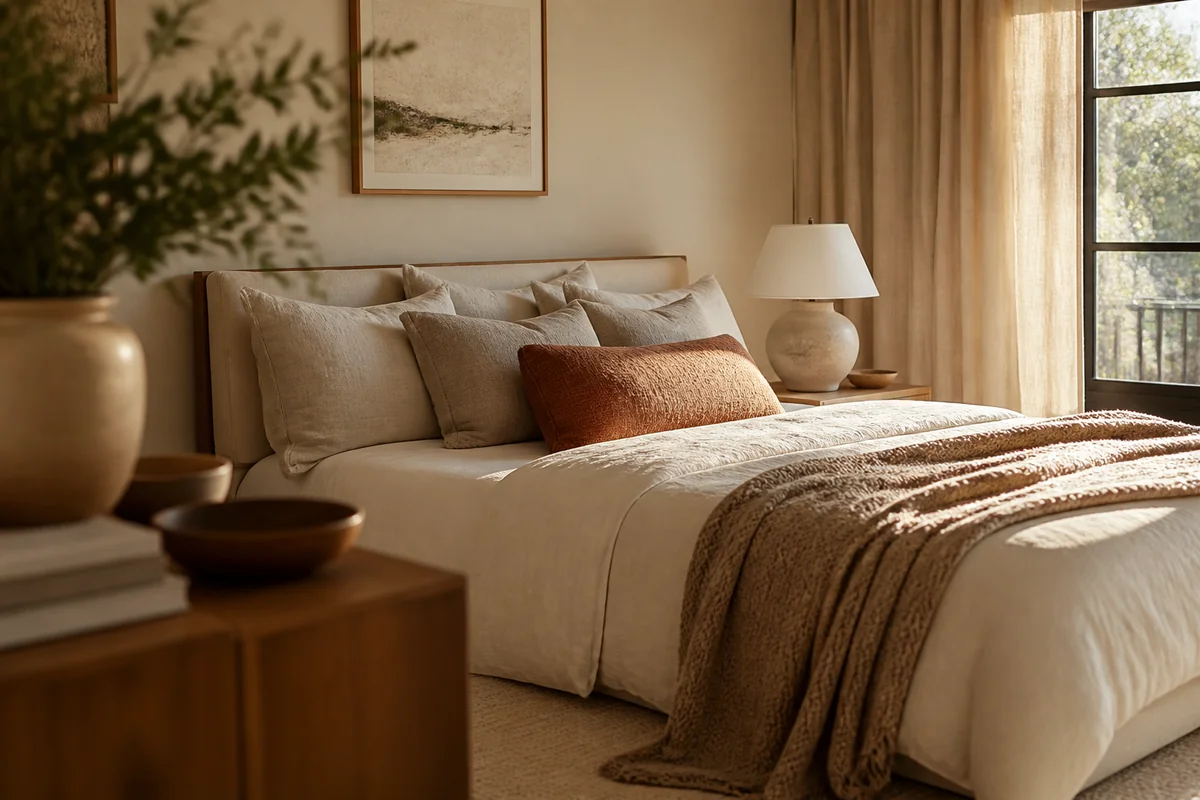
Here's what I learned the hard way: overhead lights are the enemy of a good bedroom. I was using one ceiling fixture, seriously, just one, and wondering why the space felt so institutional. I started adding lamps. A brass floor lamp beside my reading chair. Two matching table lamps on the nightstands (I found them at HomeGoods for $30 each). Then string lights above the headboard, just soft Edison bulbs on a dimmer.
Most designers I follow say you need at least three light sources in a bedroom, and honestly, they're right. The combination of these different heights and warmth made everything feel intentional. When we dimmed everything at night, the room felt like an actual retreat instead of just where we crashed after too much TV.
The total damage? About $120. Worth every penny.
Wall Color Actually Matters (Sorry, Beige)
I painted my walls a dusty sage green. Not the trendy forest green, I'd seen that trend die before the paint dried, but a really soft, almost grayish-green. It took me three weeks to pick the exact color. I brought home seven paint samples and labeled them on swatches taped to my wall. My husband thought I'd lost it.
But that color? It made everything else in the room look better instantly. My white bedding popped. The brass fixtures didn't feel cold anymore. I realized I'd been avoiding changing the walls because beige felt "safe," but safety doesn't feel good when you're trying to sleep.
One coat covered perfectly. I used Benjamin Moore Palladian Blue (yes, I know the name, it's not actually green, but the undertones are incredible). Cost was about $80 for supplies and labor since I hired someone because I absolutely cannot paint straight lines.
A Real Headboard is Worth the Investment
For years, I had nothing behind my bed except a blank wall and some regret. I finally splurged on a linen upholstered headboard from Article, $350 that felt completely excessive at the time. I sat in my living room for a week before clicking purchase. (That's $350 I didn't spend on kitchen decor, so the priorities shifted.)
It completely anchored the bed. Everything felt more intentional. More grown-up. Less like I was still decorating my apartment like I was 24.
The headboard meant I could finally add throw pillows without looking like I was trying too hard. It gave me a focal point. Seriously, this changed everything about how the room photographed and how it felt at night.
Nightstands Don't Have to Match (Mine Don't)
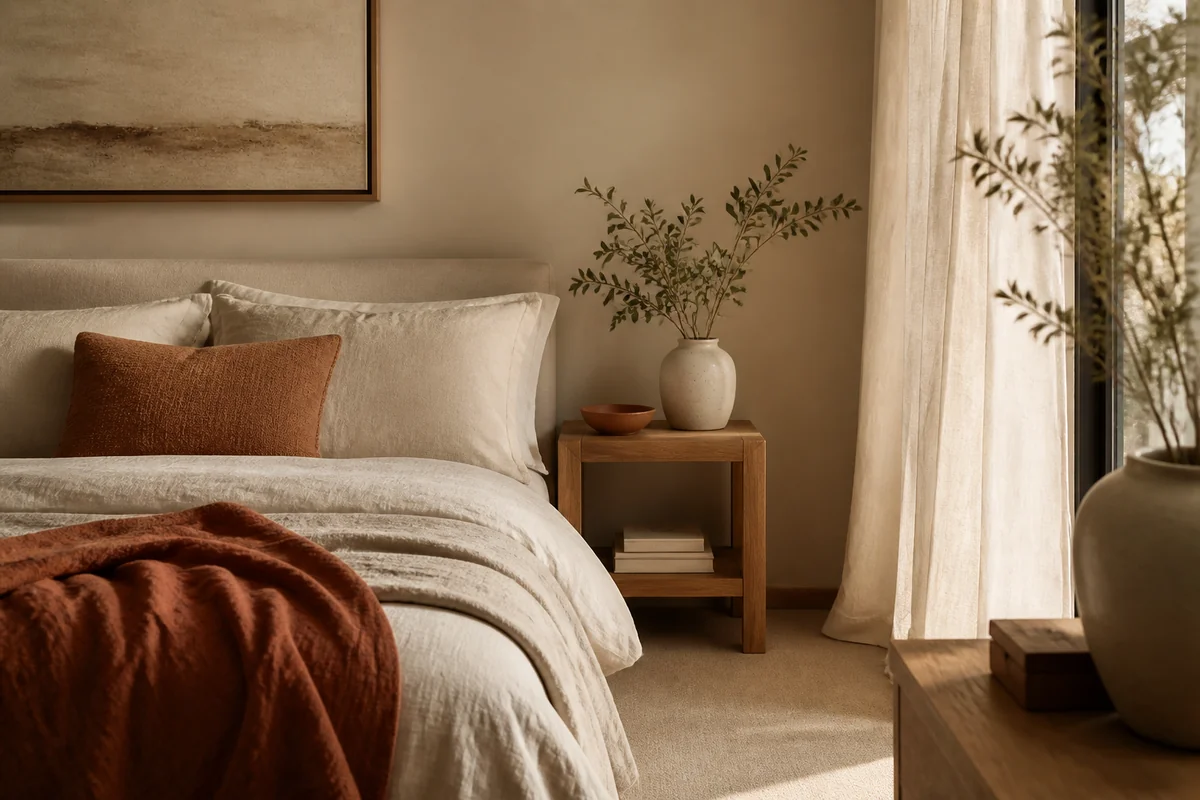
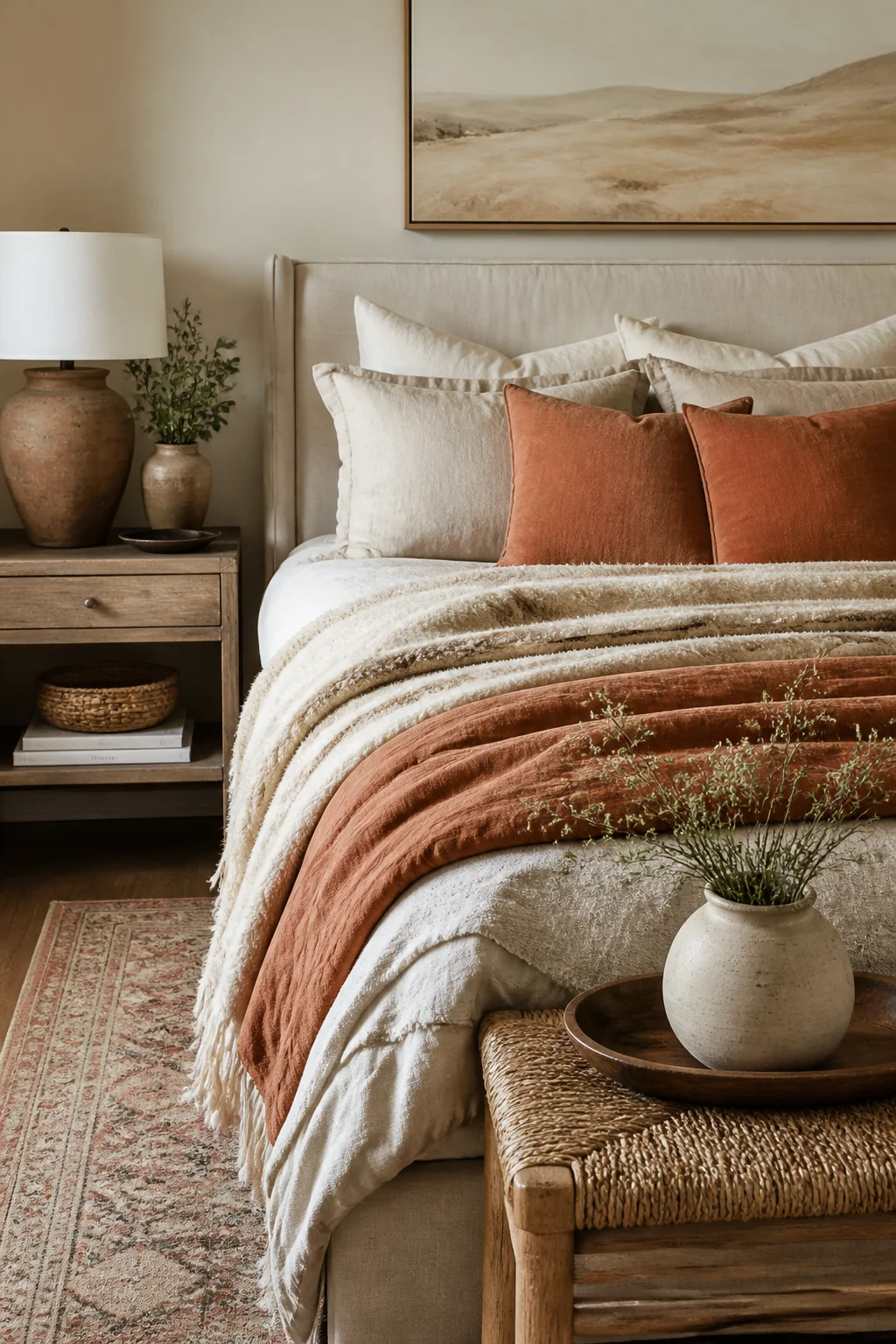
I have a white vintage side table on one side and a small wooden dresser on the other. They're completely different heights and styles. I was certain this would look chaotic until a designer friend pointed out that asymmetrical nightstands feel more collected and personal than matching sets from a furniture store.
She was right. The mix made the space feel less "catalog" and more "I actually live here." Plus, the mismatched setup gave me different storage options. One side has drawers (for the things I don't want visible). The other is open (so my current book and water glass are just sitting there looking intentional, not messy).
This was a happy accident after I realized the nightstand I loved was too tall for the space anyway.
Layering Rugs Sounds Bougie But Works
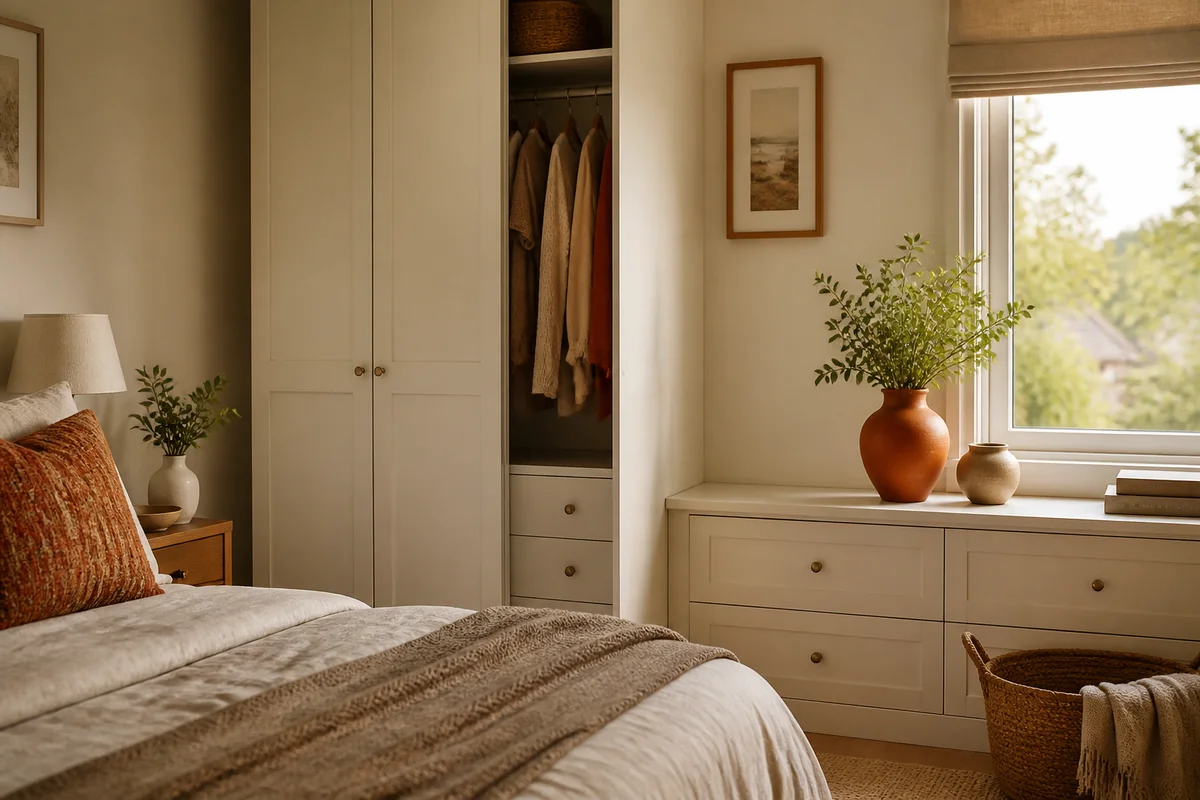
I put a smaller vintage rug on top of a larger jute rug. It cost me about $80 for both (thrifted and on sale). The effect was that the bed didn't feel like it was floating in a sea of hardwood. It created a little zone, a defined space that felt cozy without being cramped.
Most people just have one rug or nothing. Layering them adds dimension and makes the room feel intentionally designed. Plus, if the bottom rug shows wear after a few years, you just replace it without the whole space looking dated.
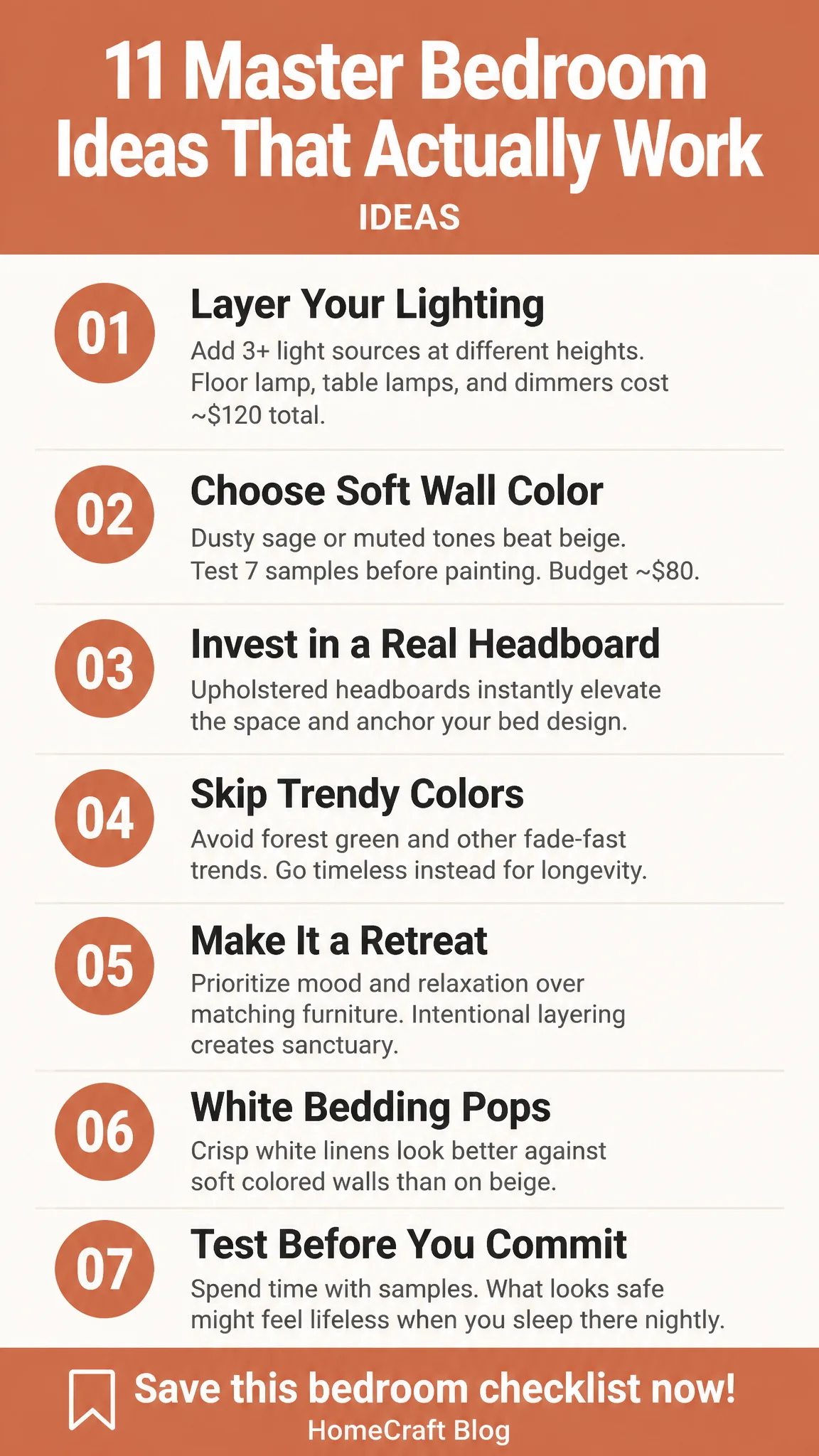
Save the full guide
Window Treatments Actually Frame the View
I hung linen curtains from Article (matching the headboard moment, but I'd started a tab and justified it as a whole-room investment). Before this, I had aluminum blinds that looked like every apartment I've ever rented. The curtains pooled slightly on the floor, very intentional, very "I know what I'm doing."
They're not sheer, so they block light when I need them to. But they're not blackout, so morning sun still comes through. The creamy color ties into the sage green walls without fighting them. This is one of those things where you pay more upfront ($120 for a pair) but they age beautifully and make you feel like a real adult every single time you close them.
One Statement Piece Per Wall
I hung an oversized piece of art above the headboard, a botanical print I found on Etsy for $45. On the wall opposite the bed, I added a wooden floating shelf with books and a small plant. The other walls? Basically empty. This restraint was hard for me because I wanted to fill every surface, but the emptiness is what makes those pieces actually stand out.
Sound familiar? Are you the type who wants to cover every wall, or do you prefer the less-is-more approach?
I learned this works better than any busy collage could. Your eye lands on something specific. You don't feel visually exhausted. And there's room to change things out without the whole room feeling discombobulated.
Fresh Bedding Was Obvious But Necessary
I finally invested in real sheets. Not the cheapest option from Target, but not luxury-brand-that-requires-a-mortgage either. I chose a 300-thread-count set from Brooklinen (about $120 per set), and I actually have two so I can wash one while using the other.
The quality made a genuine difference in how the bed felt. I was actually excited to get into it at night. Before, I'd been using old sheets from college, which is honestly kind of gross when I really think about it. Better sheets meant I was more likely to make the bed in the morning, which meant the whole room looked instantly more put-together.
Small Final Touches (Plants, Books, Candles)
I added a fiddle leaf fig in the corner, it cost $25 and I've nearly killed it twice, but it's thriving now and adds life to the space. A few books stacked on the floating shelf. A good candle burning before bedtime (I use Harlem Candle Company, worth the splurge). A small jewelry dish on one nightstand.
These touches are what make a room feel lived-in instead of decorated. They're personal. They're not perfect. And they're genuinely what makes me want to spend time in there beyond just sleeping.
The real shift happened when I stopped thinking of the bedroom as the last room to decorate and started treating it like the sanctuary it should actually be. You don't need to do everything at once, I spread these ideas across six months because I'm not made of money. Start with one thing that bothers you most. Maybe it's the lighting. Maybe it's the walls. Pick that one thing, do it well, and then notice how it makes you want to improve the next thing.
Save this post or pin it when you're ready to tackle your own space. I'll be here when you have questions.