How to Create a Maximalist Living Room Without the Chaos
Learn how to build a maximalist living room that feels intentional, not cluttered. Real strategies for layering color, art, and texture beautifully.
I walked into someone's living room last spring and stopped dead. Every wall was covered. Books everywhere. Art stacked three deep behind the sofa. Pattern on top of pattern. My first thought? Total disaster. My second thought? Wait, this actually works.
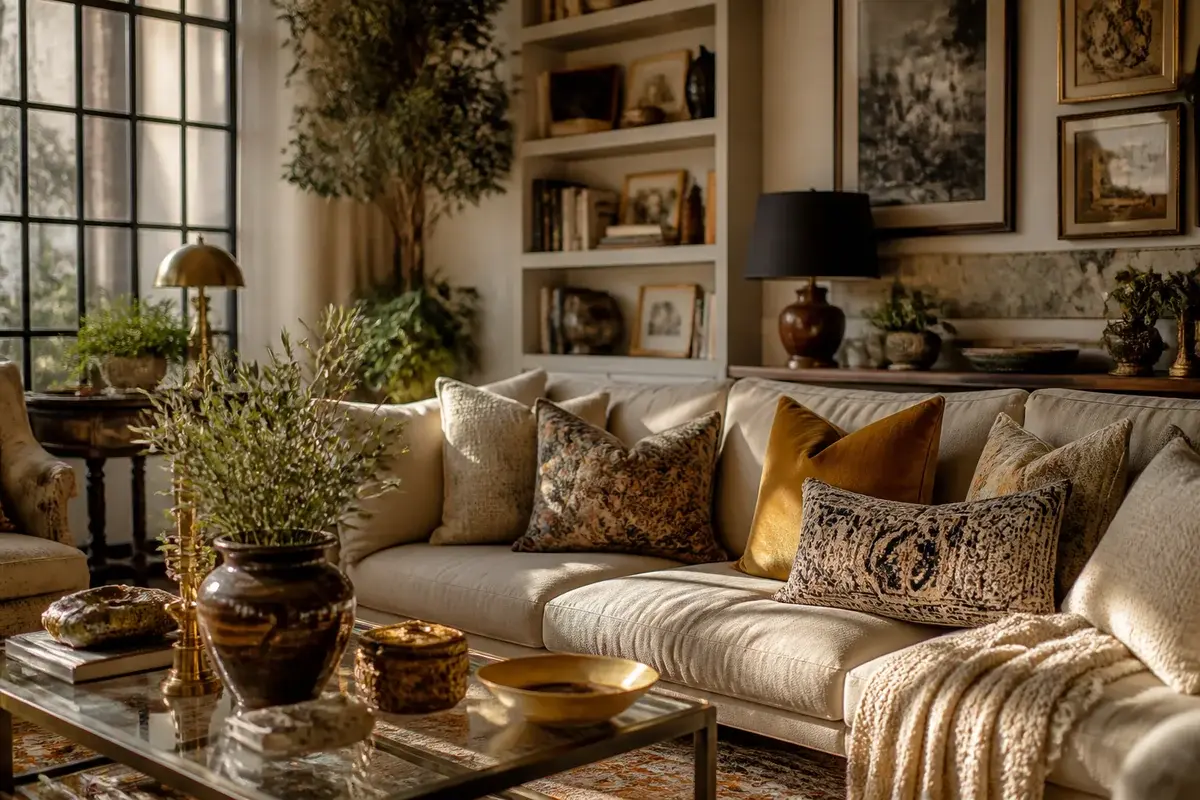
That space taught me something I'd gotten wrong about maximalism. It's not about cramming in everything you own and calling it style. It's about being intentional with your mess. About knowing exactly why each piece is there. The difference between "I bought too much stuff" and "I curated a space that tells my story" is honestly just a few decisions away.
If you're drawn to maximalism but terrified of ending up in chaos, this is for you. Let's talk about how to make it actually feel like a home, not a storage unit.
Layer Color Without Making Your Eyes Hurt
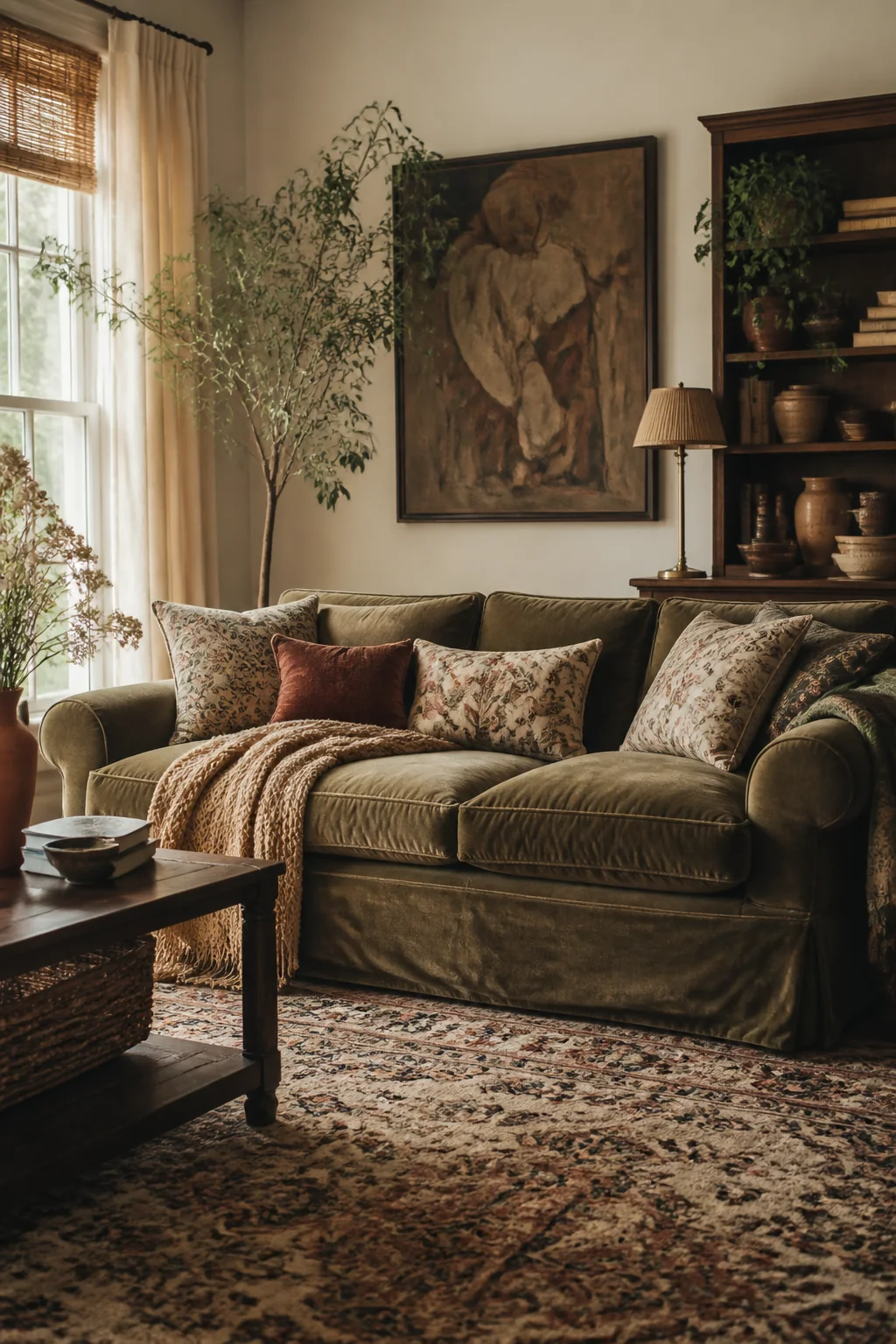
Most designers I follow say the secret isn't avoiding color. It's committing to a color story that actually connects.
Start by picking a base. This doesn't mean beige walls (though it could). It means choosing colors that feel related to each other, even if they're bold. Last year I worked with someone who went with deep jewel tones as their anchor: emerald, sapphire, burgundy. Instead of feeling random, those colors talked to each other.
The trick is repetition. Use your main colors across multiple surfaces and pieces. If you love that emerald, put it in a rug, a throw pillow, maybe an accent wall, definitely somewhere in your art. Your eye expects to see it more than once. Seriously, this changed everything for them - suddenly the space felt intentional instead of chaotic.
Pick a secondary color (maybe a warm gold or cream) and let it breathe a little. That's your visual rest stop. Use it in maybe 20-30% of the room. The remaining 10-15% of the space? That's where you play with wild accents. A teal lampshade. A printed throw. Patterned throw pillows. Those surprises work because you've already anchored the room with harmony.
Art Doesn't Have to Match to Feel Cohesive
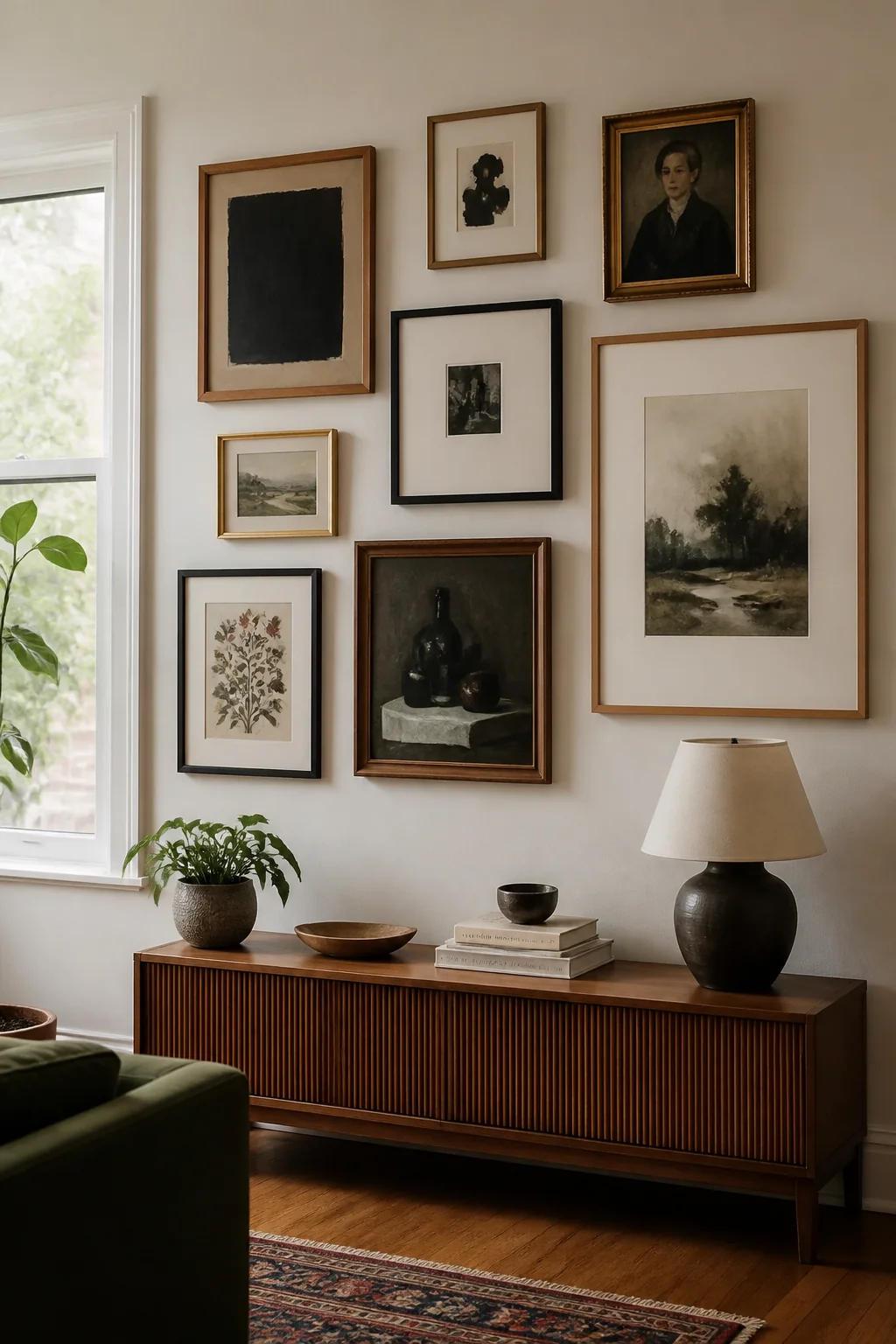
This is where people get nervous. "Won't a gallery wall look messy?" Not if you give it structure.
The structure can be visual, not literal. Instead of matching frames (that's actually pretty boring, honestly), try matching the tone. Black and white photography next to a bold abstract next to a botanical print can absolutely live together if they share a similar color palette or mood. Someone I worked with hung pieces that ranged from vintage to contemporary, but they all had that warm, earthy, slightly vintage feeling. It looked like a collection instead of random things on a wall.
Here's the practical part: measure your wall and plan it out first. I know that sounds like work, but it stops you from hammering holes everywhere and calling it good. A 6x8 wall can hold maybe 6-9 pieces depending on size. Get your layout right, and even a wild gallery wall feels intentional.
Spacing matters more than matching. If you space your art too far apart, it feels scattered. Too close, and it feels chaotic. Around 2-3 inches between frames is usually the sweet spot. Step back and look at the whole thing before you commit any holes to the drywall.
Patterns Can Coexist, Seriously
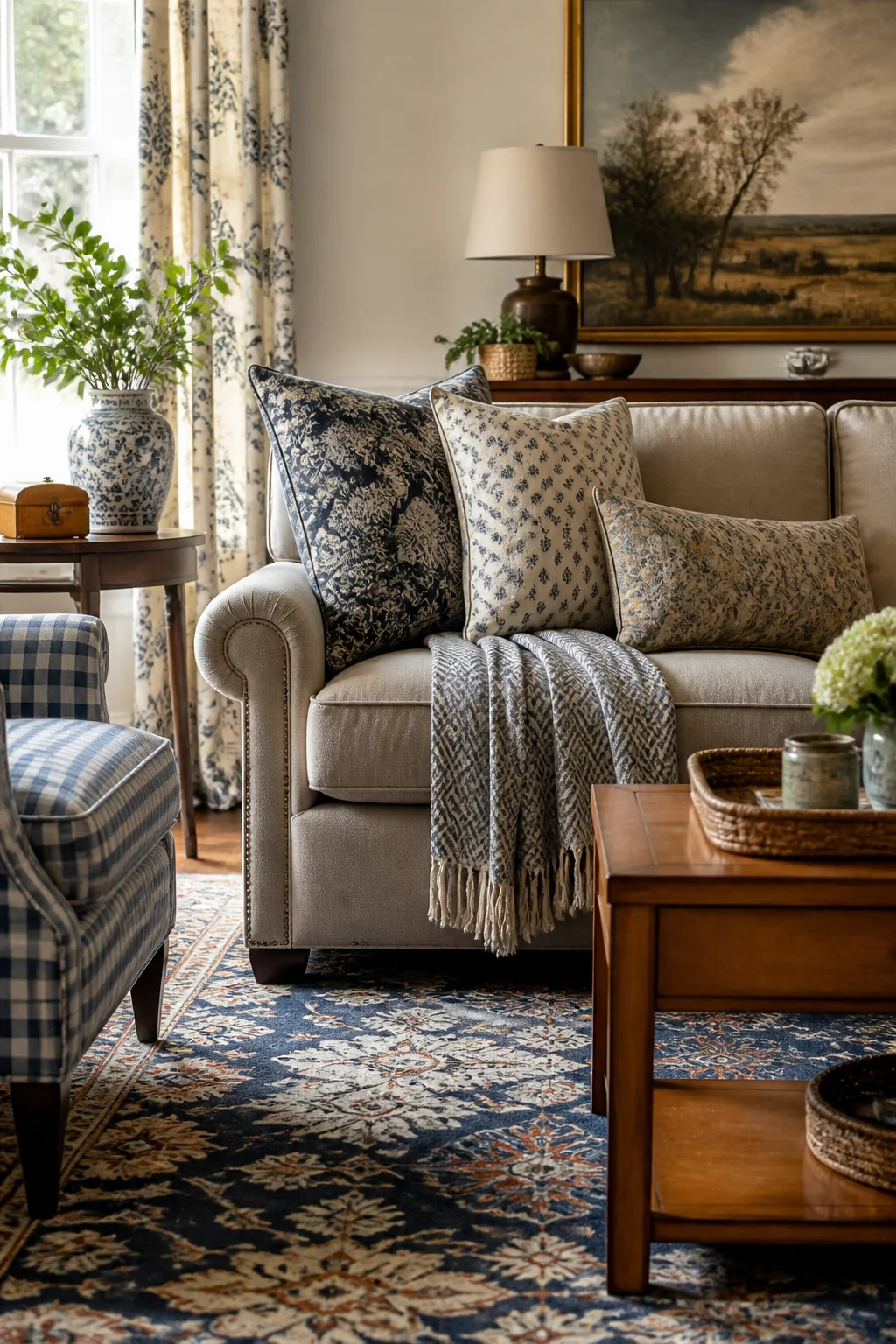
I used to think maximalism meant keeping patterns away from each other. Wrong.
Patterns actually work great together if they share either a color or a scale. Big graphic pattern next to a small geometric pattern next to stripes all feel cohesive if they're in the same color family. Or if one is large-scale and another is tiny, your eye reads them as different enough that they don't fight.
That friend of mine? Her couch had a striped pattern. The rug had a subtle geometric. Curtains were a small-scale floral. Throw pillows mixed all three. Most people would call that a pattern nightmare. Instead, it looked intentional because each pattern brought something different to the table and they were all connected by color.
Start with one bold pattern that you absolutely love. That's your anchor. Then choose one calmer pattern that shares at least one color. Use a solid or a tiny print as your third layer. That's honestly enough. You don't need six competing prints in one room.
Texture Is Your Secret Weapon
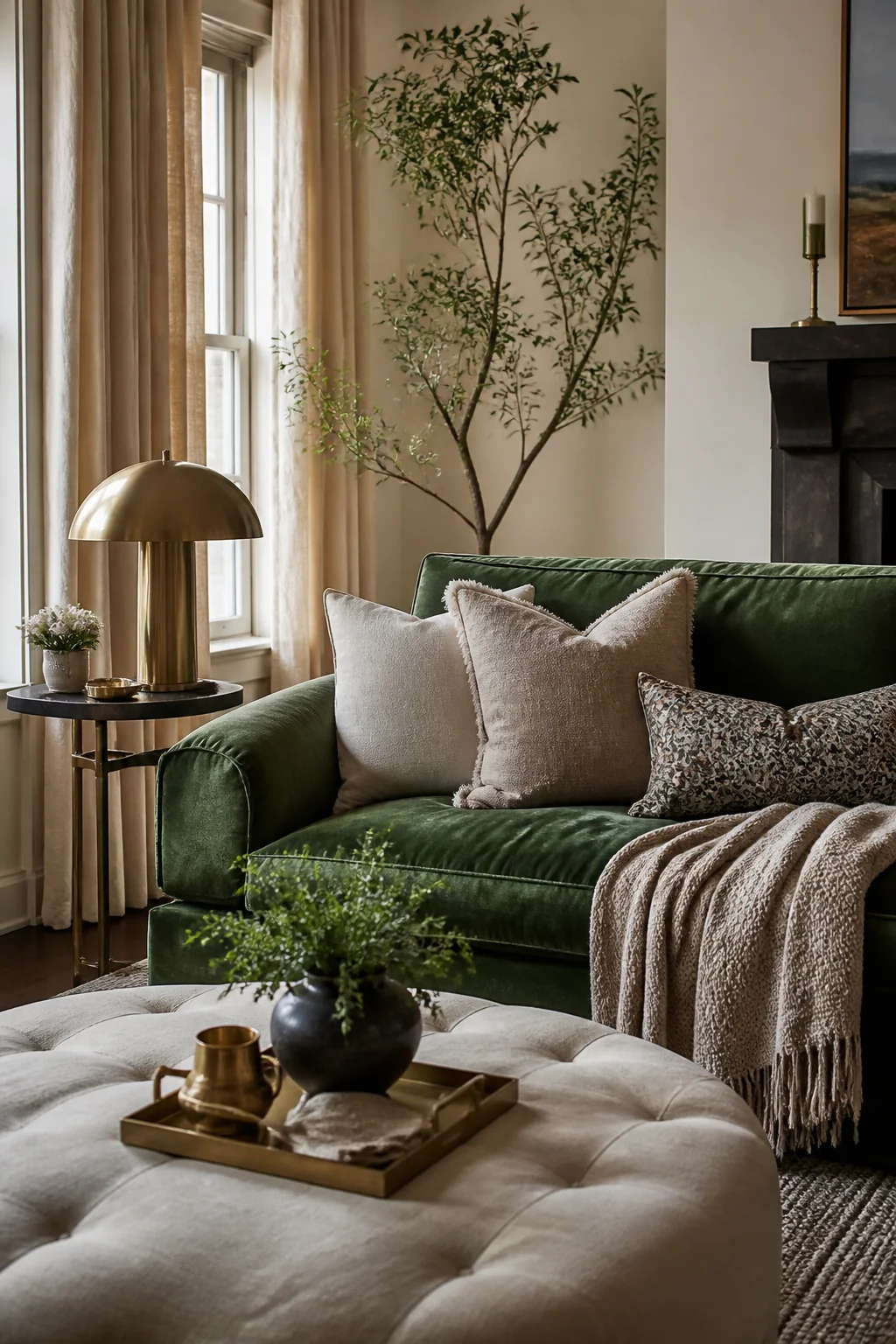
This is the part nobody talks about. Maximalism doesn't have to look flat or chaotic if you're thinking about texture.
Smooth velvet next to rough linen next to soft wool next to shiny brass creates depth that actually pulls everything together. It's like you're giving your eye permission to travel through the room instead of getting overwhelmed all at once. When I helped someone work through their space, we brought in a leather ottoman, a wool throw, linen curtains, and velvet pillows. On paper, that sounds like too much. In person, it felt rich and layered instead of messy.
The textures themselves become part of the story. Run your hand across different fabrics before you commit to them. A maximalist room should feel good, not just look good.
Know Where Your "Breathing Room" Lives
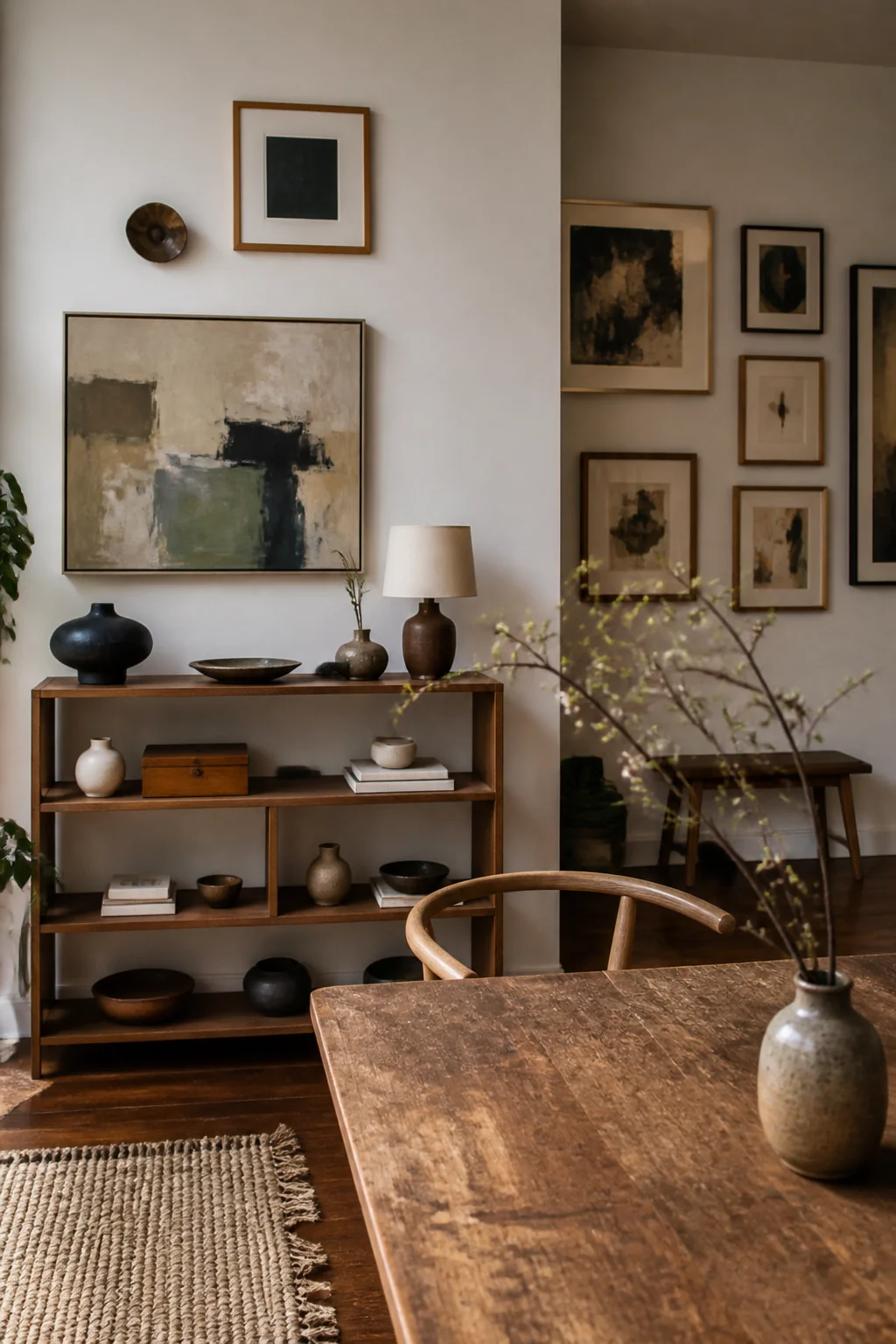
Here's my biggest mistake with maximalism: filling every single surface.
You actually need one spot in the room that feels calm. Not empty, just calmer. This could be a corner shelf with fewer objects. A wall with just one large piece of art instead of a gallery. Even a coffee table with just a few stacked books instead of clutter. It gives your eye somewhere to land.
Think about sightlines too. When you walk into the room, what do you see first? Make sure that's something you actually love. Everything else can be busier. But that entry view should feel intentional, not overwhelming.
The Ruler Test for Authenticity
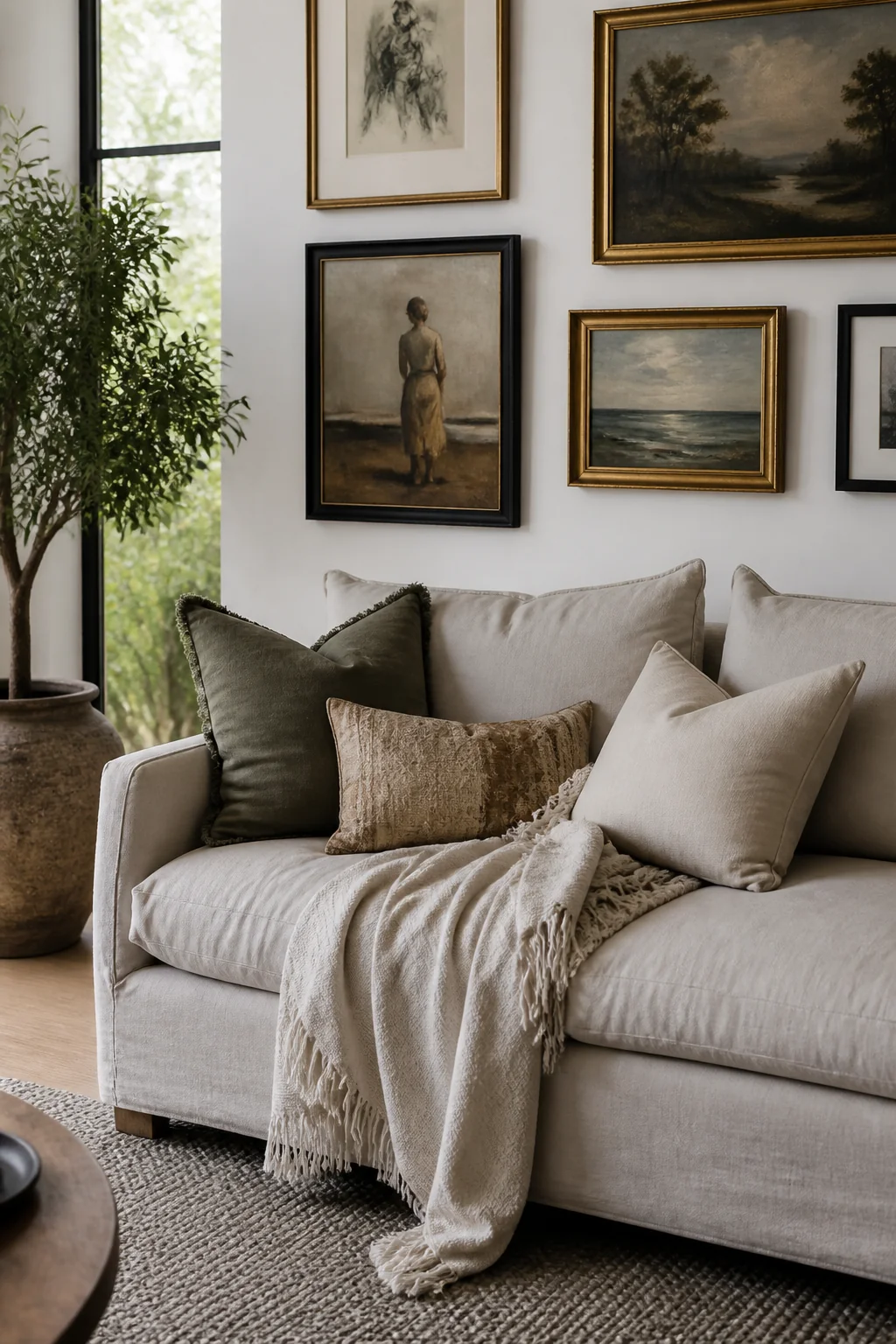
This is going to sound weird, but it actually works. Look at your maximalist living room and ask yourself if you'd keep everything in it even if guests couldn't see it.
Would that gallery wall still be there if nobody else saw it? What about that collection of books? Those throw pillows? If you're keeping things purely for show, you've crossed into chaos. If you're keeping them because they genuinely make you happy or you actually use them, you're building maximalism the right way.
Someone I worked with went through her room with this question in mind. She moved some pieces out, kept others, added some new finds. The result didn't look less full. It looked more intentional. More like her.
Furniture Anchors Everything
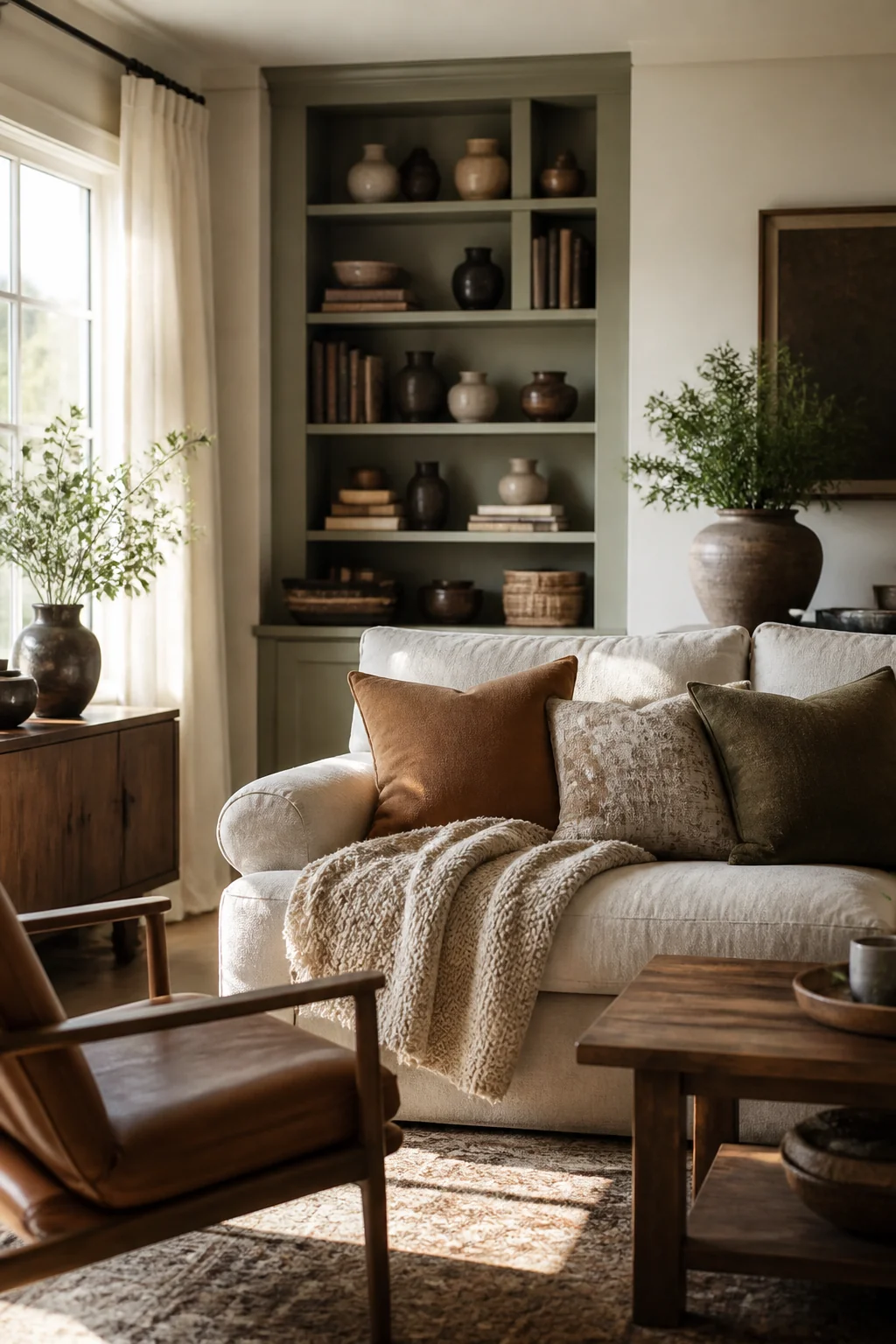
A maximalist room needs strong furniture bones. If your sofa is too small or your shelving is flimsy, adding more stuff just amplifies the chaos.
Invest in pieces that can actually hold the visual weight. A substantial bookcase, a quality sofa, a sturdy coffee table. These anchor the space and give everything else permission to be more expressive. Around $800-1200 for a good sofa is realistic if you're buying new, but secondhand finds can cut that in half. Your furniture isn't the place to compromise on structure, even if everything else around it is bold and busy.
Save the full guide
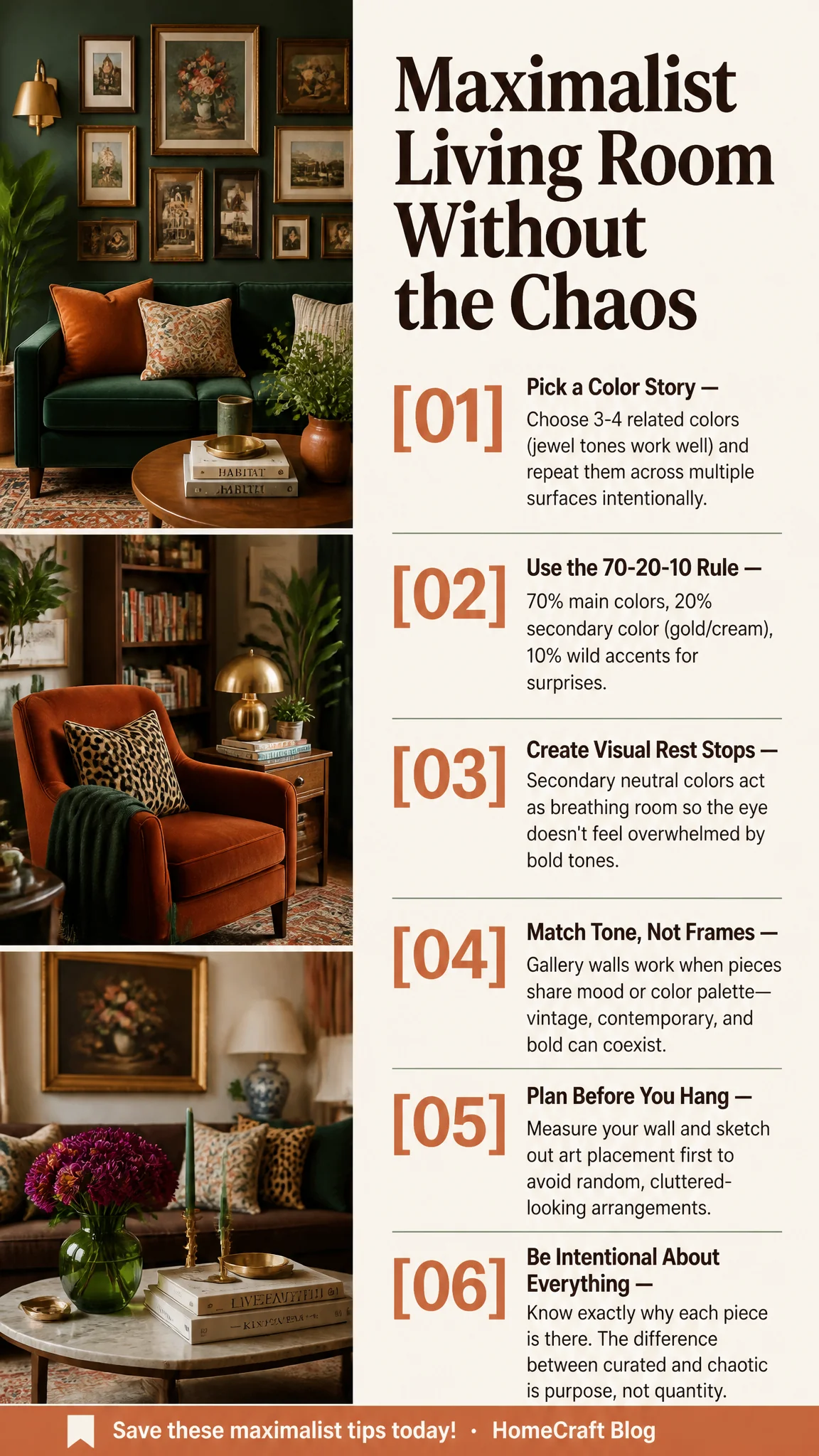
Pick one wall in your living room today. That's it. Decide right now what color story you want to tell there, or what art you'd put up. Don't overthink it. Just choose. Once you've made that one decision, everything else becomes easier because you have an anchor. Come back to HomeCraft Blog soon, and save this post for when you're ready to layer in the rest.