7 Entryway Decor Ideas That Actually Work (Plus What to Skip)
I used to think my entryway didn't matter. It was a hallway. A transition space. Who cares what it looks like? Then my friend Sarah walked in one afternoon, hung her coat on my floor (because there was nowhere else), and I realized: your entryway is the first impression people have of your whole home. More importantly, it's the last thing you see when you leave. Mine was basically screaming "I've given up," and honestly? That affected my entire mood walking out the door.
So I spent the last three years testing what actually works in an entryway and what's just pretty Pinterest clutter that'll drive you crazy in two weeks. Here's what I've learned.
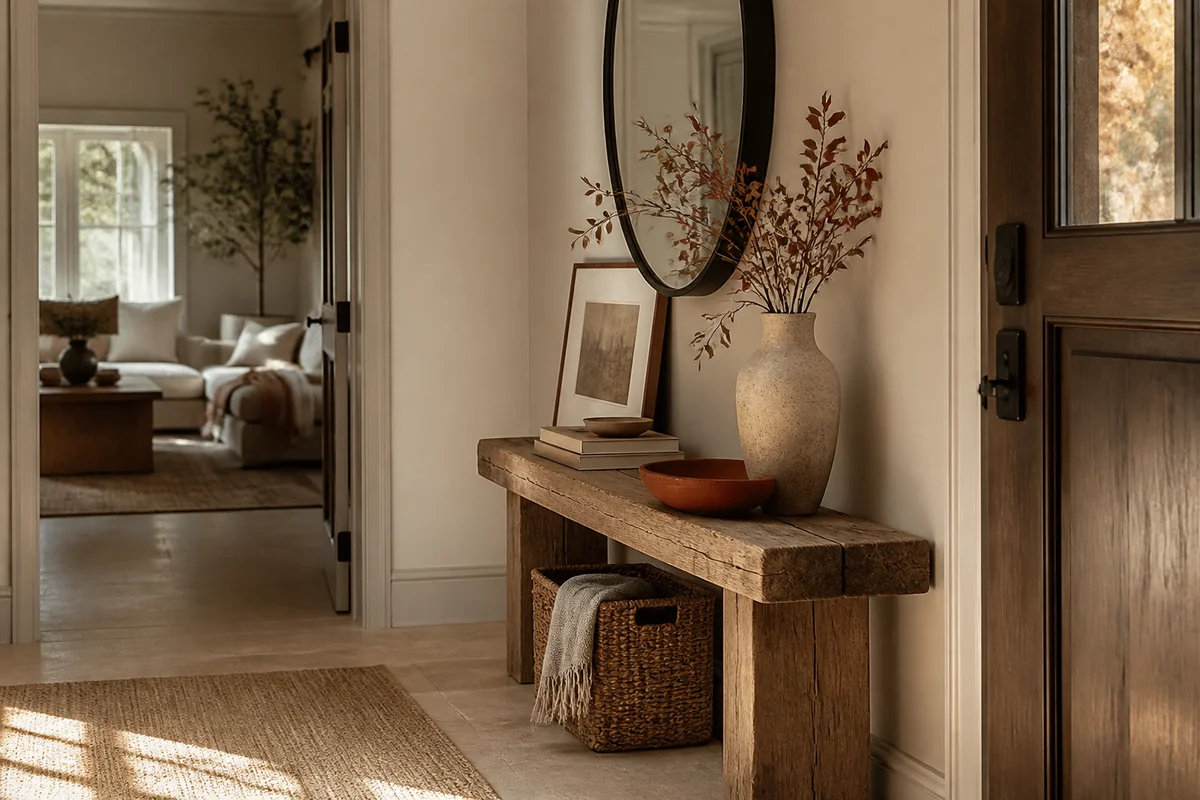
A Real Bench (Not a Decorative One)
I made a mistake here. My first entryway bench was $400 of gorgeous mid-century teak that looked absolutely beautiful and held nothing but my shame. You couldn't actually sit on it without feeling like you'd destroy it. It became a coat hanger. Then a package holder. Then a regret.
I replaced it with a $180 Wayfair bench that's upholstered in performance fabric, the kind that laughs in the face of spilled coffee and dirty dog paws. It has storage underneath. You can actually sit down and take your shoes off without feeling like you're in a museum.
Most designers I follow say the same thing: your entryway needs to function first and look good second. A bench solves so many problems at once. Somewhere to sit. Storage below. A visual anchor for the space. If you've got kids, this becomes non-negotiable (seriously, this changed everything for school mornings).
What size do you need? Measure your space first. A bench shouldn't block your ability to open the door fully. That's the whole point.
A Coat Rack That Actually Holds Coats
Here's the thing nobody tells you: those cute minimalist wooden pegs with three hooks? They're purely decorative. The moment you need to hang an actual winter coat, a crossbody bag, and a scarf, you're out of luck.
I went with wall-mounted hooks instead, , industrial brass hooks spaced about 12 inches apart. I have six of them. Some days they're all full. Some days it's three coats and a tote bag someone left here. The point is they work. I got mine from Schoolhouse Electric for about $15 each, which felt splurgy but they've lasted two years without complaint.
Put them at a height where you and your visitors can actually reach them without doing gymnastics. Not your aesthetic preference. Not Instagram height. Actual functional height.
A Mirror (But Make It Matter)
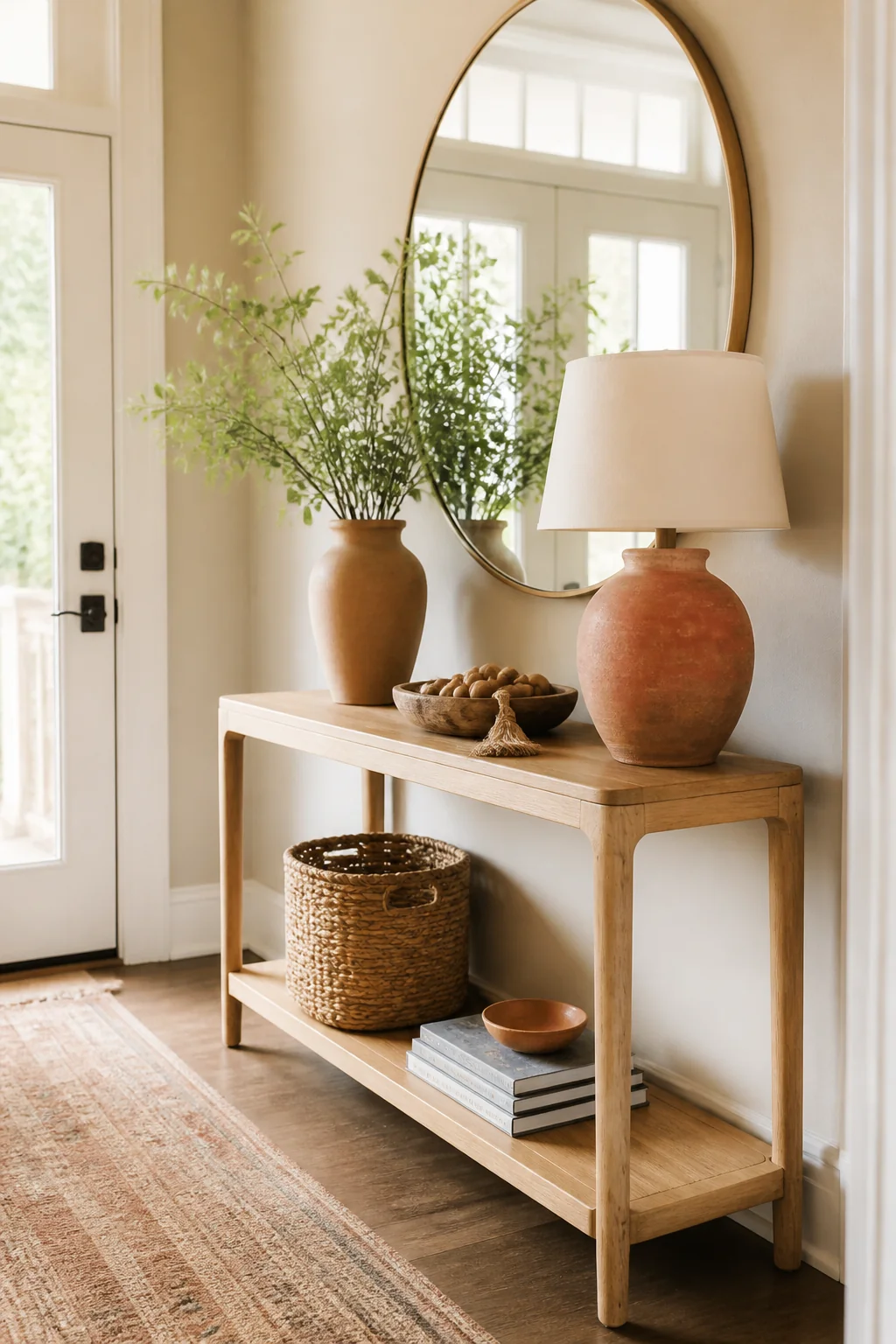
A mirror does two things in an entryway: it makes the space feel bigger, and it's useful. You're literally standing there checking if you have spinach in your teeth before you leave. Why pretend that's not happening?
I chose a large rectangular mirror with a simple wooden frame in a light oak finish. It's hung at about 60 inches from the floor to the center, which works for me at 5'6" and my 6'2" husband. The key is not going too small. A tiny mirror looks precious and defeated. Go bigger than you think you need.
And honestly? Skip the designer mirrors with the complicated metal frames unless you actually love them. This is where a simple, affordable mirror does the job just as well as something pricey. Mine was $120 from West Elm, and I could've gotten a similar shape for $40 at IKEA.
The mirror should be about the same width as your bench, if you have one. They should talk to each other visually.
A Small Table for Keys (and Only Keys)
I used to have a decorative catch-all bowl on my entryway table. It caught everything. Keys, receipts, random papers, someone's hair tie, a mystery USB drive. It became a visual disaster.
Now I use a small brass tray, the kind designed for jewelry. It's maybe 8 inches wide. Keys go on it. That's literally it. Everything else has to find a home elsewhere: papers go to the home office, random items get sorted immediately.
A small table keeps you from that catch-all trap. Pair it with something with actual edges and boundaries. Not a giant surface that invites chaos. Something like a narrow console table, or even a small stool doubling as a table if you're really tight on space.
The mental shift here is important: your entryway should be leaving, not arriving.
Good Lighting That Doesn't Cost $600
My entryway didn't have overhead lighting, just natural light from the front door window. When it got dark, stepping inside was like walking into a cave.
I added a simple pendant light fixture about 72 inches from the floor for $89 from Rejuvenation. It's warm white (2700K color temperature, most designers I follow recommend this over bright white). It hangs centered above the entryway, and suddenly the whole space changed. I could actually see my shoes. I could find my keys. Revolutionary.
Sound familiar? A lot of us skip lighting because it seems complicated or expensive. But good lighting is one of those things that genuinely affects how you feel about a space. You don't need a designer fixture. You need adequate, warm light that makes your entryway feel intentional instead of transitional.
Save the full guide
Greenery (One Plant. Not Ten.)
I killed approximately 47 houseplants before I accepted that my entryway is cold and dark and not a tropical rainforest. So I stopped fighting it.
I have one plant: a snake plant in a simple ceramic pot. It lives in the corner near the window. It's unkillable, which is honestly why I keep it around. I water it when I remember, and it's fine either way. This plant asks nothing from me except the occasional drink.
One living thing makes an entryway feel welcoming without the guilt of dead plants cluttering your space.
What to Skip (Seriously)
Don't do a shoe rack. Not a visible one. Most designers I follow say the same thing, shoes belong in a closet or a cabinet, not displayed in your entryway. It reads cluttered instead of organized, and honestly, I've never had a guest say "I really want to see everyone's shoes."
Don't do a cute little art installation that requires maintenance. You'll have to dust it constantly, and it'll be right there where you're rushing out the door. Skip it.
Grab a notebook and measure your actual entryway today, the width, the depth, what light it has, what's already working. Pinterest can wait. Real spaces need real solutions, and that starts with knowing what you're working with.