20 Calm Back to School Study Space Ideas for Every Age
My sister called me last spring in a slight panic. Her daughter was starting high school, and their kitchen table wasn't cutting it anymore. The noise, the clutter, the total chaos of homework happening next to dinner prep. She needed a real study space, but their apartment was tight. Sound familiar? That afternoon we tackled her spare corner, and honestly, it changed everything for them. Turns out, a calm study zone doesn't need much square footage or a huge budget. Just the right pieces in the right places. Whether you're setting up for a kindergartener, a college student, or yourself, these 20 ideas work across ages and spaces.
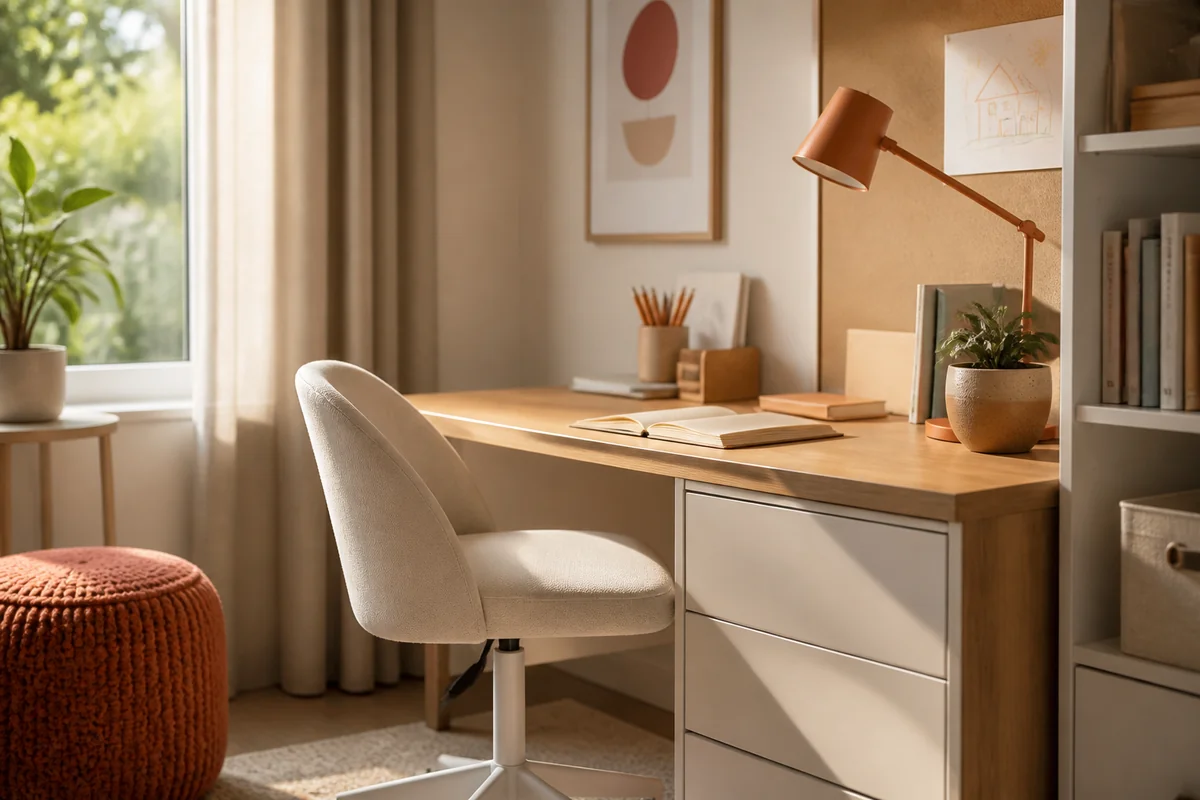
1. Anchor with a real desk, even if it's small
A 36-inch desk is enough. You don't need something massive. My friend found a simple wooden one at a thrift store for $35. Having an actual desk surface signals "work happens here" to your brain. It changes focus instantly.
2. Layer your lighting with a desk lamp plus overhead light
One light source creates shadows and eye strain. Desk lamps run $20-40. Pair it with your existing overhead light or a plug-in strip light. Most designers I follow say this combo cuts distractions by half because your eyes aren't fighting the glare.
3. Add a small area rug to define the zone
A 5x7 rug doesn't take up much space but totally grounds a study corner. Even in a shared bedroom. It tells your eye, "This is the work area."
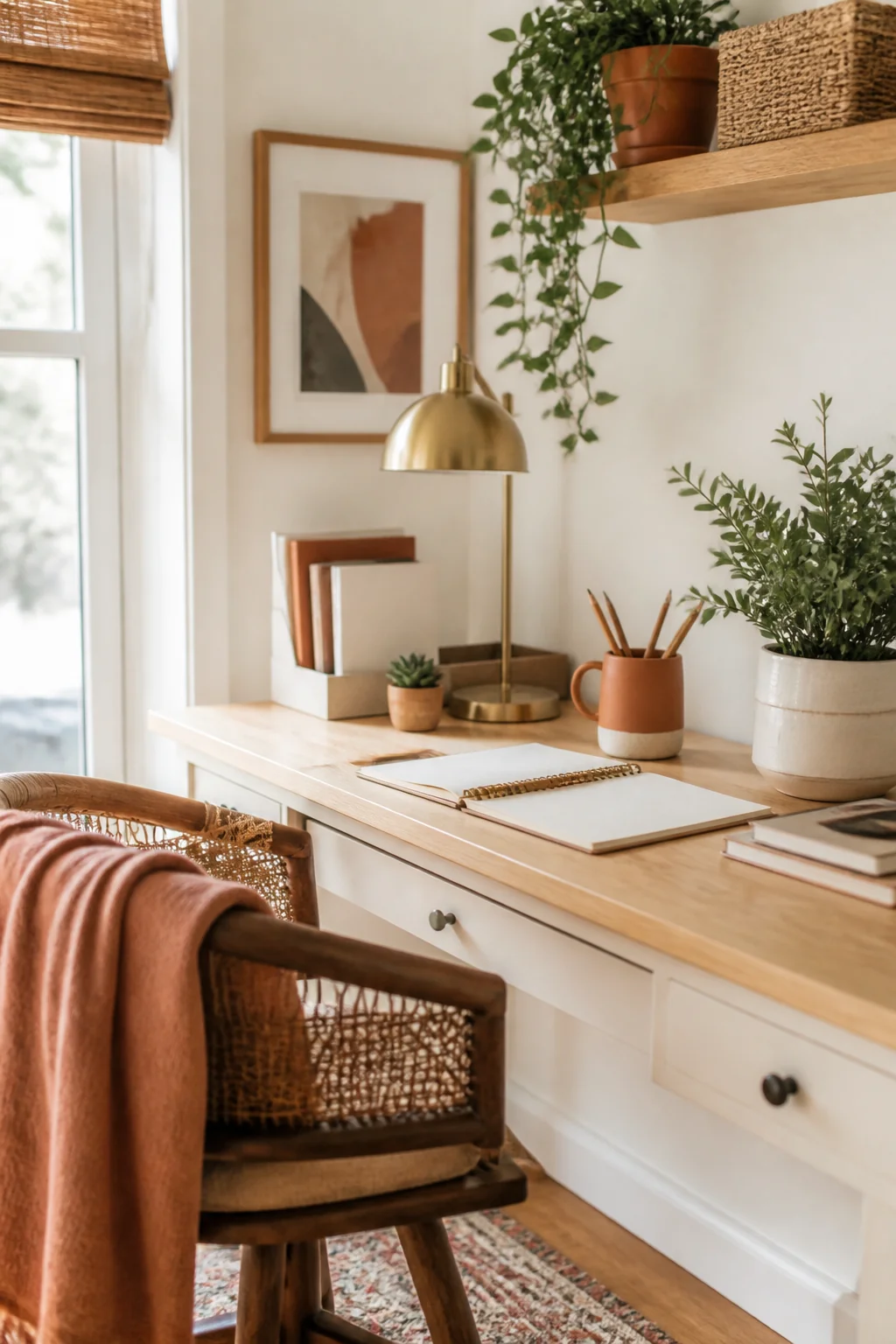
4. Use a rolling cart for supplies and books
Keep everything within arm's reach. Pencils, erasers, notepads, chargers. A three-tier cart runs about $60 and takes up minimal floor space. Rolling means you can tuck it to the side when you're done.
5. Hang a pegboard above the desk for vertical storage
Pegboards cost under $25. Hang it directly behind or beside your desk. Hooks, baskets, and shelves turn dead wall space into working storage. Seriously, this changed everything for organization.
Save the full guide
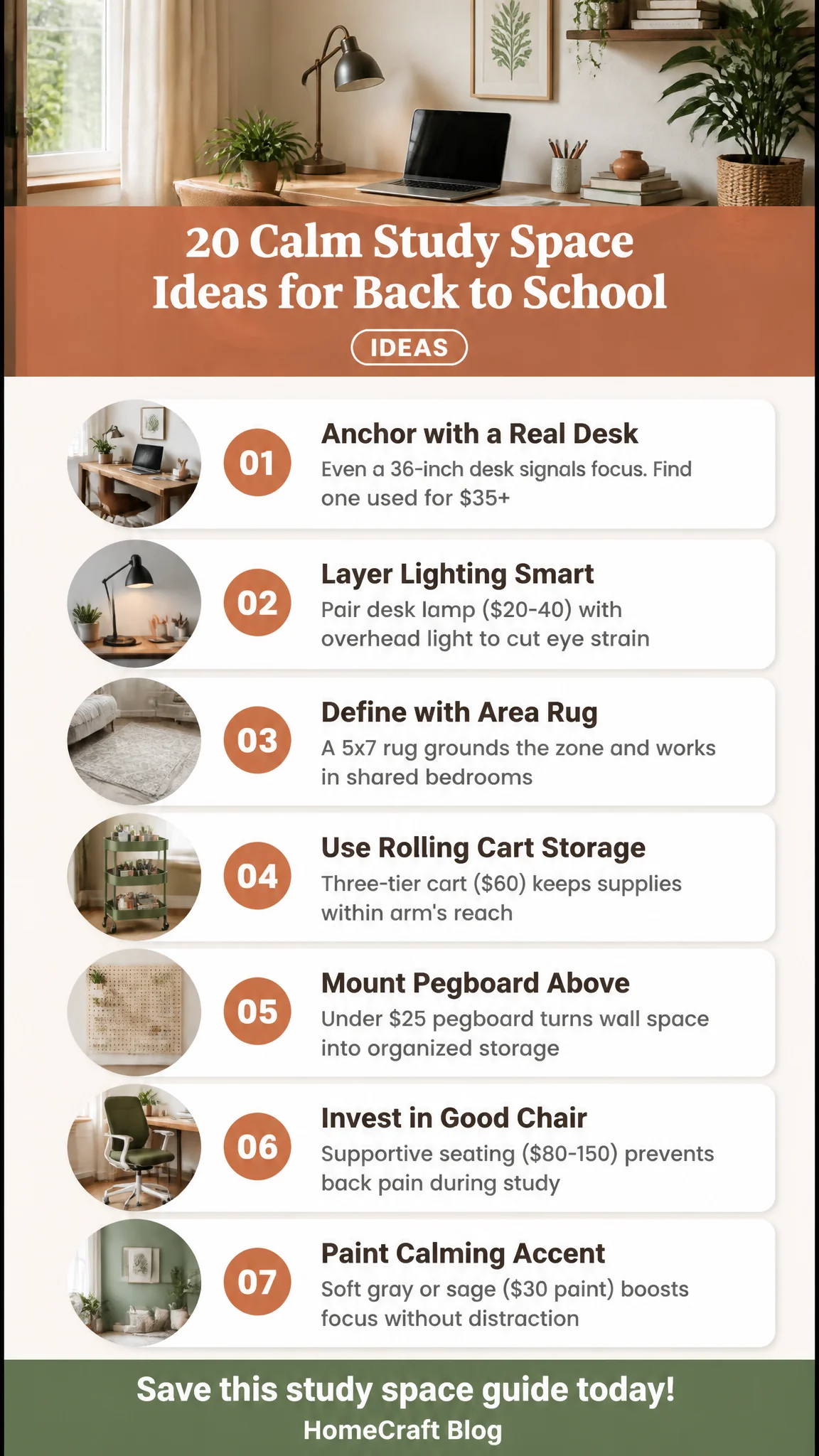
6. Choose a chair that supports good posture
Don't skimp here. A chair that tilts your pelvis forward keeps your back straight. You'll study longer without pain. Most go $80-150. Your future self will thank you.
7. Mount a narrow floating shelf for reference books
Floating shelves run $15-30 each. One shelf at eye level holds textbooks, dictionaries, or notebooks. Keeps your desk surface clear without taking up floor space.
8. Paint an accent wall in soft gray or sage
If you're allowed to paint, soft colors boost calm without being distracting. One gallon of paint costs about $30. A neutral like soft gray or sage works across all ages and styles.
9. Add a small plant to the corner
A pothos or snake plant needs almost no care. Toss it in a 6-inch pot for under $20. Studies show plants reduce stress. Plus, your space looks intentional, not just functional.
10. Install a simple wire shelf above the desk
Cheaper than floating shelves and just as effective. You can find open shelving for $15-25 at most hardware stores. Display only active books and supplies, nothing else.
11. Use drawer dividers to corral small items
Junk drawers kill focus. Dividers run $10-15 and split one drawer into zones. Pens, sticky notes, and erasers each get their own slot. One drawer stays tidy, one desk surface stays clear.
12. Hang a whiteboard for daily task lists
A small whiteboard (around 18x24 inches) runs $15-30. Write your top three tasks for the day. Checking them off builds momentum. And you're not scrolling your phone looking for reminders.
13. Layer in soft background sound or a white noise machine
Silence isn't always best. A small white noise machine costs about $20-40. Rain sounds or gentle static help some people focus. Others prefer lo-fi beats playing quietly. Try both.
14. Add a monitor arm if you use a laptop
A single monitor arm frees up desk space and lifts the screen to eye level. They cost around $30-60. Your neck stays neutral. Your desk doesn't feel cramped.
15. Create a closed-off nook with a corner shelf unit
If you have a corner, a tall narrow shelf unit ($50-100) creates visual boundaries. It feels like your own room within a room. Your brain takes that separation seriously.
16. Use warm-toned string lights around the perimeter
Honest mistake: I thought study spaces had to feel sterile. They don't. Soft warm lights strung low make the space feel inviting, not clinical. Most run $15-25 for a strand.
17. Keep a small water bottle and snack caddy nearby
Hunger and thirst break focus. A water bottle on the desk and a small basket of snacks means you don't wander away every twenty minutes. Hydration keeps your brain sharp.
18. Mount a cork board for inspiration or reminders
Cork boards are cheap (under $15) and let you pin important dates, quotes, or images. One visual reminder beats ten digital notifications.
19. Add a footrest or under-desk space heater for comfort
Comfort compounds focus. A small footrest (around $25-40) takes pressure off your lower back. If your study space is cold, a compact space heater helps too. Most are $25-50.
20. Set boundaries with a simple "Do Not Disturb" sign
Sounds silly, but a sign (even handmade) signals to others that you're working. Fewer interruptions. Better focus. Your housemates get it immediately.
The real win? Start with just three of these ideas this week. Pick the desk, the lighting, and one storage piece. Get those right first. Then layer in comfort and organization as you go. Your study space doesn't need to be perfect; it just needs to feel like yours and support you showing up. Save this, pick your top three, and grab what you need this weekend.